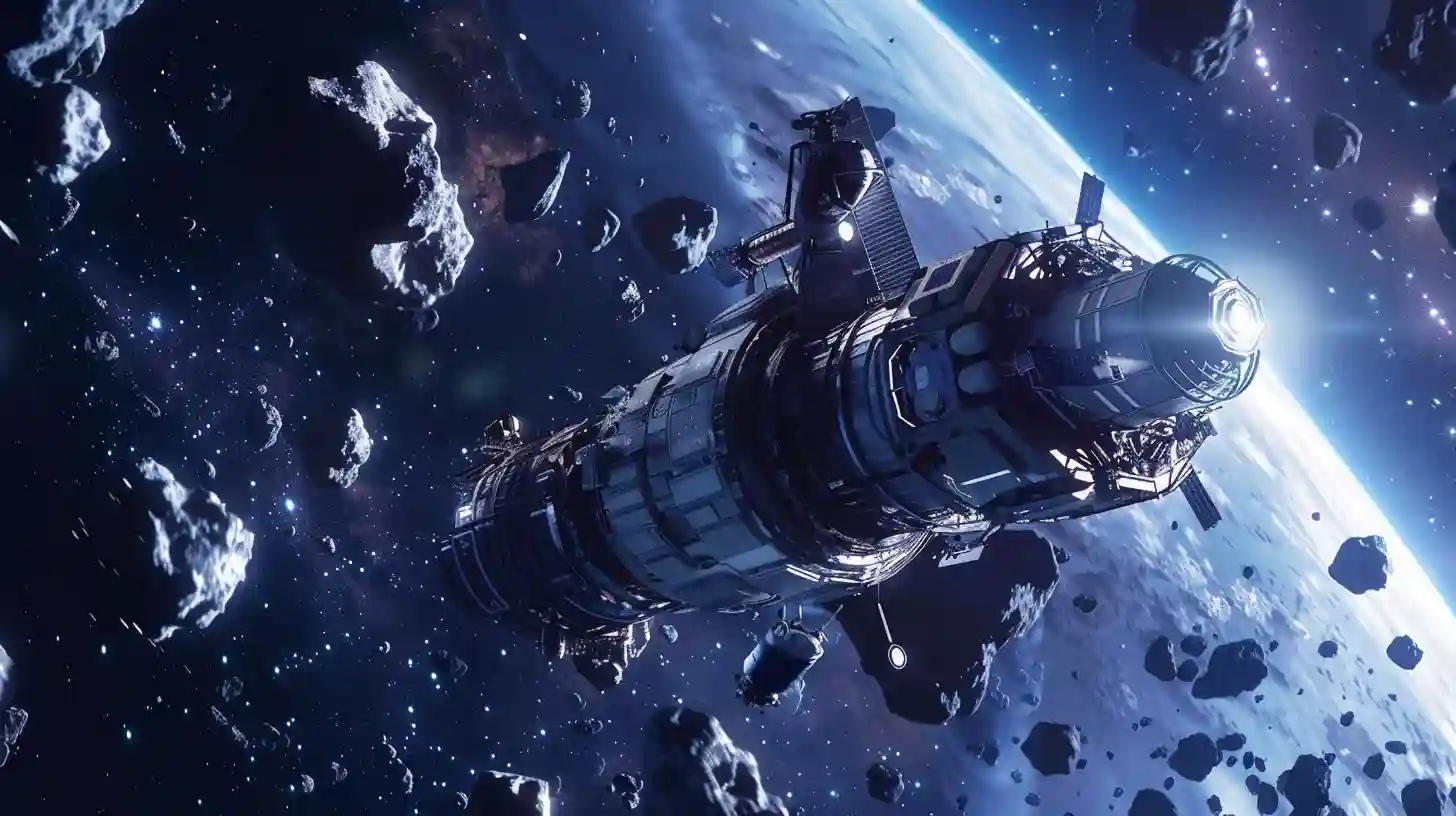
Spaceship: Expanding the Frontiers of Exploration
The vast expanses of space have always captivated the human imagination, awakening interest in what lies beyond our planet. Since the dawn of the space age, spacecraft have played a critical role in expanding our understanding of space and pushing the boundaries of exploration. From the early days of manned spaceflight to today's advanced technology, spacecraft have played an important role in allowing humans to reach new heights and unlock the mysteries of the universe.
One of the most iconic spacecraft in history is the Apollo program, which carried out a series of manned missions to the Moon between 1969 and 1972. The Apollo spacecraft, consisting of a command module, a service module and a lunar module, allowed astronauts to travel to the Moon. The moon, walk across its surface and return safely to Earth. These missions represented a monumental achievement in human history, demonstrating the power of technology and the spirit of exploration.
In the decades following the Apollo program, spacecraft technology continued to advance, with new missions pushing the boundaries of what was thought possible. One such mission was the Voyager probes, launched in 1977 to explore the outer planets of our solar system. Voyager 1 and Voyager 2 traveled vast distances, sending back stunning images and data that revolutionized our understanding of the outer planets and their moons.
The Hubble Space Telescope, launched in 1990, has provided us with breathtaking views of the universe, capturing images of distant galaxies, nebulae and stars. The data collected by Hubble has revolutionized our understanding of the cosmos, leading to groundbreaking discoveries about the nature of dark matter, dark energy and the origin of the universe.
Spacecraft technology has continued to advance at a rapid pace in recent years, with missions such as the Mars rovers and New Horizons spacecraft further pushing the boundaries of exploration. The Mars rovers Spirit, Opportunity and Curiosity have explored the surface of the Red Planet, sending back valuable data about its geology, atmosphere and potential for life. The New Horizons mission, which flew past Pluto in 2015, provided us with the first close-up images of this distant dwarf planet, revealing a world of frozen plains, towering mountains and icy glaciers.
The future of spacecraft looks even more promising, with missions planned to explore the moons of Jupiter and Saturn, return samples from Mars, and search for signs of life on distant exoplanets. The James Webb Space Telescope, scheduled to launch in 2021, will revolutionize our understanding of the early Universe, allowing us to peer further into the past than ever before. With each new mission, spacecraft continue to push the boundaries of exploration, expanding our knowledge of space and inspiring future generations of scientists, engineers and explorers.
But space technology is not limited to the exploration of distant worlds. Satellites orbiting the Earth provide critical data for weather forecasting, communications, navigation and climate change monitoring. From GPS satellites that help us navigate around the world to weather satellites that track storms and hurricanes, space technology plays a vital role in our daily lives.
Spacecraft have revolutionized our understanding of the universe, allowing us to explore distant worlds, uncover the mysteries of the cosmos, and push the boundaries of human knowledge. From the early days of the Apollo program to today's advanced technologies, spacecraft continue to inspire us with their ability to explore, discover, and innovate. As we look to the future, the possibilities are endless, with missions planned to explore new worlds, search for signs of life, and uncover the secrets of the universe. The legacy of spaceships is one of discovery, adventure and the relentless pursuit of knowledge.