The microscope stands as one of humankind’s most revolutionary inventions, allowing us not only to glimpse into the minute world that exists beyond the naked eye but also fundamentally altering our understanding of biology, materials, and the very structure of life. Designed to magnify objects, microscopes can unveil intricate details of organisms, cells, and materials that would otherwise remain invisible. While many may perceive a microscope simply as a tool to observe tiny things, its operation involves a combination of optics, mechanics, and illumination that all work collaboratively to transform our perception of the microcosm.
At the heart of any microscope lies its optical system, composed primarily of lenses. These lenses are made of glass or other transparent materials that bend light rays through a mechanism known as refraction. The fundamental principle behind a lens is that as light transitions from one medium to another—like from air to glass—it changes speed and thus its path. Convex lenses, which are thicker in the center than at the edges, bend light inward to a focal point, while concave lenses diverge light rays outward.
Most common microscopes employ a series of convex lenses to achieve the desired magnification. The initial lens called the objective lens, is placed very close to the specimen. This lens takes in light that is emanating from or reflecting off the specimen and collects it to form a real image. The real image is inverted and smaller than the actual specimen. The eyepiece lens, also known as the ocular lens, takes this real image and magnifies it further, allowing the observer to see a larger version of the specimen. Both lenses work synergistically; the objective lens provides the primary magnification, while the eyepiece enhances this effect.
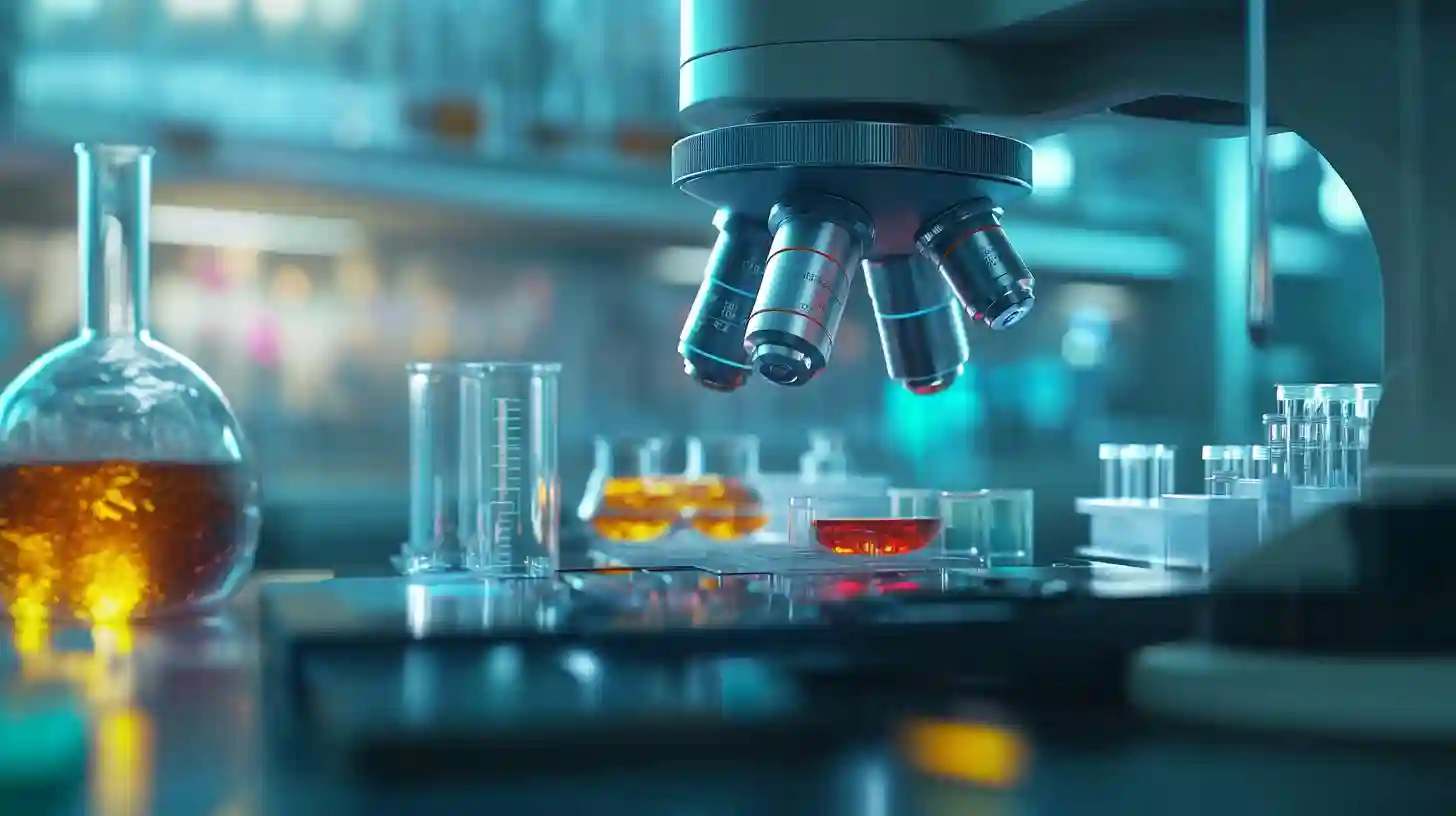
The construction of a microscope typically incorporates multiple objective lenses of varying magnifications. These are adjustable via a rotating turret, allowing the user to select a higher or lower magnification based on the size and detail needed for viewing the specimen. Each lens in the system is specifically designed to reduce chromatic aberration, a common optical distortion that leads to color fringing. Modern microscopes often utilize multiple glass elements in each lens system to optimize the path of light and improve clarity, ensuring that the final image is both sharp and true to the specimen’s color.
Illumination is another critical aspect of microscope functionality. Early microscopes relied on natural light, but as technology progressed, artificial illumination sources were incorporated. Light sources, such as halogen bulbs or LEDs, illuminate the specimen from below, and the light must be appropriately focused as it travels through the condenser lens—a component that concentrates the light onto the specimen. This controlled lighting is vital for revealing the details of transparent or semi-transparent samples, which otherwise might not reflect enough light to be visible.
Different microscopy techniques utilize various methods of illumination. For instance, bright-field microscopy employs transmitted light to illuminate specimens, which is typically stained to add contrast. In contrast, dark-field microscopy illuminates specimens at an angle, making unstained samples appear bright against a dark background. Another well-known technique, phase-contrast microscopy, enhances the contrast of transparent specimens without the need for staining, making it ideal for observing living cells and biological processes in real-time. Fluorescence microscopy utilizes specific wavelengths of light to excite fluorescent dyes within the specimen, allowing for vibrant imaging of various cellular components.
The mastery of microscopy goes further than just the basic mechanisms of optics and illumination; it also delves into sample preparation, which can drastically impact the quality of observation. Specimens must often be prepared in ways that enhance their visibility. Traditional methods include staining, where specific dyes attach to cellular components, increasing contrast. Mounting techniques can vary from simple wet mounts to more elaborate fixations and dehydrations, accommodating different materials and research needs.
In laboratory settings, microscopes can be equipped with additional capabilities to capture images, allowing researchers to document observations. Digital cameras can be attached, enabling real-time imaging and the ability to share findings instantaneously with an audience or document experiments for later analysis. Advances in software also allow for measurement and analysis of images, contributing to fields such as microbiology, histology, and material science.
The importance of microscopy extends beyond education and research; it plays a crucial role in various industries, including healthcare, where it is indispensable in diagnostic pathology. Pathologists use microscopes to examine tissue samples for abnormalities, including cancer cells. The ability to differentiate between healthy and diseased tissue underpins effective diagnosis and treatment planning. Similarly, in microbiology labs, microscopes are key to identifying pathogens, studying their characteristics, and devising strategies for treatment or containment.
In the field of materials science, microscopy enables the examination of material structures at a nanoscale, facilitating the development of new materials with tailored properties for specific applications. The introduction of electron microscopy has allowed scientists to explore materials at unprecedented resolutions, providing insights into atomic arrangements and defects that influence material behavior.
The journey of microscopy does not end with traditional techniques; advanced methodologies have emerged, opening new avenues in research and industry. One such advancement is super-resolution microscopy, which breaks through the diffraction limit of light microscopy. Techniques such as STED and PALM allow scientists to visualize structures at the nanoscale, providing insights into biological processes at unprecedented resolutions. Leveraging fluorescent proteins and advanced optics, these methodologies have greatly expanded our understanding of cellular dynamics and the organization of biomolecules.
Another significant advance is the integration of artificial intelligence with microscopy, which is transforming data analysis. Machine learning algorithms can automate the identification and classification of cellular structures, streamlining the analysis process while reducing human error. This advancement is particularly beneficial in areas requiring high throughput or where large data sets complicate visual inspection.
Microscopy, a fusion of art, science, and technology, continues to evolve and expand its capabilities, allowing humanity to peer deeper into the intricacies of life and matter. The implications of this tool are vast, influencing a plethora of fields and reshaping our understanding of the world at its smallest scales. From fundamental research to clinical applications, the microscope has transcended its initial design to become an integral instrument in the exploration of science, embodying the spirit of curiosity that drives human discovery.