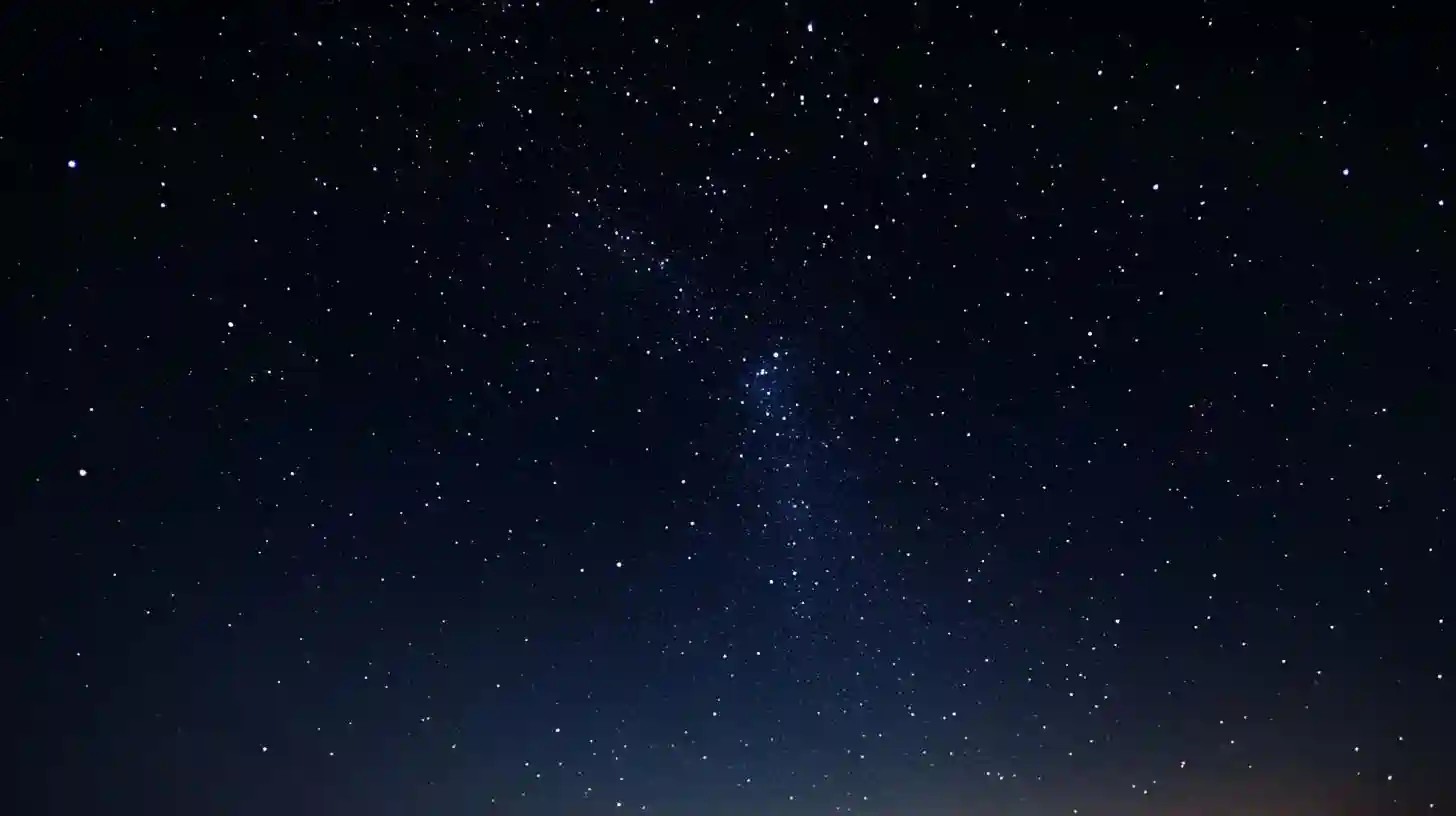
Stars have captivated human imagination for millennia, their steady glow and occasional twinkling often serving as silent witnesses to the cosmic theater. To the casual observer, the night sky appears as a quaint tapestry of tiny, twinkling lights. This seemingly simple phenomenon of twinkling is, in reality, a complex interplay of astrophysics, atmospheric conditions, and perception.
The twinkling of stars, scientifically known as stellar scintillation, is primarily attributed to the Earth's atmosphere. The atmosphere, a dynamic and unpredictable layer of gases, is composed of various elements that influence the light from stars long before it reaches our eyes. As starlight travels through space, it remains unaffected—the vacuum of space does not interfere with its trajectory. The moment starlight enters the Earth's atmosphere, it encounters an array of obstacles.
Air is not a homogeneous medium. It contains varying densities, temperatures, and compositions, creating pockets that constantly shift and move. These pockets act like lenses, bending and refracting the light in myriad ways. As light passes through these layers, its path gets distorted, causing it to travel in various directions. The resultant effect is a wobbling or twinkling appearance. This is particularly noticeable with stars because they are point sources of light, meaning all the light comes from an extremely narrow, distant source. Even the slightest atmospheric interference can cause a significant impact on its apparent position and intensity.
Planets, on the other hand, do not exhibit the same degree of twinkling. This is due to their apparent size in the sky; they appear as small disks rather than points. The light from these disks averages out the distortions caused by the atmosphere, resulting in a steadier appearance. The phenomena of twinkling, or the lack thereof, thus offers an interesting method to distinguish between stars and planets in the night sky.
Aside from the Earth's atmosphere, other factors contribute to the twinkling of stars. Astronomical bodies like stars emit light that travels vast distances, often millions or even billions of light years, before reaching Earth. Over such enormous distances, the light can also encounter interstellar medium—cosmic dust and gas that lie scattered throughout space. This interstellar medium causes the light to scatter, refract, and even get absorbed, leading to variations in intensity by the time it reaches our planet. However, this phenomenon is more subtle compared to the distortions caused by the Earth's atmosphere.
Different stars twinkle to different extents, with some seemingly flickering almost furiously while others maintain a subdued sparkle. Part of this variation stems from the star’s position relative to the Earth's horizon. Stars closer to the horizon need to traverse a thicker layer of the Earth's atmosphere compared to those located higher up in the sky. As a result, stars near the horizon are subjected to increased atmospheric distortion, accentuating their twinkling. Conversely, stars located directly overhead pass through a thinner atmospheric segment, resulting in less pronounced twinkling.
The color of a star's light also adds another layer of intrigue to the phenomenon of twinkling. Stars are not monochromatic; they emit light across a spectrum, often generating different colors due to their varying temperatures. The Earth's atmosphere acts akin to a prism, dispersing the starlight and accentuating different colors as the light shifts and bends. This dispersion can give rise to the illusion of a star "changing" colors rapidly. For instance, red and blue hues might become more pronounced as the atmosphere refracts different wavelengths of light to different extents, further enhancing the flickering spectacle.
Human perception plays a pivotal role in the experience of starlight twinkling. The eyes are equipped with rod and cone cells that respond differently to various light conditions. Rod cells, responsible for vision in low light, are more sensitive to light intensity changes, making the twinkling more noticeable, especially in dimly lit environments. Cone cells, which perceive color, add to the visual complexity by interpreting the variations in the starlight's hue. Consequently, the twinkling of stars is perceived through a blend of fluctuating light intensity and color, shaped equally by atmospheric interferences and the limitations and capabilities of human vision.
The Earth's atmosphere is far from a constant entity; it is restless, perpetually in motion. Weather patterns, temperature gradients, and air currents all contribute to the dynamic nature of the atmosphere. This constant flux means that starlight faces an ever-changing pathway every night, leading to varied twinkling patterns. Additionally, the advent of global phenomena such as atmospheric turbulence and jet streams, which are fast-flowing air currents encircling the Earth, introduces another variable that influences the degree and nature of twinkling. These high-altitude airflows significantly disturb the atmosphere, causing rapid changes in its density and refractive properties, thereby escalating the scintillation of starlight.
Acute observers and professional astronomers have long sought to study and quantify stellar scintillation. Advanced instruments like scintillometers measure the intensity and frequency of twinkling, providing valuable data about atmospheric conditions. By studying how stars twinkle, scientists can glean insights into weather patterns, atmospheric turbulence, and even infer properties about the interstellar medium.
In astronomical observations, twinkling poses a challenge. The atmospheric distortions that create twinkling can blur images and obscure fine details. To mitigate this, astronomers employ adaptive optics—a technology that uses deformable mirrors to compensate for the atmospheric turbulence in real time. By adjusting these mirrors based on the incoming light, adaptive optics can effectively "un-twinkle" a star, enabling clearer and more stable observations. Space telescopes like the Hubble Space Telescope circumvent this issue entirely by operating beyond the Earth's atmosphere, capturing pristine images devoid of atmospheric distortions.
The phenomenon of starlight twinkling is not limited to Earth. Any celestial body with an atmosphere can induce similar effects on the light from stars. Observations made from Mars or other planetary bodies with significant atmospheres could reveal their own unique scintillation patterns, providing further avenues for comparative studies and enriching our understanding of atmospheric sciences across different celestial environments.
The beauty and mystery of twinkling stars extend beyond the realm of scientific inquiry, permeating culture, art, and literature. From children's lullabies to poetic verses, the twinkling of stars has inspired countless expressions of wonder and awe. The scientific explanations add a layer of depth, enhancing the appreciation for this natural wonder without stripping away its intrinsic magic.
The twinkling of stars stands as a testament to the intricate interplay between cosmic light and our ever-shifting atmosphere. It merges the distant, unfathomable realms of the universe with the immediate, tangible presence of our planetary environment. Far from being a mere optical illusion, the phenomenon encapsulates the essence of astronomical wonders, reminding us of the dynamic and interconnected nature of the cosmos. As we gaze upon the starry sky, the twinkling continues to remind us of the blend of science and enchantment that defines our view of the universe.