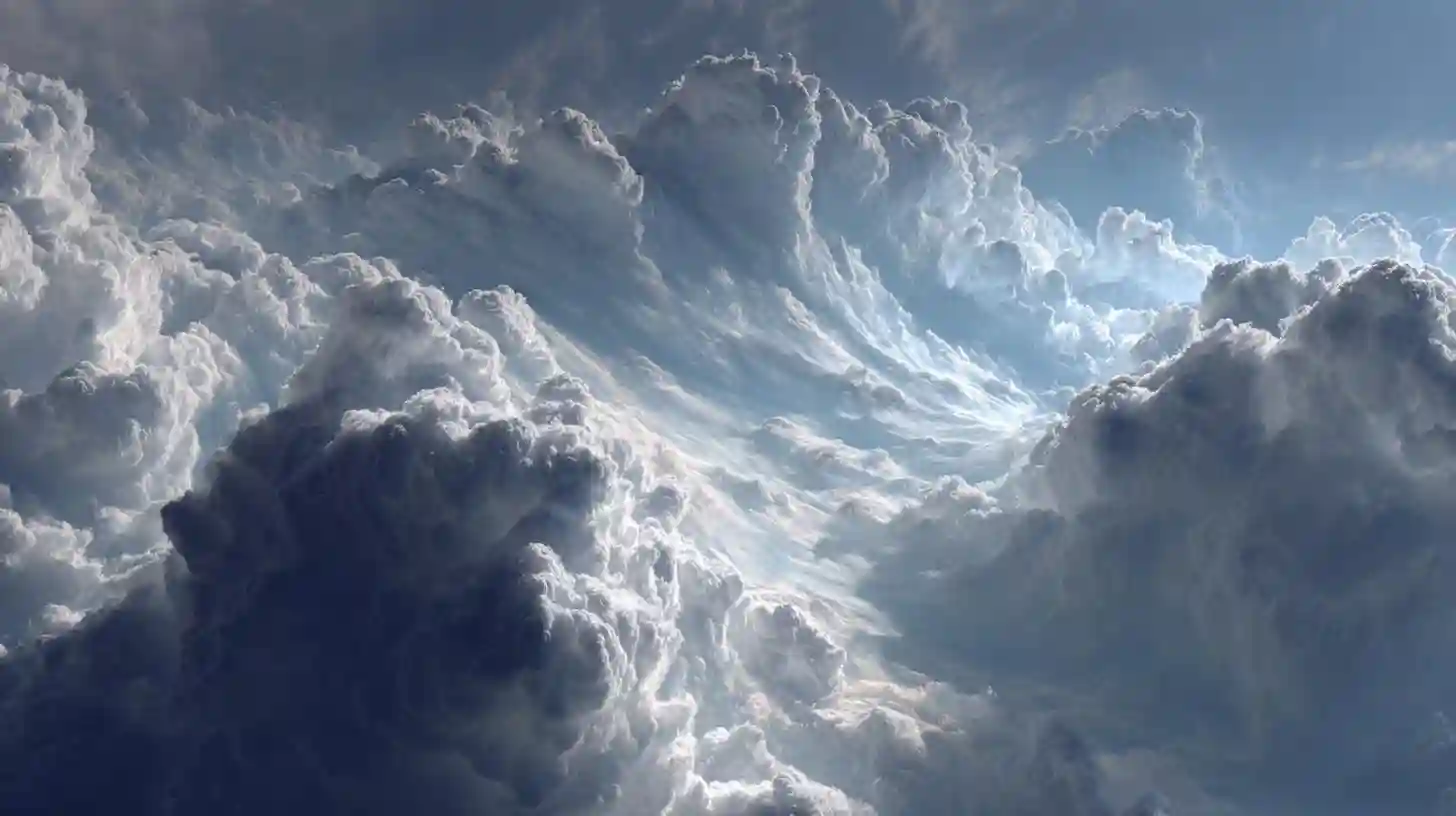
Clouds and atmospheric pressure systems are closely interconnected elements in Earth's weather systems. Atmospheric pressure, which refers to the weight of the air above a given point, plays a crucial role in cloud formation and weather patterns. Low-pressure systems are typically associated with cloud formation and precipitation. As warm air rises in a low-pressure area, it cools and condenses, leading to the formation of clouds. This process is particularly evident in areas experiencing storms, where clouds often appear as thick, dark masses of water vapor. High-pressure systems, on the other hand, are generally associated with clear skies and stable weather conditions. In these systems, air sinks and warms, reducing the likelihood of cloud formation. The lack of rising air limits the condensation of moisture, leading to a decrease in cloud cover and precipitation.
The movement of these pressure systems across the Earth's surface contributes to the variation in cloud types. For example, as a low-pressure system moves into a region, it can bring with it a variety of cloud forms such as cumulus or stratus clouds, signaling the potential for rain or thunderstorms. On the other hand, a high-pressure system typically results in clear skies with only a few scattered clouds, which is often characteristic of fair weather. The interaction between these pressure systems and moisture in the atmosphere also influences the type and extent of cloud cover. In regions where low-pressure systems dominate, clouds can form rapidly and cover large areas, leading to widespread precipitation. In contrast, in high-pressure zones, clouds are often sparse and short-lived.
The relationship between clouds and atmospheric pressure systems is a fundamental aspect of weather forecasting. By monitoring shifts in pressure patterns, meteorologists can predict the development of cloud cover and the likelihood of precipitation, helping to understand and anticipate weather changes. This dynamic interaction governs the distribution of clouds around the globe, affecting daily weather and long-term climate patterns.