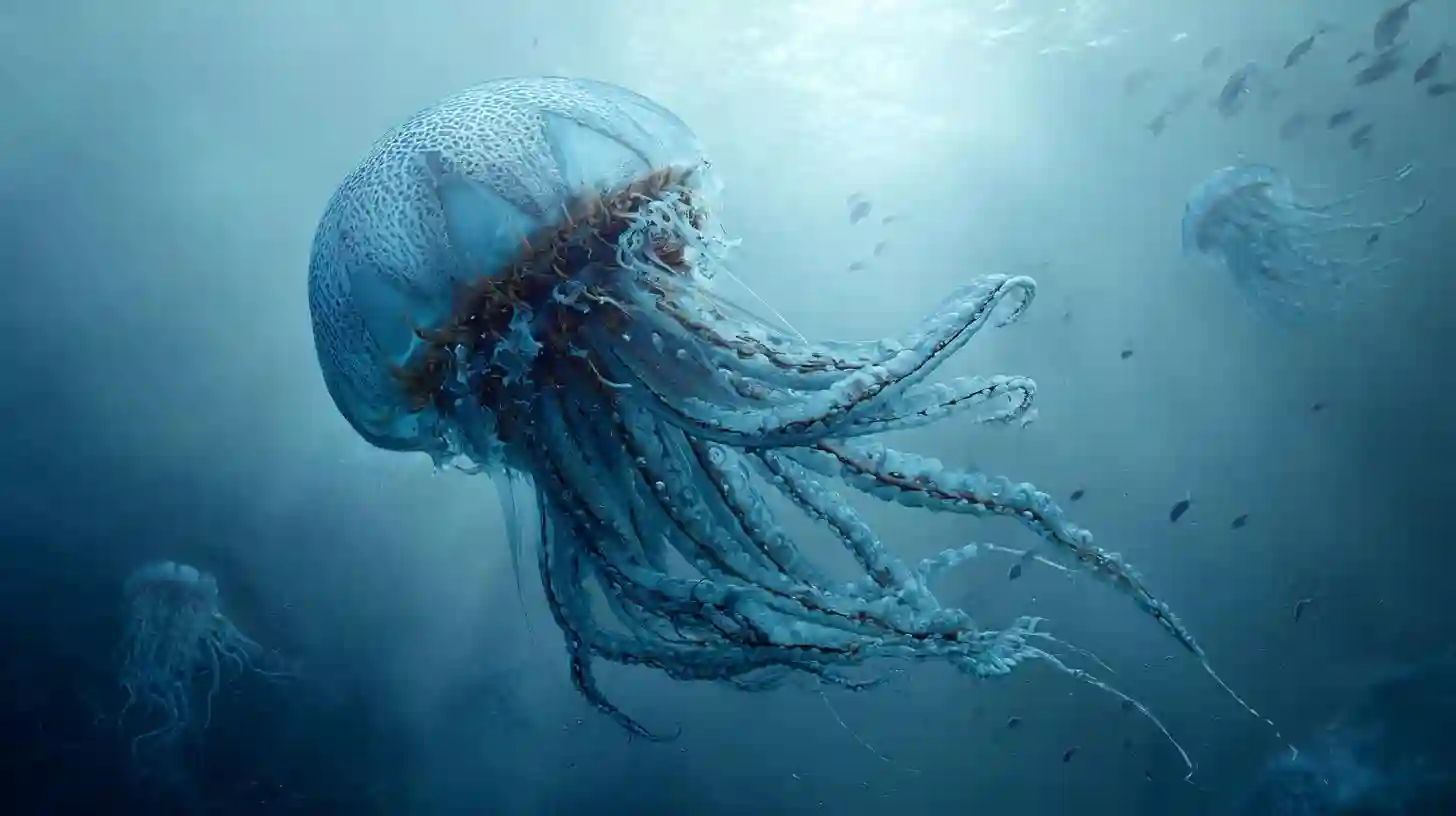
Deep-sea creatures have developed a range of remarkable adaptations that allow them to survive and thrive in one of the most extreme environments on Earth. The deep ocean is characterized by immense pressure, near-freezing temperatures, complete darkness, and a scarcity of food. Creatures that inhabit these depths have evolved specialized features to cope with these harsh conditions.
One of the most striking adaptations is the ability to withstand the crushing pressure of the deep sea. As depth increases, pressure grows exponentially, and organisms must have flexible or reinforced bodies to prevent injury or collapse. Many deep-sea creatures, such as certain fish and invertebrates, have developed soft, gelatinous bodies that can deform and adjust to the pressure. Others, like deep-sea squids, have specialized internal structures that help maintain their integrity under extreme pressure.
In addition to pressure, temperature is another significant challenge for deep-sea organisms. The temperature of the deep ocean is just above freezing, yet creatures living there need to remain active. To manage this, many deep-sea organisms have evolved cold-adapted enzymes and metabolic processes that function efficiently in low temperatures. Their bodies often conserve heat through specialized proteins and fats, which help to maintain cellular activity despite the chilling environment. Some species even rely on a unique biological antifreeze that prevents ice crystals from forming in their tissues.
With the absence of sunlight in the deep ocean, creatures have developed a variety of strategies for finding food and communicating. Many deep-sea organisms are bioluminescent, producing their own light through chemical reactions. This bioluminescence serves multiple purposes: it can attract prey, deter predators, or help individuals of the same species find each other in the dark. Some deep-sea fish also possess large eyes to detect faint light from bioluminescent organisms, giving them an advantage in the pitch-black environment.
Moreover, food scarcity is another challenge that deep-sea creatures must contend with. Most of the organic material that reaches the deep ocean comes from the surface, but this is limited. As a result, many creatures have adapted to survive on minimal food by having slow metabolisms and the ability to store large amounts of energy. Certain species can go without food for extended periods, allowing them to survive in an environment where nourishment is not always readily available.
Through these fascinating adaptations, deep-sea creatures have proven to be some of the most resilient life forms on Earth, capable of thriving in conditions that would be lethal to most organisms. Their ability to survive in such extreme environments highlights the incredible diversity and resourcefulness of life on our planet.