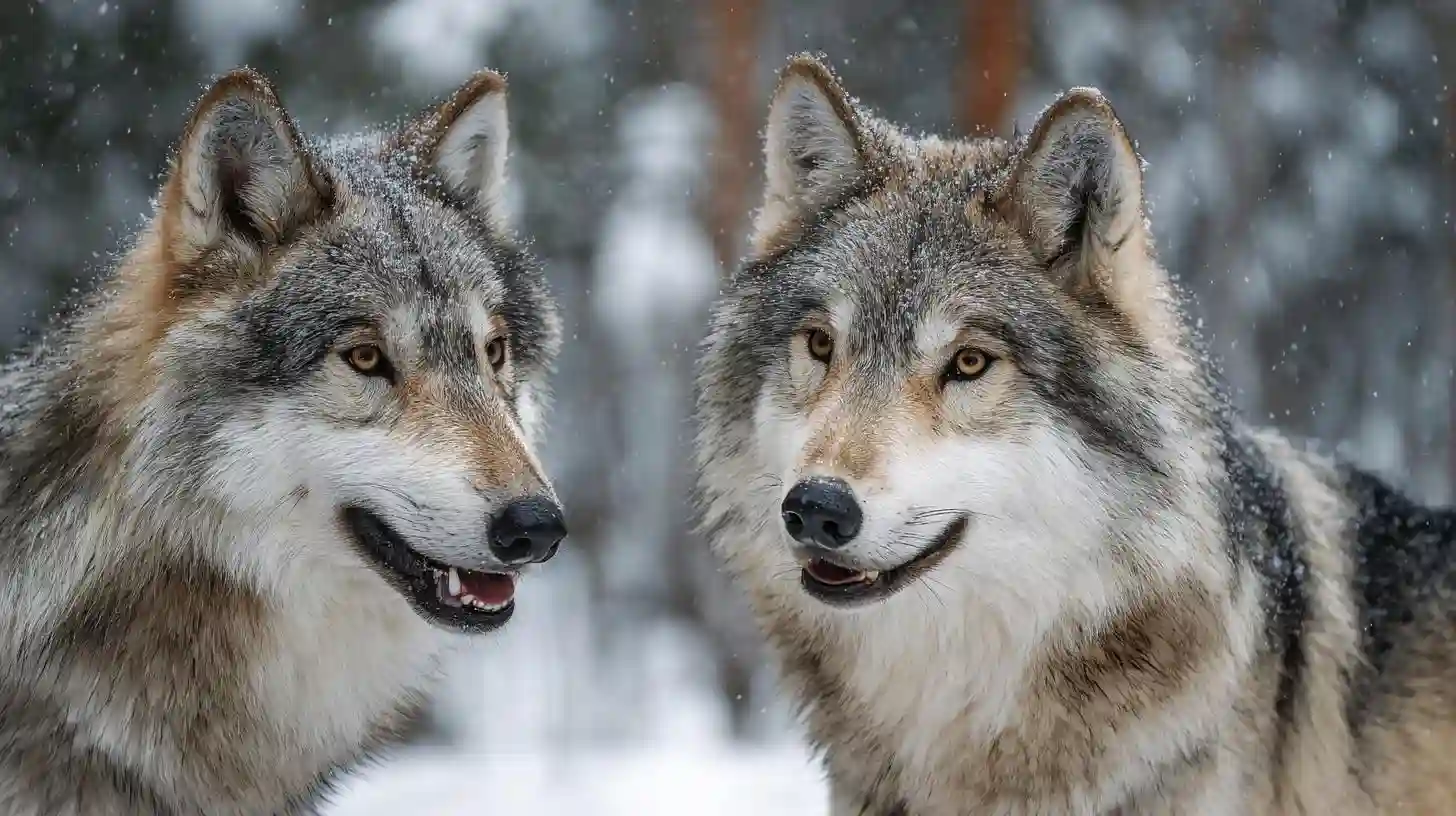
Gray wolves rely heavily on vocalizations to communicate with one another. One of the most prominent methods of communication is howling, which plays a vital role in coordinating group activities, maintaining territory boundaries, and reinforcing social bonds within the pack. Howls are often heard at night when wolves are most active, allowing them to reach long distances and signal to others in their group. The sound of a wolf's howl can carry for miles, making it an effective tool for communication across vast landscapes.
The howling serves various purposes, with one of its main functions being territory defense. Wolves live in packs and often stake out large areas as their own, marking these territories against other competing packs. Howling is a way of announcing their presence, sending a clear message to other wolves that this area is already claimed. It is not only a form of communication but also a warning that any attempt to intrude may result in a confrontation. In this sense, howls help prevent unnecessary conflict by setting clear boundaries.
Howls are also crucial for coordination within the pack. Wolves hunt and travel in groups, and the howling helps synchronize their movements. For example, when wolves are separated during a hunt or migration, howling can help reestablish contact and guide members back together. Additionally, howls play an essential role in maintaining pack cohesion. Through vocalizations, wolves can strengthen their social structure and ensure that all members of the pack are aware of each other’s locations and status.
Interestingly, not all howls are the same. Wolves may vary the pitch, duration, and frequency of their howls based on the situation at hand. A long, drawn-out howl might indicate a call for unity, while rapid and shorter bursts could signal urgency or the need for immediate attention. This variation adds complexity to wolf communication, making it adaptable to different situations. Thus, the howl is much more than just a vocalization; it is a multifaceted tool that plays an integral role in the survival and social dynamics of the gray wolf pack.