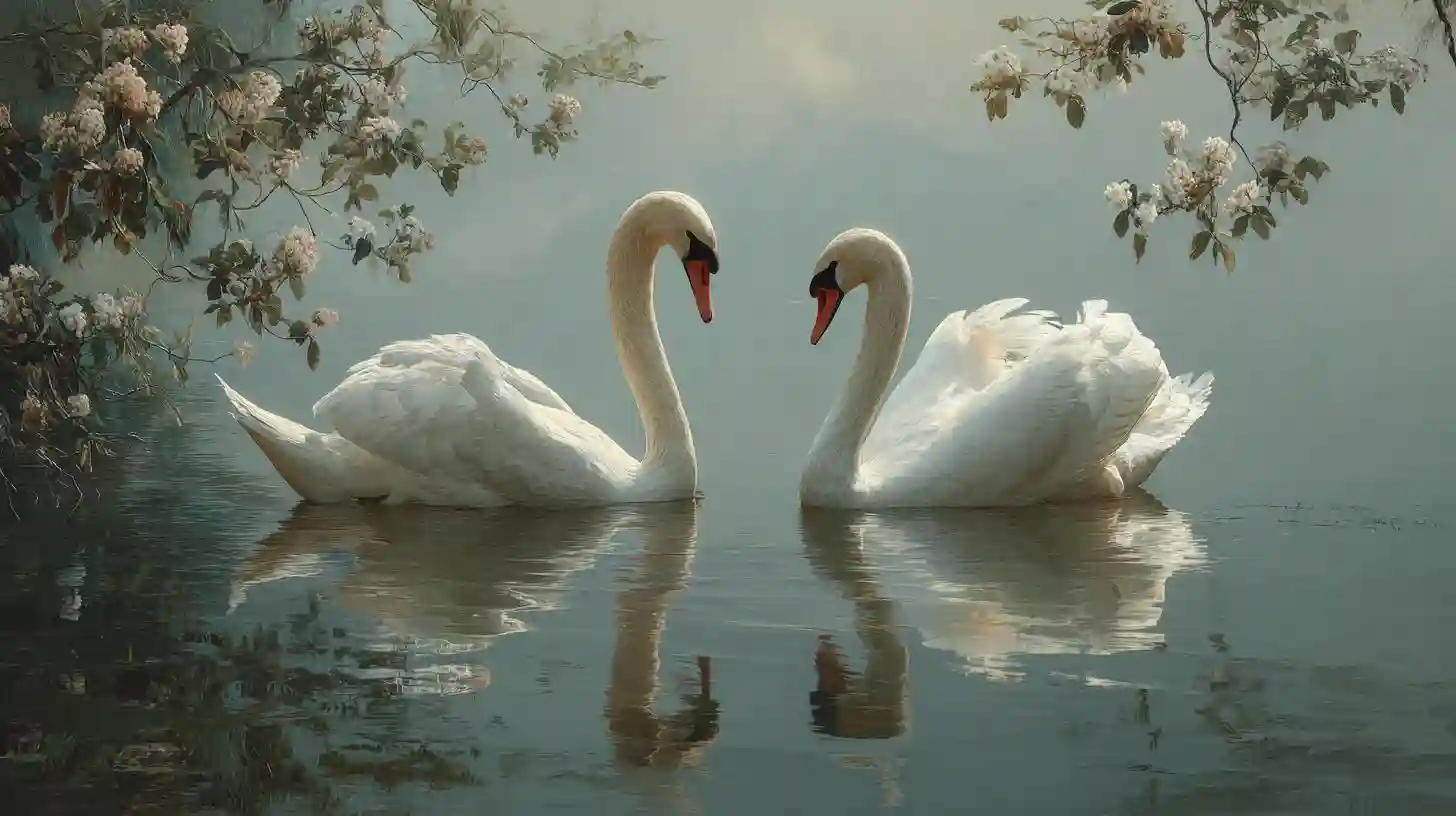
Swans have long held a significant place in the history of art, symbolizing a range of qualities from beauty and grace to mystery and transformation. In ancient civilizations, such as those of the Greeks and Romans, swans were often associated with the gods and featured prominently in mythology. The most famous depiction of a swan in classical mythology is the story of Zeus, who transformed into a swan to seduce the mortal Leda. This myth has been depicted in numerous paintings, sculptures, and later, in literary works, underscoring the bird’s ethereal and sometimes divine nature. During the Renaissance, swans became symbolic of purity and elegance, often appearing in paintings as a reflection of these values. The delicate and smooth lines of the swan's neck and its graceful form made it an ideal subject for artists seeking to convey ideals of beauty. Many of these paintings were set against idyllic, serene landscapes, where the swan appeared as a creature of peace and tranquillity. In Northern European art, particularly in the works of Dutch and Flemish painters, swans were sometimes shown in more realistic settings, perhaps emphasizing the contrast between their beauty and the often dark, tumultuous world around them. The bird's symbolism evolved over time, particularly in the Romantic period, when artists were drawn to the swan's symbolic potential for transformation and the interplay between life and death. In literature and visual art, swans came to represent more complex ideas, such as the fragility of beauty and the inevitability of change. In works like those of the Symbolists, swans were frequently used to evoke a sense of melancholy and transcendence, often in relation to the fleeting nature of human existence. The motif of the swan also found its way into ballet, where it became emblematic of grace, but also of the dark, tragic side of beauty. In the famous ballet "Swan Lake," the swan is not merely a symbol of beauty but also of tragic fate and the complexities of transformation. Swans continue to be used as symbols in contemporary art, maintaining their historical significance while evolving in meaning. Modern artists use swans to explore themes of environmental conservation, the fragility of ecosystems, and the continuing relevance of mythology in the modern world. Whether in the form of a traditional painting, a modern sculpture, or a digital artwork, the swan remains a powerful and evocative symbol, transcending time periods and artistic movements.