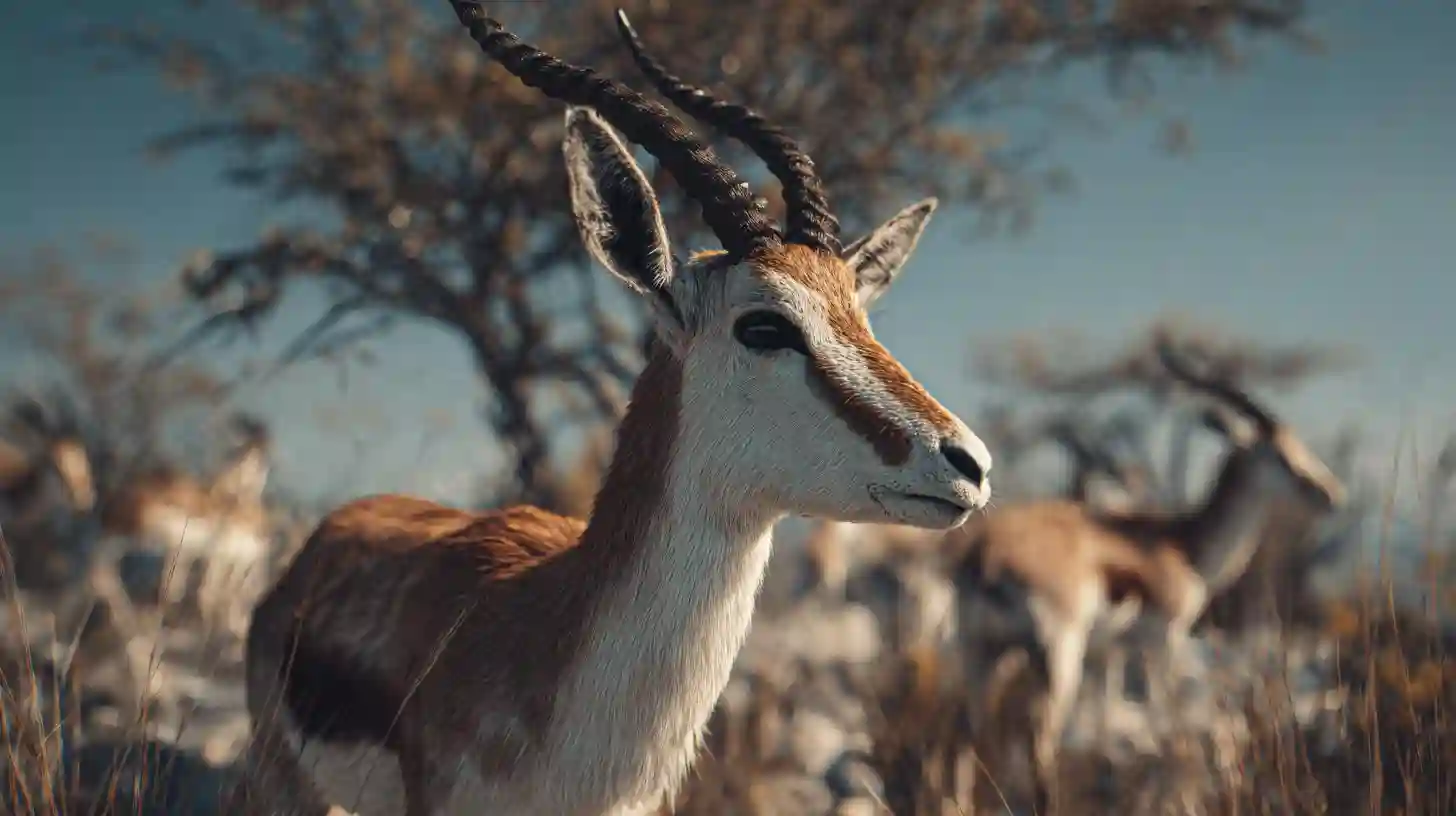
Antelopes are remarkable creatures that have evolved various adaptations to thrive in harsh environments. These animals are primarily found in savannas, deserts, and grasslands, where the climate can be extremely challenging, with little rainfall and intense heat. To survive, antelopes have developed specialized physical and behavioral traits that help them conserve water, regulate body temperature, and avoid predators. One of the most notable adaptations is their ability to survive on minimal water. Many species of antelopes are capable of going without drinking water for long periods, as they can extract moisture from the plants they consume. This ability is particularly beneficial in arid regions where water sources are scarce. Additionally, their digestive systems are highly efficient, allowing them to extract the maximum nutrients from the vegetation available, which is often dry and tough. Antelopes also have remarkable adaptations to control their body temperature. Some species possess a thick coat that helps protect them from the scorching sun during the day while providing insulation during cooler nights. Their coats are often light-colored, which helps to reflect the heat, while their skin underneath is designed to minimize heat absorption. Furthermore, antelopes have adapted to forage and move primarily during cooler times of the day, such as early morning or late evening, to avoid the extreme midday heat. Another key adaptation is their exceptional speed and agility. Antelopes are known for their ability to run at high speeds for short bursts, often reaching speeds that surpass many predators in their environment. This allows them to escape quickly when threatened. Their strong and muscular legs, along with keen eyesight, provide them with the ability to detect danger from a great distance. Some species also exhibit specific social behaviors, such as living in herds, which provides safety in numbers. In these groups, individuals often take turns keeping watch for predators while others graze. The cooperative nature of these herds increases their chances of survival in areas with high predator populations. Finally, antelopes have also adapted to the challenges of scarce food by being selective feeders. They can distinguish between different types of vegetation and prefer the more nutritious options, even if they are harder to find. This selective feeding behavior allows them to maintain their energy levels and remain healthy in environments where food is limited.