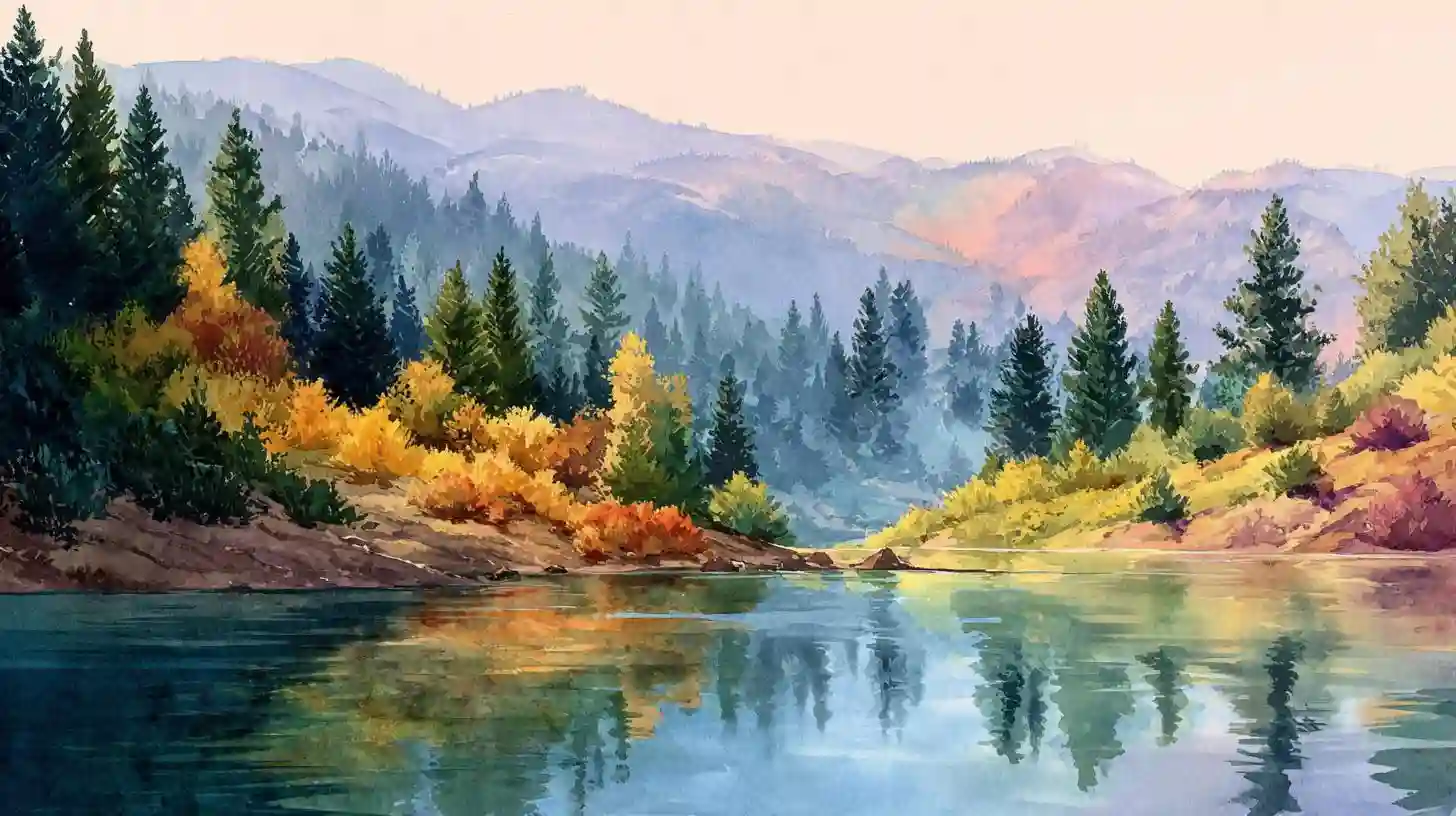
Color theory plays a crucial role in watercolor landscapes, helping artists create harmonious compositions that evoke mood and atmosphere. Understanding how different colors interact with one another is essential for achieving depth, contrast, and balance in a painting. The foundational principles of color theory, including the color wheel, primary, secondary, and tertiary colors, guide artists in making informed decisions about color choices. In watercolor landscapes, the blending of colors creates smooth transitions, a characteristic feature of the medium. The use of warm and cool tones adds dimension, allowing artists to depict light and shadow in a natural way. For instance, warm colors like reds, oranges, and yellows can create the illusion of light, often used to depict sunsets, sunrises, or autumn landscapes. Conversely, cool colors such as blues, purples, and greens give a sense of tranquility and distance, making them ideal for depicting skies, water, and distant mountains. Complementary colors, which are located opposite each other on the color wheel, can be used strategically to create contrast and vibrancy. When placed side by side, these colors enhance each other's intensity, making the overall composition more dynamic. Analogous colors, which sit next to each other on the wheel, are often used to produce a more subtle, unified effect. In watercolor painting, the transparent nature of the medium allows colors to blend naturally, creating softer transitions between hues. This blending is particularly useful in landscape painting, where the sky, water, and land often merge seamlessly. The artist can layer pigments to build up the desired intensity, gradually adjusting the balance of colors until the landscape comes to life. Additionally, understanding the emotional impact of color is important. Warm colors tend to evoke feelings of energy and warmth, while cool colors bring a sense of calm and serenity. The balance between these color families can significantly affect the emotional tone of the piece. By applying color theory, watercolor artists can master the delicate art of portraying the beauty of the natural world, guiding the viewer’s eye through a scene and eliciting a specific emotional response.