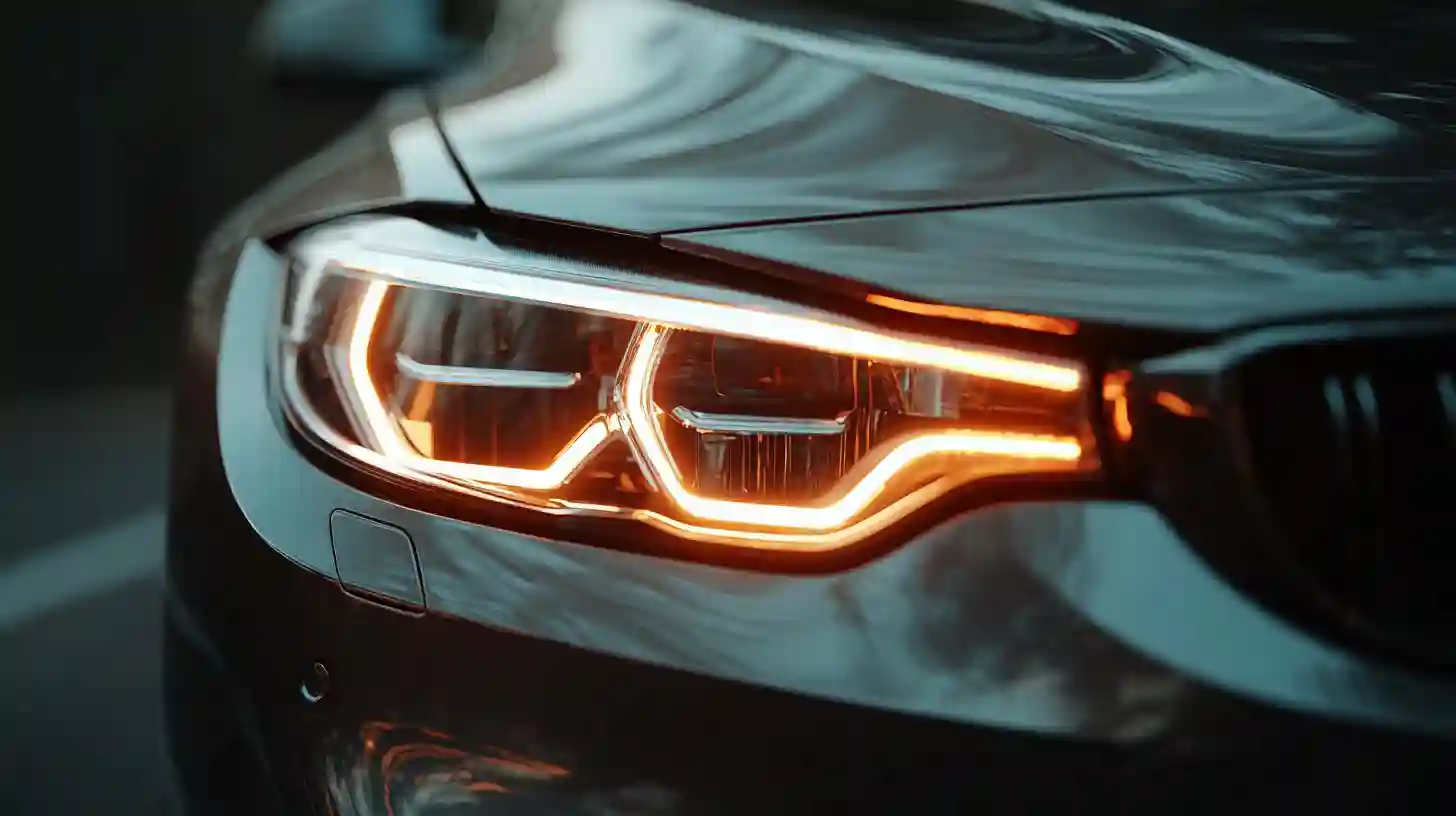
Smart headlights are revolutionizing the way vehicles interact with their environment, especially as the automotive industry moves towards autonomous driving technologies. These advanced lighting systems are designed to automatically adjust to changing road conditions, enhancing both safety and driving comfort. Adaptive lighting is one of the key features of smart headlights, which allows the headlights to respond dynamically to factors like speed, steering angle, and the vehicle's elevation. This means that as a driver turns a corner, the lights will pivot to illuminate the direction of travel, reducing blind spots and improving visibility. This adaptability is crucial for nighttime driving, where visibility is often limited, and the road layout might not be easily seen with traditional headlights.
In the context of autonomous vehicles, smart headlights play a more significant role. They are integrated with other sensors and systems that help the vehicle navigate and understand its surroundings. With autonomous vehicles relying on a combination of radar, cameras, and LIDAR, the smart headlights can collaborate with these technologies to enhance vehicle perception and communication. For example, smart headlights can alert pedestrians and other vehicles about the vehicle's intentions or indicate when the car is about to make a turn. This communication is essential for creating a safer environment for both the vehicle occupants and those around them. Additionally, smart headlights can adjust their intensity and beam patterns in real-time to minimize glare, making driving safer for all road users.
Furthermore, these headlights can optimize energy use, ensuring that the light intensity is appropriate for the road conditions while not draining the vehicle's power unnecessarily. With the rise of electric vehicles, energy efficiency becomes even more important, and smart headlights contribute by reducing the strain on the battery. As technology continues to evolve, the integration of intelligent lighting systems in autonomous vehicles is expected to improve significantly, offering a smarter, safer driving experience.