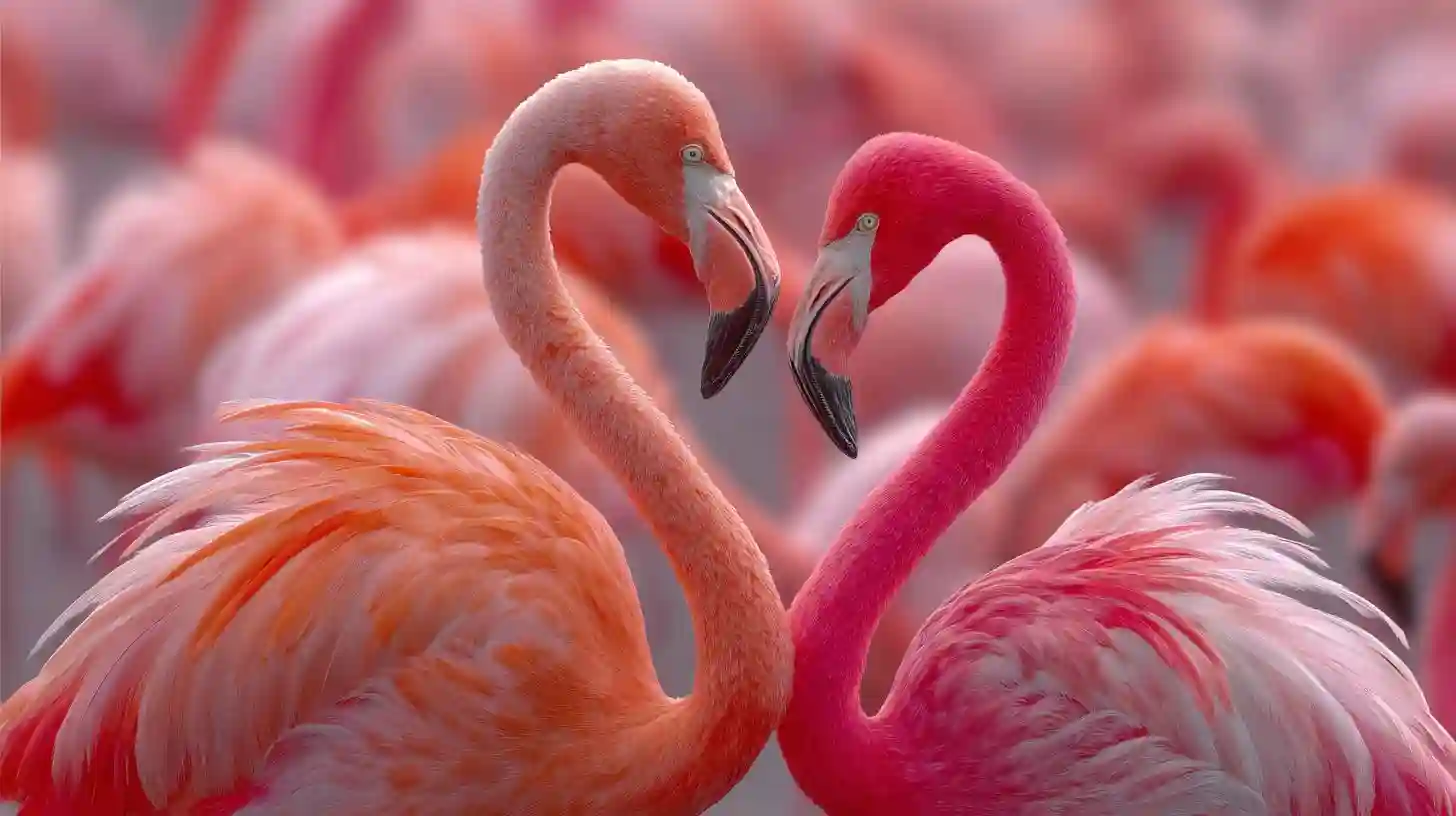
Flamingos are known for their striking pink plumage, and this vibrant color plays a significant role in their courtship rituals. The rich pink hue is not just a visual spectacle but a symbol of the bird's health, strength, and genetic fitness. During the mating season, male flamingos engage in elaborate displays to attract females, and color becomes one of the primary signals they use to communicate their suitability as a mate. The intensity of the male’s pink coloration is influenced by the carotenoid pigments found in their diet, particularly from algae and crustaceans. A bright, vivid color indicates that the male has access to high-quality food sources, a factor that females instinctively associate with good health and the ability to provide for potential offspring.
In the wild, flamingos often gather in large colonies, and the males put on a show to stand out from the crowd. This display usually involves a series of synchronized movements, including head bobbing, wing flapping, and stretching their necks toward the sky, while also flaunting their brightly colored feathers. The more intense the color, the more attractive the male appears to the females. Females observe these behaviors carefully, evaluating the males not just for their performance, but also for their coloration, as it reflects their overall vitality. This visual display of color thus plays a critical role in the pair-bonding process, where the male’s ability to showcase vibrant feathers may directly impact his chances of attracting a mate.
Interestingly, flamingos undergo a gradual change in their feather color throughout their lives, with younger flamingos having pale, almost white plumage. As they mature and begin to consume a diet rich in carotenoids, their feathers gradually turn the iconic pink color that is central to their courtship behavior. Therefore, color in flamingo courtship is not just about beauty, but about signaling health, age, and reproductive viability, making it an essential aspect of their mating strategy.