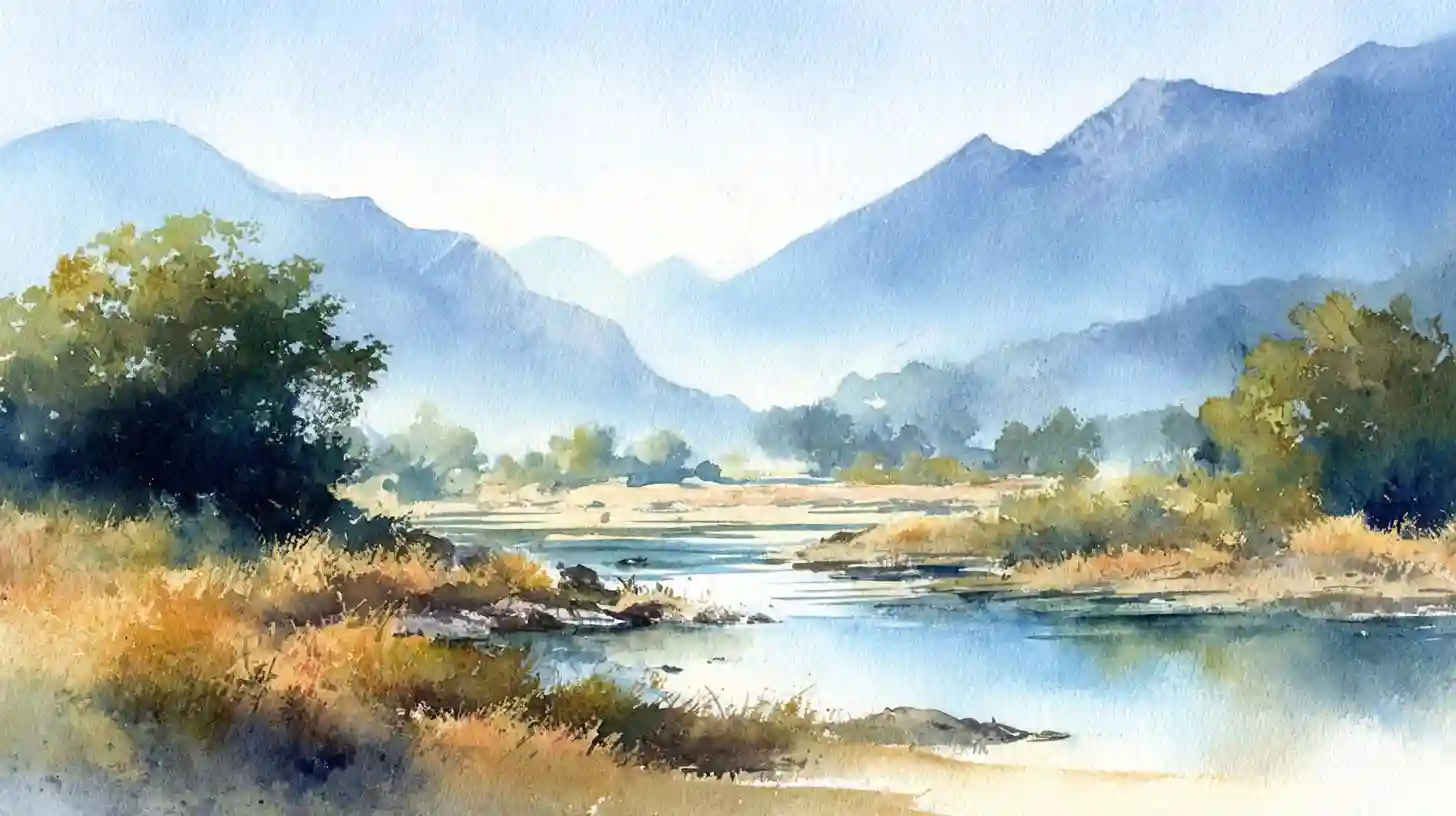
Light and shadow are essential elements in watercolor landscape paintings, serving as the driving forces behind creating depth, atmosphere, and emotion. When working with watercolors, the interplay of light and shadow becomes even more significant because of the medium’s translucent nature. Unlike oils or acrylics, watercolor allows light to penetrate through layers of pigment, which enhances the feeling of luminosity and vibrancy. Artists often use the natural behavior of light and shadow to direct the viewer’s attention to specific areas of the painting, guiding them through the scene. The contrast between light and shadow can make a simple landscape feel dynamic and alive. Shadows provide a sense of volume, defining the form and structure of objects within the scene. A tree, a building, or a distant mountain range becomes more tangible through the careful application of shadows, which give the painting its three-dimensional quality. Without this contrast, the elements of the landscape might appear flat and lifeless. Light, on the other hand, plays a vital role in capturing the time of day, the weather, and the mood of the landscape. The direction and intensity of light sources—whether it’s the soft glow of morning sun, the harsh midday light, or the cool, diffused light of dusk—help convey the emotional tone of the painting. The artist often leaves areas of the paper untouched, allowing the white of the paper to shine through as natural light, creating highlights that enhance the contrast with the shadowed areas. This delicate balance requires a deep understanding of the natural world, as well as technical skill in manipulating the watercolor medium. The flow of water, the blending of pigments, and the use of negative space all contribute to the artist’s ability to capture both the light and dark aspects of the landscape. Through the strategic use of light and shadow, watercolor artists transform simple scenes into captivating works of art, evoking a range of emotions and allowing viewers to connect with the natural world in a more profound way.