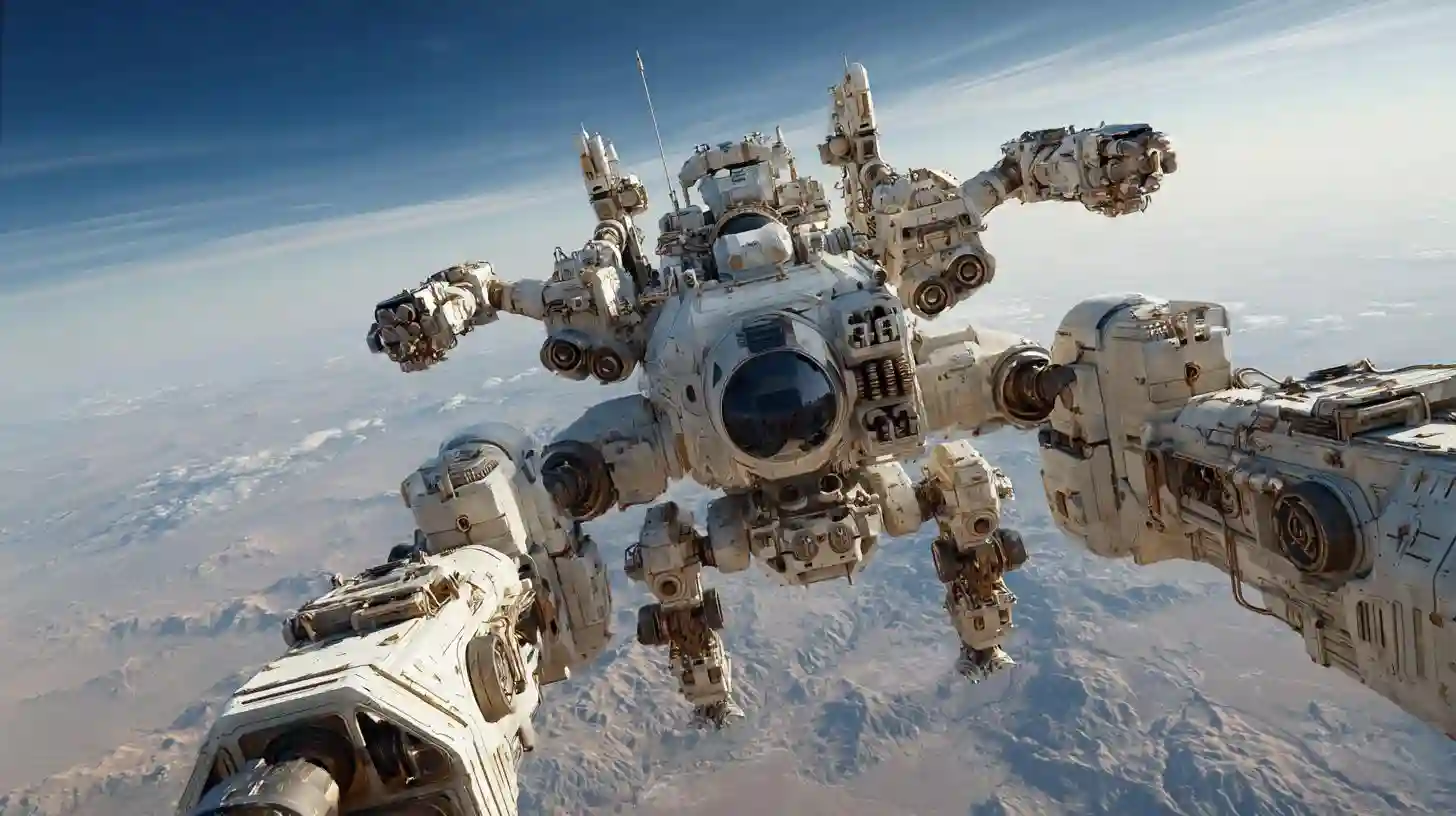
Robotics plays a crucial role in the advancement of space exploration, significantly enhancing the capabilities of space missions. In environments where human presence is limited or impossible, robots become the primary tool for gathering data, conducting experiments, and performing tasks that are essential for the success of a mission. These robotic systems are designed to operate in extreme conditions, such as the vacuum of space, the harsh temperature fluctuations, and the absence of gravity, all of which make it difficult for humans to carry out complex operations.
One of the primary functions of robotic technology in space exploration is conducting scientific research. Rovers, such as those used on Mars, are equipped with advanced sensors and cameras to analyze the planet's surface, search for signs of water, and collect soil samples. These rovers can traverse rugged terrain, sending back valuable data about the planet's geology and atmosphere. Without these robots, many of the insights we have about distant celestial bodies would remain out of reach.
Robotic arms have also become a key component in the construction and maintenance of spacecraft and space stations. These arms, often mounted on orbiting platforms like the International Space Station, are capable of moving heavy objects, installing equipment, and even performing repairs. They extend the lifespan of space stations by allowing for in-space maintenance that would otherwise require a human spacewalk, which is complex and dangerous.
In addition, robots are essential in satellite servicing and repair. Satellites, which are integral to communication, weather forecasting, and global navigation systems, can malfunction or suffer damage over time. Robots equipped with precision tools can visit these satellites, perform necessary repairs, or replace malfunctioning components, ensuring the continuous functionality of vital space infrastructure.
The potential for robotics in space exploration continues to grow with advancements in artificial intelligence, machine learning, and autonomous systems. These developments enable robots to make real-time decisions and carry out tasks with minimal human oversight, further expanding the possibilities of space missions. As we look to explore more distant parts of the solar system and beyond, robotics will remain at the forefront of our ability to push the boundaries of human knowledge and capability in space.