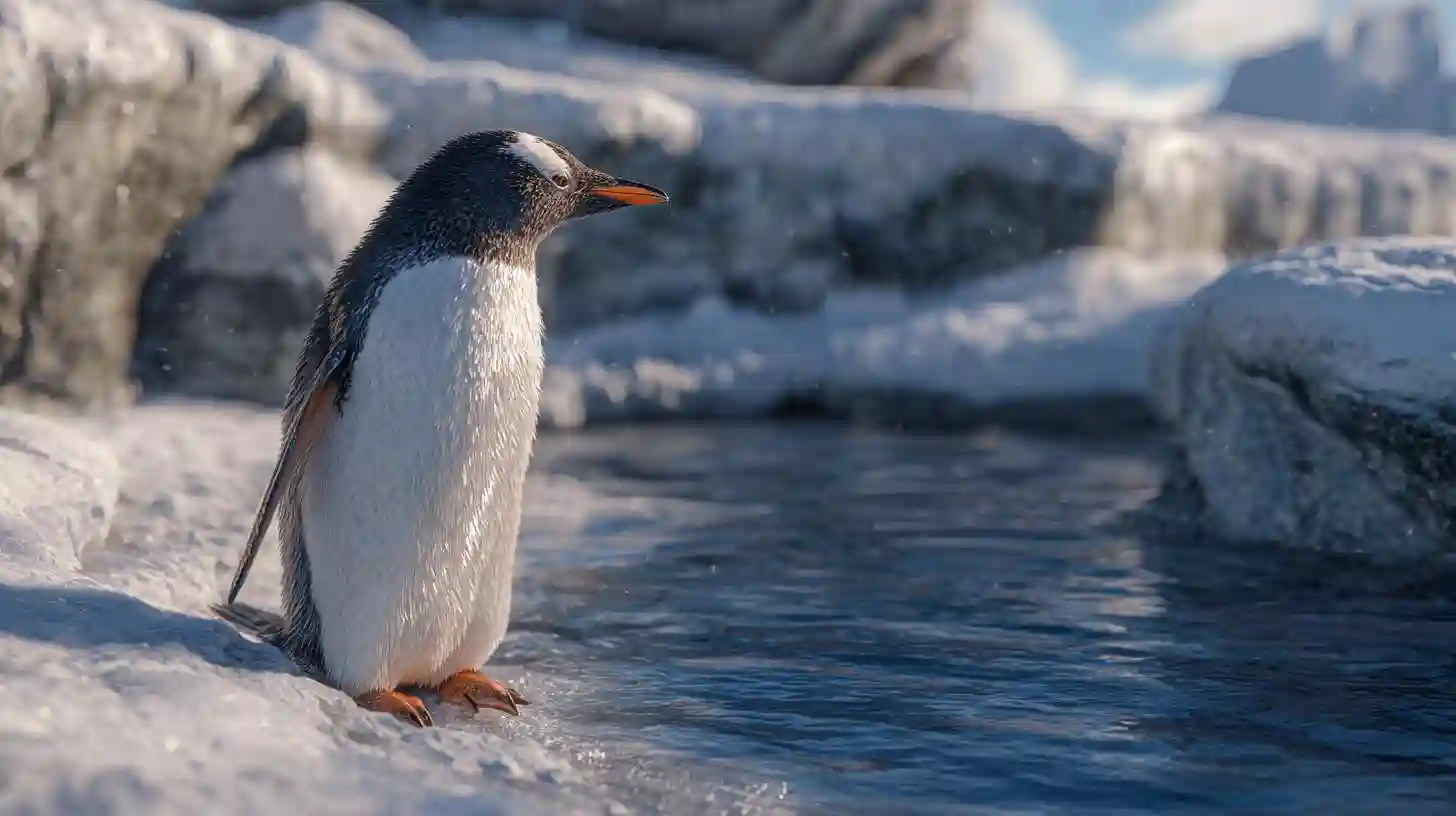
Penguins are fascinating creatures that thrive in some of the harshest cold environments on Earth. Their physical and behavioral adaptations enable them to survive and even thrive in freezing temperatures. One of the most prominent adaptations is their dense, water-repellent feathers. These feathers provide excellent insulation, trapping air close to their bodies to keep them warm while also keeping water away from their skin. Penguins have a unique layer of fat beneath their skin, known as blubber, which acts as both insulation and an energy reserve during times when food is scarce. This layer helps them maintain their body temperature even in sub-zero waters. Additionally, penguins have specialized blood vessels that allow them to regulate heat loss. Blood flow to the extremities is minimized in cold conditions, which prevents excessive heat loss through their flippers and feet. Their bodies are compact and streamlined, with small extremities that minimize surface area, reducing the risk of heat loss. The shape of their wings, which have evolved into flippers, is also well-suited for swimming in icy waters. Their flippers are rigid and serve as powerful tools for propulsion underwater, allowing them to move swiftly through the cold ocean to catch fish. Penguins have remarkable behavioral adaptations as well. They huddle together in large groups to conserve warmth, often forming dense clusters that help them stay warmer during the frigid Antarctic winters. Their communal behavior extends to nesting, where they rely on each other for protection from the elements. During breeding seasons, penguins have adapted to the extreme cold by using their bodies to protect their eggs from the icy ground, often keeping them warm by placing them on top of their feet. These unique adaptations allow penguins to not only survive but to thrive in some of the coldest regions on the planet.