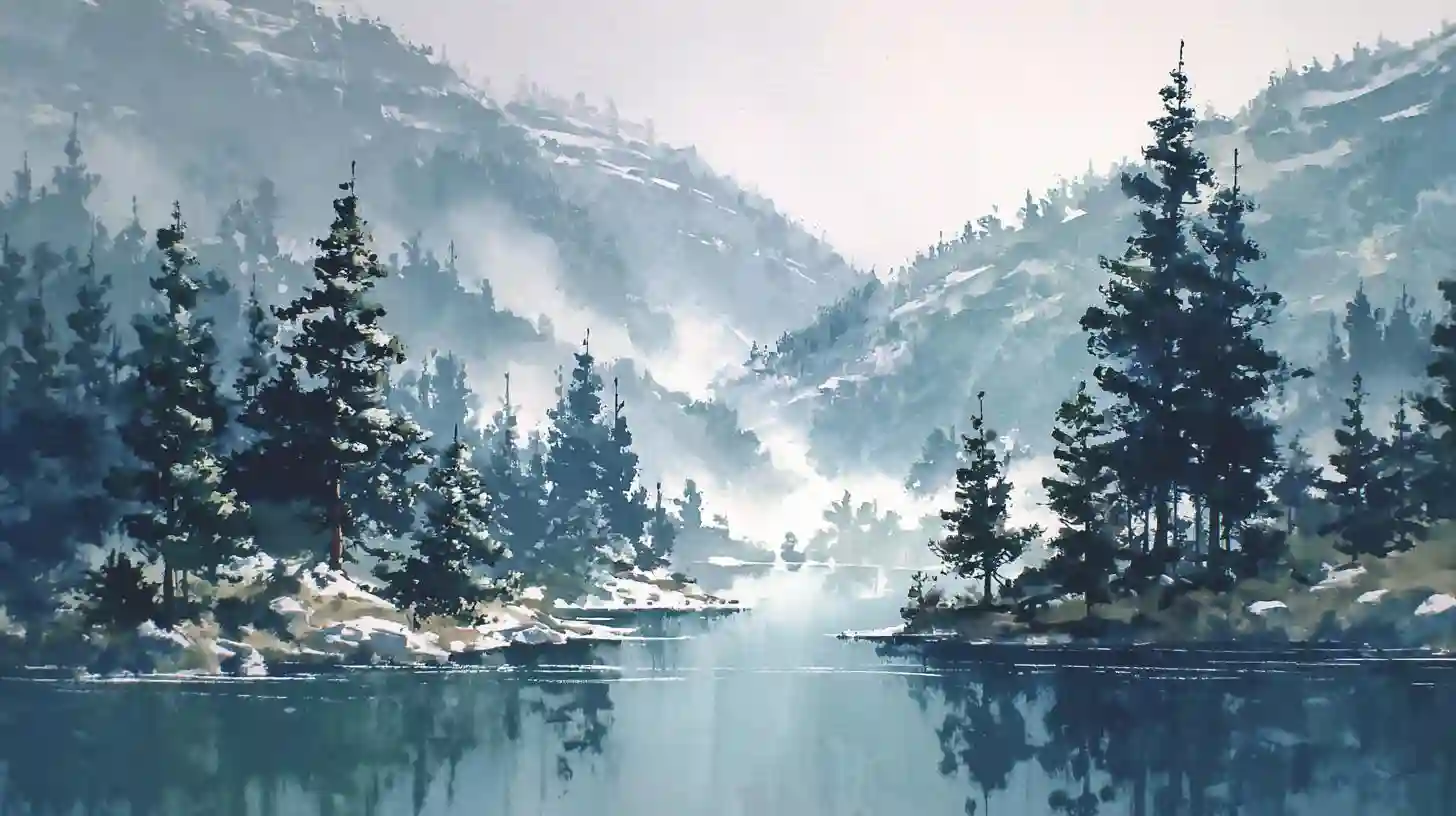
Negative space in watercolor landscapes refers to the empty or unpainted areas in a composition that help define the subject and overall structure of the artwork. It plays a crucial role in guiding the viewer's eye and enhancing the visual impact of a painting. By skillfully using negative space, artists can create a sense of depth, balance, and harmony within a landscape. The beauty of negative space lies in its ability to draw attention to the positive elements of a scene, such as trees, mountains, or rivers, without overcrowding the composition. In watercolor, where blending and soft transitions of color are key features, negative space is especially effective in making the subject stand out and preventing the painting from feeling too busy or cluttered. One of the challenges of using negative space in watercolor is the medium's fluidity. The artist must carefully plan the areas of blank space while allowing the paint to flow naturally, creating soft edges and organic shapes. It requires a delicate balance between the painted and unpainted portions of the paper. Negative space in landscapes can also convey mood or atmosphere. For instance, a vast, empty sky may evoke a sense of solitude or tranquility, while the absence of detail in distant hills might suggest a sense of mystery or vastness. When used intentionally, negative space can help reinforce the emotional tone of a scene. By leaving certain elements undefined, the artist invites the viewer to engage more actively with the piece, imagining what might lie beyond the boundaries of the painted areas. This technique not only gives the landscape a sense of openness but also adds a layer of interpretation, allowing each viewer to experience the artwork in their own way.