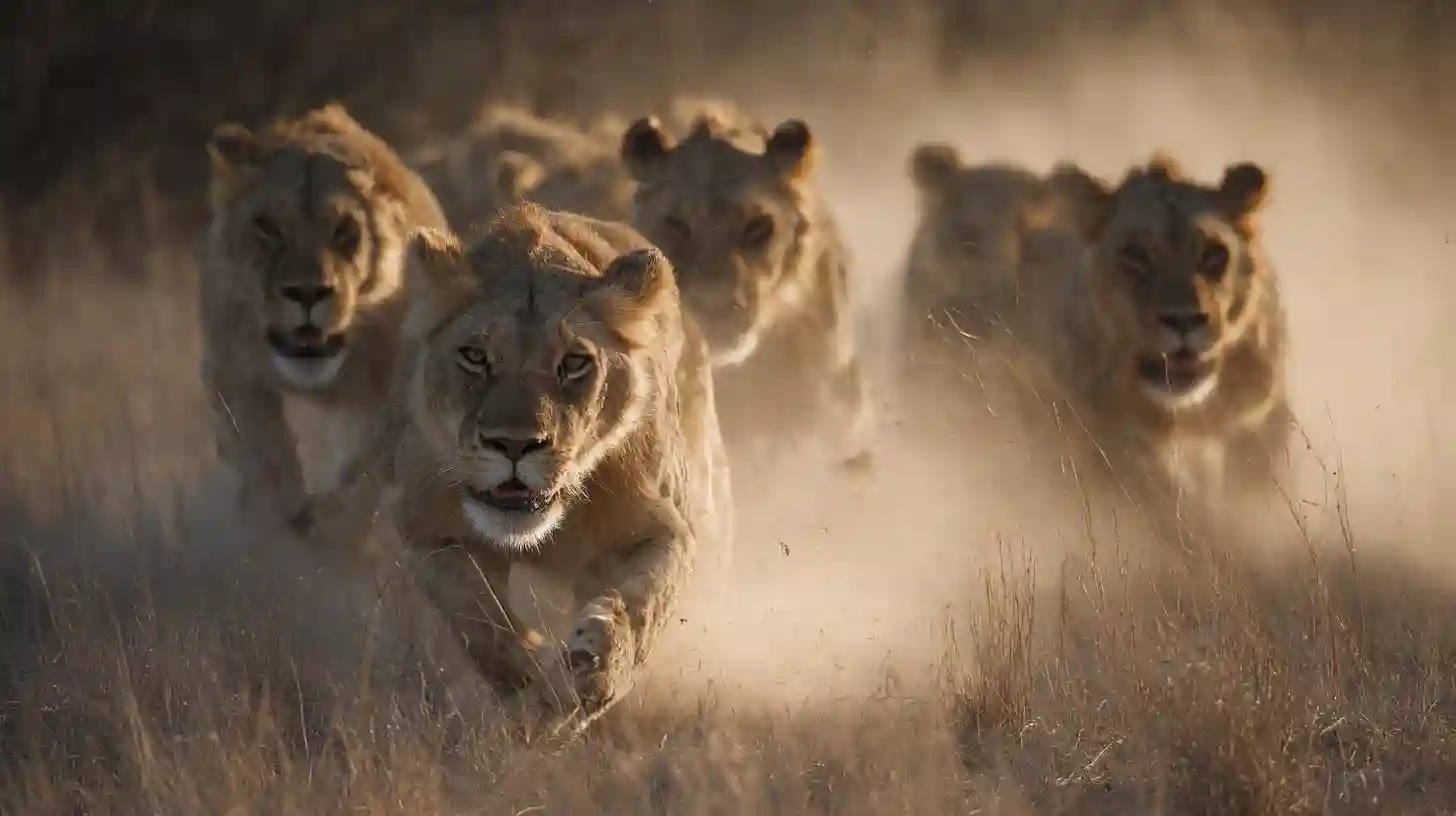
Group dynamics play a crucial role in the hunting strategies of lions, affecting their success and efficiency in capturing prey. Lions, unlike most other big cats, rely heavily on collaboration to bring down larger prey, and the way they interact within their prides influences the outcomes of these hunts. A lion pride consists of related females, along with a few males, and their social structure is built around cooperation. The females, who do the majority of the hunting, use coordinated strategies that involve a mix of roles and positions to trap and ambush their prey. The group works together, using the landscape and their knowledge of the prey’s behavior to increase the chances of a successful kill.
The hunting strategy begins with the pride members selecting a target, typically a weaker or isolated animal from the herd. Each lion takes on a specific role: some act as blockers to prevent the prey from escaping, while others stealthily approach from different angles. The lions' ability to communicate through body language and subtle signals is critical to the coordination needed for the hunt to succeed. When the prey is close enough, the lions pounce in unison, overwhelming the target with their sheer numbers and strength. This synchronization, enabled by strong group dynamics, is often the difference between a failed hunt and a successful one.
The males in the pride also play an important part, though their role is more focused on protecting the pride and helping with large prey or challenging situations. They may not be as involved in the day-to-day hunting, but when the prey is particularly tough or large, their presence is needed. The dominance of the males in the pride ensures that they can maintain control over the hunting grounds and prevent challenges from rival prides, further supporting the group's overall success.
The ability of lions to work together effectively is a key factor that differentiates them from solitary hunters like tigers. The social bonds within the pride allow for a level of cooperation that ensures the survival and prosperity of the group as a whole. Even as individuals, lions rely on each other to hunt effectively, using their group dynamics to create strategies that no single lion could accomplish alone. This level of collaboration enables them to tackle prey that would be impossible for them to catch individually, showcasing the power of social cooperation in the wild.