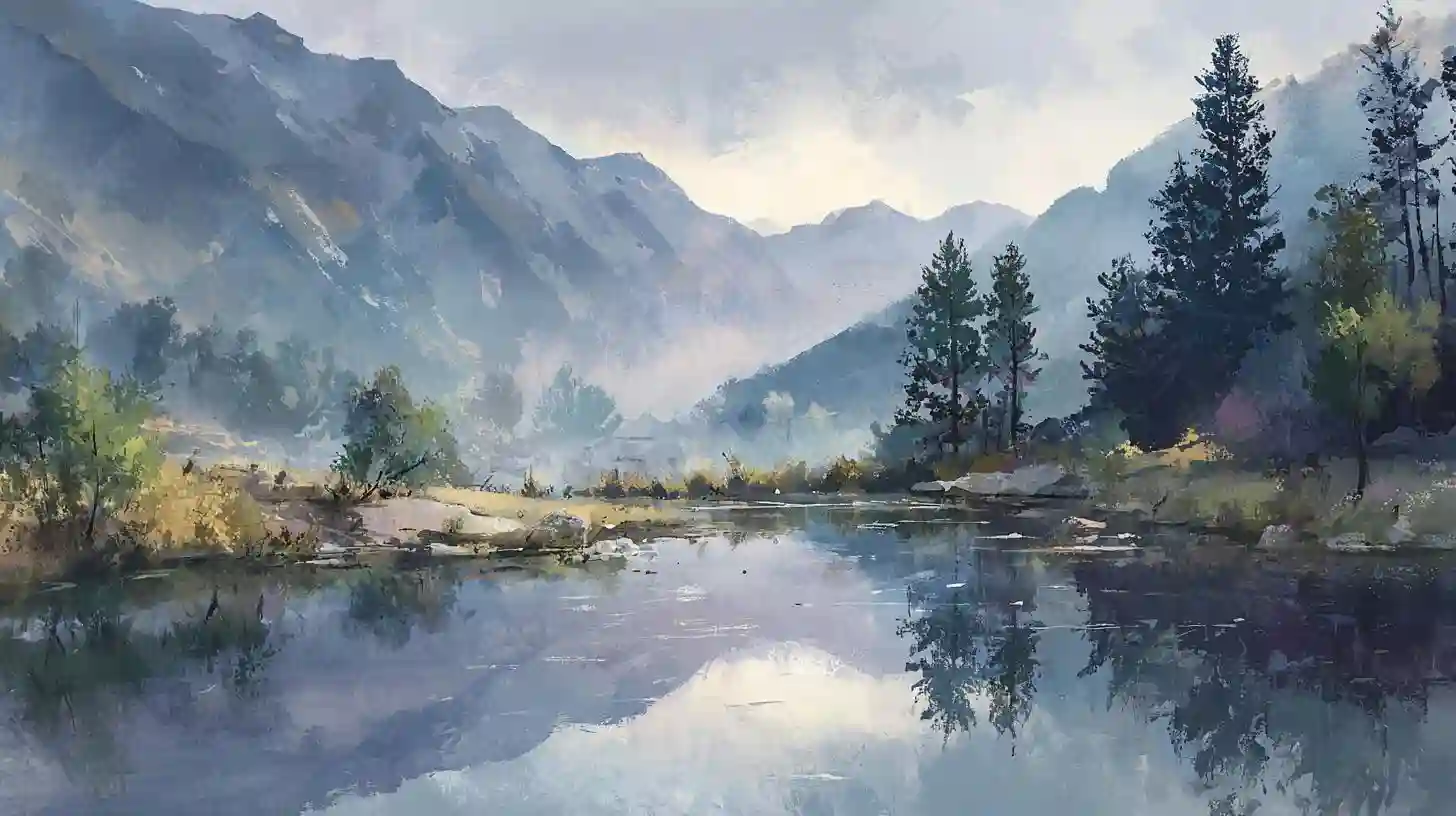
One common mistake in watercolor landscapes is overworking the paint. Many beginners tend to layer too many washes, which can lead to a muddy appearance, especially when the paint is still wet. This happens because the pigments mix too much, losing the vibrancy that watercolor is known for. To fix this, it's important to let each layer dry before adding another. This gives you control over the color and texture, ensuring that each wash remains fresh and transparent. Another frequent error is using too much water in the mix, which can make the colors too light or cause them to bleed uncontrollably. A better approach is to find a balance between water and pigment, ensuring that the colors are rich but not overpowering. This can be achieved by practicing with different ratios of water to pigment until you find what works best for your style.
Lack of proper contrast is also a common problem in watercolor landscapes. Without sufficient contrast between light and dark areas, a painting can appear flat and lack depth. This can be corrected by observing the light source carefully and using stronger dark tones in areas of shadow. Adding darker shades to the foreground and leaving the background lighter can create a sense of space and distance. Another mistake is failing to account for the natural flow of the paint. Watercolors are inherently fluid, and sometimes, artists try to control the paint too much. This can make the painting feel stiff. Embracing the fluidity of watercolor allows for a more dynamic and natural effect.
Many watercolorists also struggle with poor composition, especially in landscape scenes. An overcrowded scene with too many elements can lead to a disorganized look. To fix this, it’s helpful to plan the composition first, deciding on a focal point and using leading lines to guide the viewer's eye through the painting. It's also important to leave some space open rather than trying to fill every inch with detail. Sometimes, less is more. Finally, not respecting the white spaces in watercolor is another frequent mistake. These white areas are essential for creating highlights and adding life to the piece. Many beginners fill in all the space, forgetting to leave areas unpainted for those natural highlights, which can make the painting feel lifeless. Learning to use negative space is key to creating a balanced and lively landscape painting.