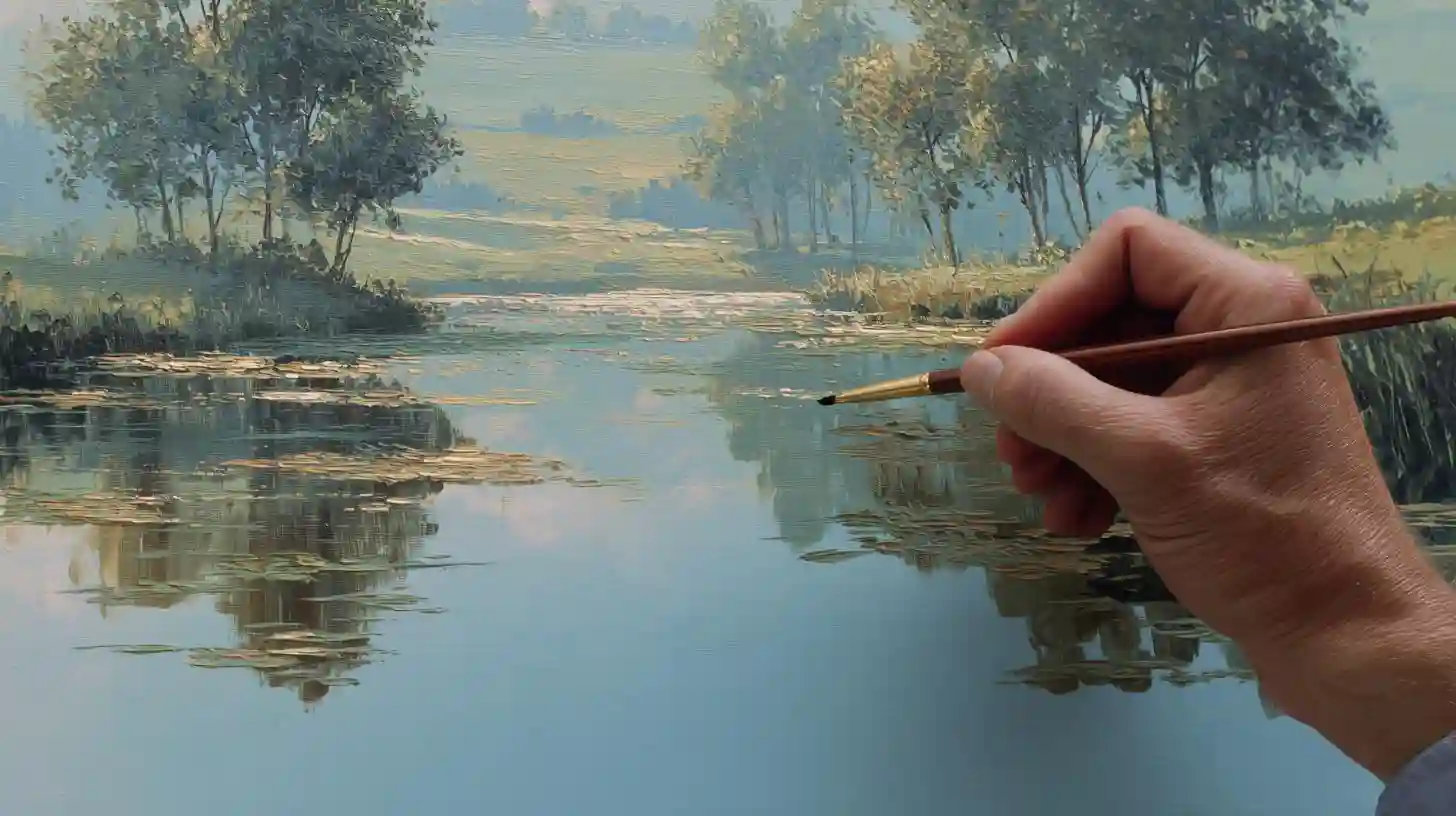
To paint water reflections in watercolors, start by preparing your materials. Choose a high-quality watercolor paper, preferably cold-pressed, which has enough texture to hold the paint well. Have a variety of brushes, including a flat brush for broad strokes and a fine-tipped one for details. You'll also need clean water, a palette for mixing colors, and a selection of watercolor paints.
Begin by sketching the scene lightly on your paper. Focus on the key elements that will appear in the water, such as trees, buildings, or mountains. Remember, reflections are not exact replicas of the objects but rather distorted and softened versions of them. The reflections are generally more diffused, often with less detail than the objects themselves.
Once the basic sketch is in place, it’s time to wet the area where the water will be. Using a clean brush, apply a light wash of water over the lower portion of the paper, ensuring it’s evenly moist but not soaking. This will allow the watercolor pigments to flow and blend in a way that mimics the natural movement of water.
Start painting the objects above the water, using colors that will reflect in the water below. Keep the colors a bit lighter and more subdued than the original objects, as water tends to soften and mute colors. Allow the colors to blend naturally, creating gentle transitions between shades. For a more realistic look, let the paint bleed slightly into the wet area beneath it, making the reflection look like it’s softly rippling on the surface.
For the water reflection itself, consider the direction of the light. Shadows in the water will be darker, while areas reflecting the sky or distant elements might be lighter. It’s crucial to capture the movement of the water by painting horizontal strokes in the reflection. Use soft brushstrokes to create gentle waves and undulations that will give the water a natural flow.
You can add details like ripples or disturbances in the water by lightly dragging a damp brush in horizontal strokes across the reflection. This mimics the effect of wind or movement on the water’s surface. Be mindful not to overwork the water area; the beauty of watercolor comes from its ability to retain lightness and transparency.
When painting objects like trees, use more pigment in the areas that are closer to the water and lighter pigment where the reflection fades into the deeper part of the water. This fading effect will give the appearance of depth, making it seem like the reflection is stretching further down into the water.
To finish, add subtle ripples or lines with a dry brush or a small flat brush to mimic the effect of a calm breeze or slight current. This step is important to avoid overly static reflections. A few final touches on the objects themselves can be done if necessary to enhance contrast, but avoid overly sharp lines or high contrast in the reflection. Let the blending and diffusion in the water create the harmony.