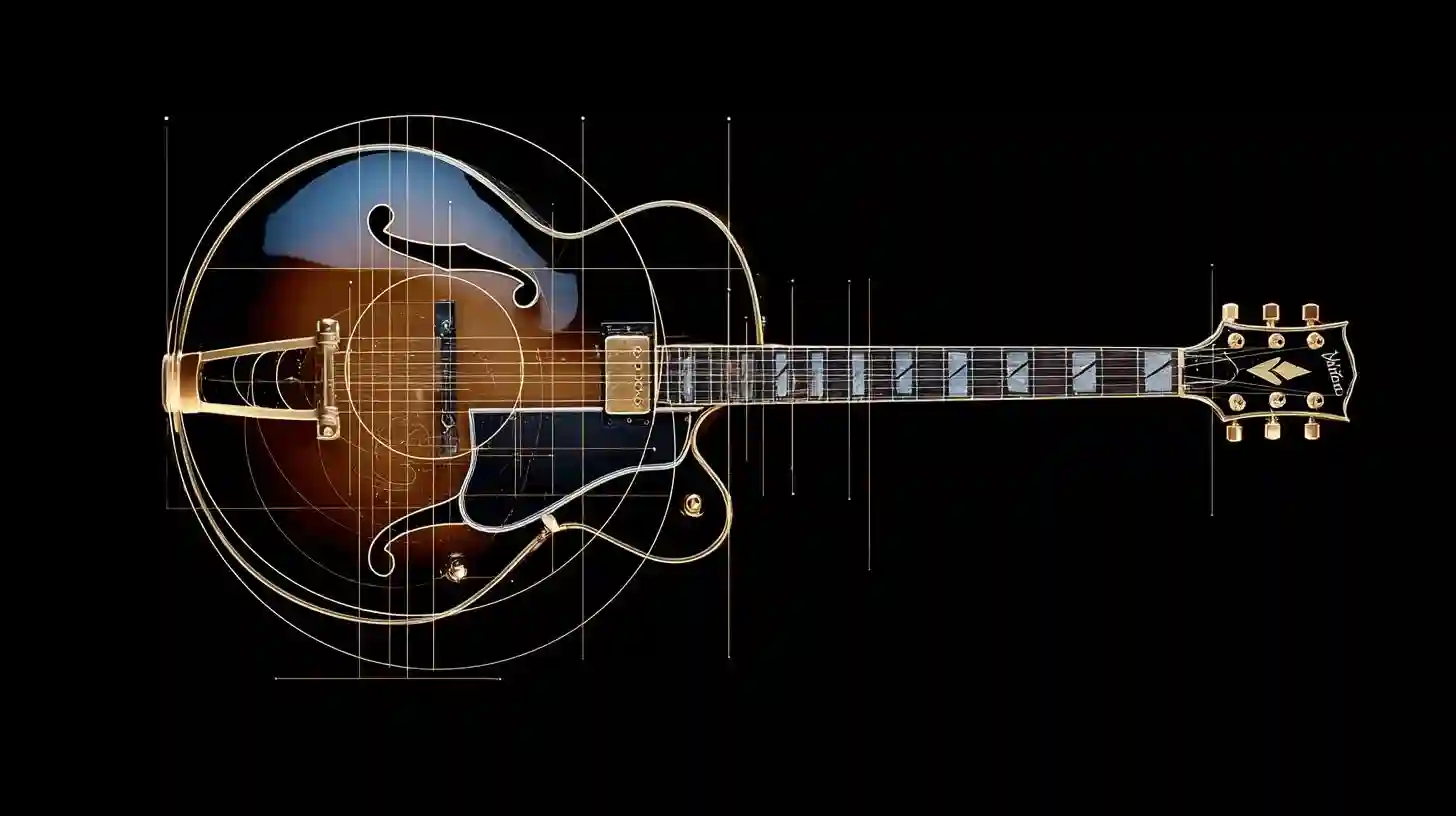
Jazz and blues have long shared a deep, intertwined relationship, particularly on the guitar. The guitar, with its ability to both mimic and expand the emotional expressiveness of these genres, serves as a bridge between the two. Blues, with its raw and soulful origins in African American communities, is rooted in simple yet powerful chord progressions. The guitar in blues often revolves around the I-IV-V progression, a structure that lays the foundation for many of the genre's iconic riffs and solos. These progressions create a space where the guitarist can improvise, reflecting the deep emotional tension and release that is characteristic of blues music.
Jazz, on the other hand, has a more complex harmonic structure. It builds upon the foundation of blues but introduces extended chords, altered tones, and chromaticism, which adds a level of sophistication and nuance to the music. Guitarists who play jazz often draw upon the language of the blues, incorporating its phrasing and feel, but they add intricate chord voicings and scales, such as the diminished or augmented scale, which would not traditionally be found in a blues context. Jazz guitarists such as Wes Montgomery, Charlie Christian, and Django Reinhardt were able to blend the emotional power of the blues with the harmonic sophistication of jazz, creating something entirely unique.
Both genres share a reliance on improvisation, and the guitar’s role in this is pivotal. In blues, improvisation often takes the form of expressive soloing, focusing on bends, slides, and the blues scale, with a heavy emphasis on phrasing. Jazz guitarists, while still improvising, tend to incorporate more complex lines and harmonies, often drawing from scales like the bebop scale or the pentatonic scale, blending them with advanced chord structures.
Despite these differences, both jazz and blues guitarists use the same core techniques to convey emotion. The bending of notes, the use of space, and the timing of each phrase are all central to both genres. Jazz and blues also share a common rhythmic foundation, with syncopated rhythms and swing feeling central to both styles. Even as jazz guitarists began to experiment with more avant-garde harmonies and structures, the essence of blues—its emotional intensity and soulfulness—remained a strong undercurrent.
Guitarists in both genres have continuously influenced each other. Jazz players were inspired by the passion and simplicity of blues, while blues players have embraced jazz's harmonic sophistication, creating a blend that is greater than the sum of its parts. As a result, the guitar has become the ultimate instrument for expressing both the sorrow and joy, complexity and simplicity, that define the relationship between jazz and blues.