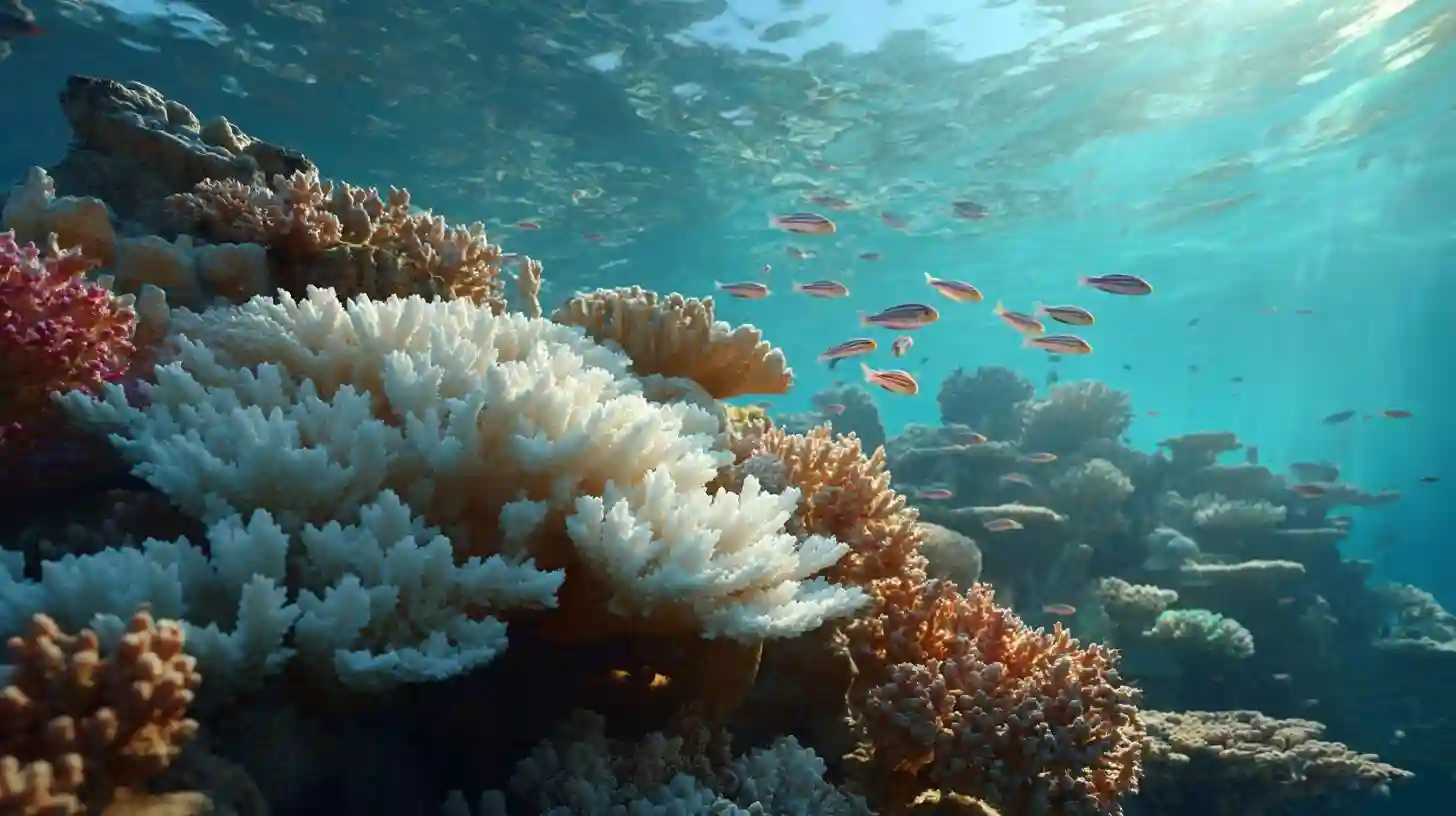
Coral bleaching is a phenomenon where corals lose their vibrant colors and become pale or white due to stress, typically caused by elevated sea temperatures, pollution, and changes in water quality. These stressors disrupt the symbiotic relationship between corals and the algae that live within their tissues. The algae, known as zooxanthellae, provide corals with essential nutrients through photosynthesis. When the corals experience stress, they expel the algae, leaving them without the food source that sustains them, causing the corals to appear bleached.
Coral reefs are among the most diverse ecosystems on the planet, hosting an array of marine species, including fish, mollusks, and other invertebrates. They provide crucial habitat for these species and act as a source of food and shelter. Coral bleaching disrupts this intricate web of life, leading to a decline in biodiversity. As the corals become weakened by bleaching, they become more susceptible to disease, which further exacerbates the decline in reef health. Without healthy reefs, many species of marine life are forced to migrate or face the threat of extinction.
The loss of coral reefs also has significant implications for human communities, particularly those in coastal regions. Many communities depend on coral reefs for food, income from tourism, and protection from storms and erosion. Bleached reefs can no longer perform these vital functions, leaving these communities vulnerable to economic losses and environmental damage.
Furthermore, coral bleaching is an indicator of broader environmental changes. The rising ocean temperatures associated with global warming are one of the primary causes of coral bleaching. As the planet continues to warm, the frequency and severity of coral bleaching events are expected to increase, leading to further losses in biodiversity. Coral reefs are not just a natural wonder, but also an essential component of marine ecosystems, supporting the well-being of countless species, including humans.