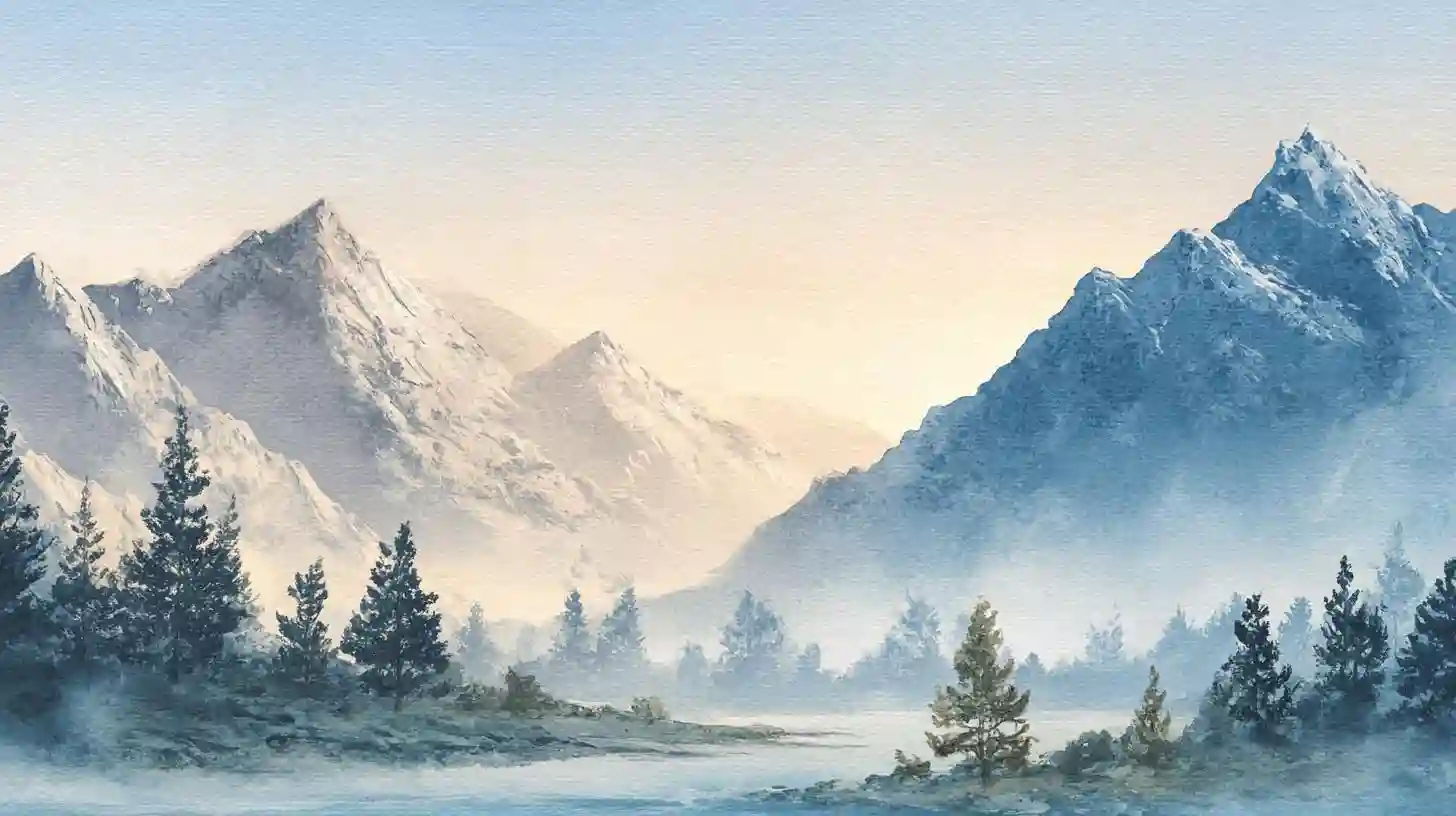
When selecting watercolor paper for landscape painting, it's important to understand that different types of paper will interact with your paints and techniques in various ways. The texture, weight, and composition of the paper can significantly affect the outcome of your artwork. Watercolor papers are primarily made from cotton, wood pulp, or a blend of both, each offering unique qualities for different painting styles.
One of the most popular choices for landscape artists is cold-pressed paper. Cold-pressed paper, often referred to as NOT (not hot-pressed), has a slightly textured surface. This texture helps create beautiful effects for landscapes, allowing for subtle gradations of color while also holding pigment well. The surface of cold-pressed paper is ideal for detailed washes and layering, making it a go-to for artists who want a balanced blend of texture and smoothness. Its moderate texture offers enough grip for brushstrokes while still allowing the paint to flow freely.
Another type of watercolor paper to consider is hot-pressed paper, also known as HP. This type of paper has a smooth surface that provides a glass-like finish. Hot-pressed paper is excellent for artists who want to achieve fine details and crisp lines in their landscapes. The smooth surface allows for precision, making it a great choice for intricate work such as painting fine branches, delicate leaves, or distant horizons. However, it is not ideal for loose, expressive washes, as the paint tends to settle quickly without much blending.
Rough watercolor paper, with its prominent texture, provides a more dynamic approach to landscape painting. This paper type has a pronounced, uneven surface that allows for expressive and energetic brushstrokes. It works wonderfully for creating a natural, textured look, particularly in paintings that capture rugged terrain, stormy skies, or wild vegetation. The rough surface holds the paint in a way that can create interesting effects, such as granulation, where the pigment settles into the texture of the paper in distinct patterns.
The weight of the paper is another factor to consider. Heavier papers, such as those that weigh over three hundred grams per square meter, generally absorb more water and allow for more extensive washes without warping. Lighter papers, on the other hand, tend to buckle or warp when used with large amounts of water unless they are stretched or taped down. Heavy papers offer more freedom for experimentation with wet-on-wet techniques, while lighter papers may be more suitable for quicker, more controlled work.
Artists may also experiment with different blends of cotton and wood pulp. Cotton papers are the gold standard in watercolor, offering a high level of absorbency and durability, which is especially important for prolonged techniques like glazing. They are also less likely to buckle or tear under heavy washes. Papers made from wood pulp are often more affordable, and while they may not offer the same luxurious feel or durability as cotton, they can still produce vibrant results for artists on a budget or those experimenting with more vigorous techniques.
When selecting watercolor paper for landscapes, it’s essential to consider the overall effect you wish to achieve. Each type of paper offers distinct advantages, whether you are looking for fine detail, rich textures, or the freedom to work with large washes of color. Experimenting with different papers can open up new possibilities and help you discover which works best for your artistic vision.