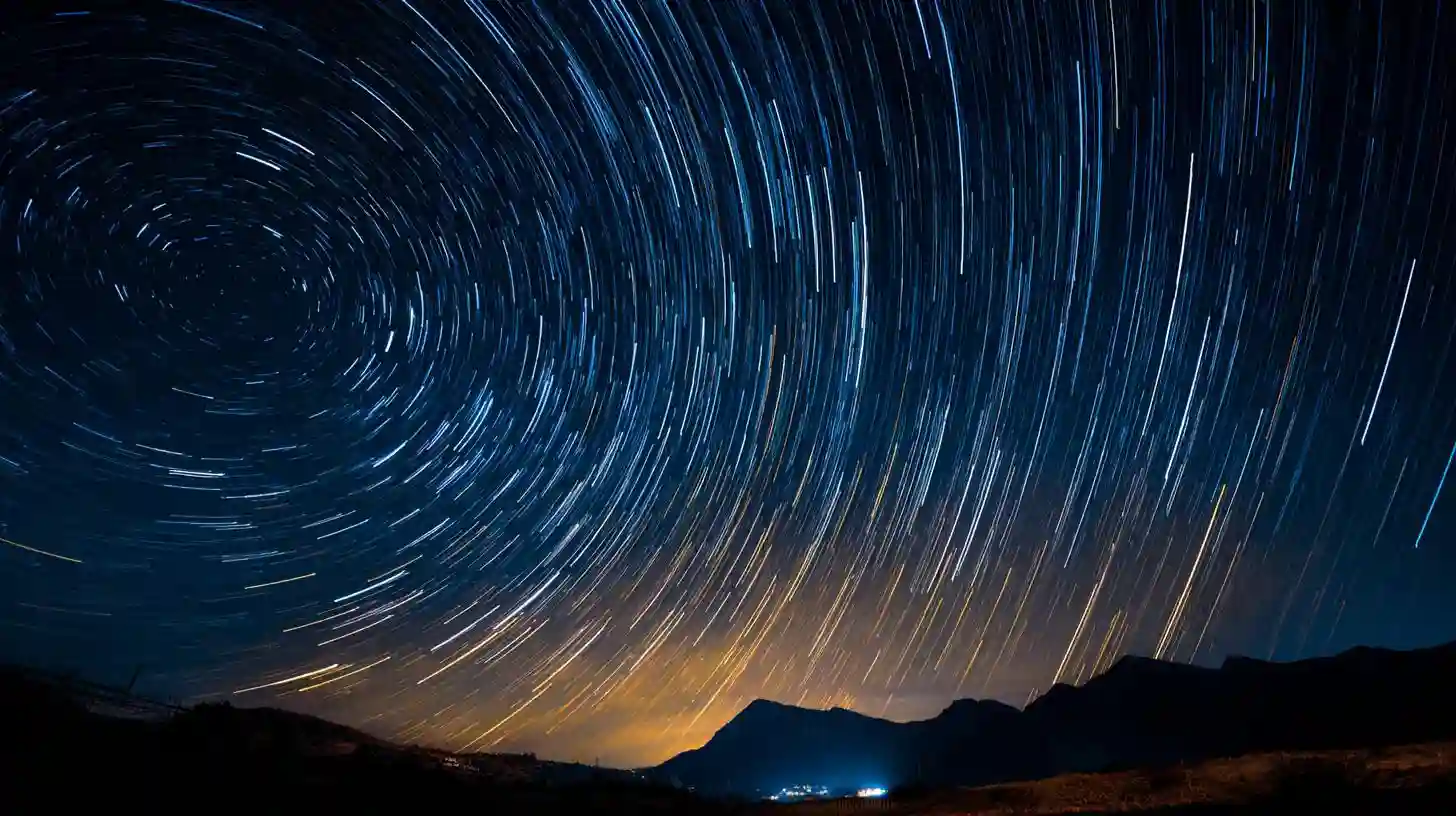
Long exposure photography has become a popular technique for capturing the mesmerizing beauty of the night sky and star trails. This method allows photographers to collect more light over a longer period, revealing celestial objects and phenomena that are invisible to the naked eye. When shooting at night, especially in areas with minimal light pollution, the camera sensor can accumulate light for minutes or even hours, resulting in stunning images that highlight the movement of the stars across the sky.
The process of capturing star trails begins with setting up the camera on a tripod to ensure stability throughout the long exposure. A remote shutter release or self-timer is used to avoid any vibrations when pressing the shutter button. The photographer typically uses a wide-angle lens to capture a broad expanse of the sky, ensuring that enough stars are included in the composition to create an impressive trail. A low ISO setting is often preferred to minimize noise, while a small aperture is used to maximize the depth of field, ensuring the stars remain sharp throughout the exposure.
As the exposure continues, the stars appear to move across the sky, forming arcs of light that trace their path due to the Earth's rotation. The longer the exposure, the more pronounced the trails become. Some photographers choose to create a composite image by taking multiple shorter exposures and stacking them together to prevent overexposure and preserve the details in the night sky.
One of the most fascinating aspects of long exposure night photography is the ability to capture the motion of the stars in a way that reveals the dynamic nature of the universe. The resulting images can evoke a sense of timelessness, highlighting the contrast between the stillness of the landscape and the continuous movement of celestial bodies. Whether photographing the Milky Way, a meteor shower, or the star trails themselves, long exposure photography offers a unique opportunity to showcase the grandeur of the cosmos in a single frame.