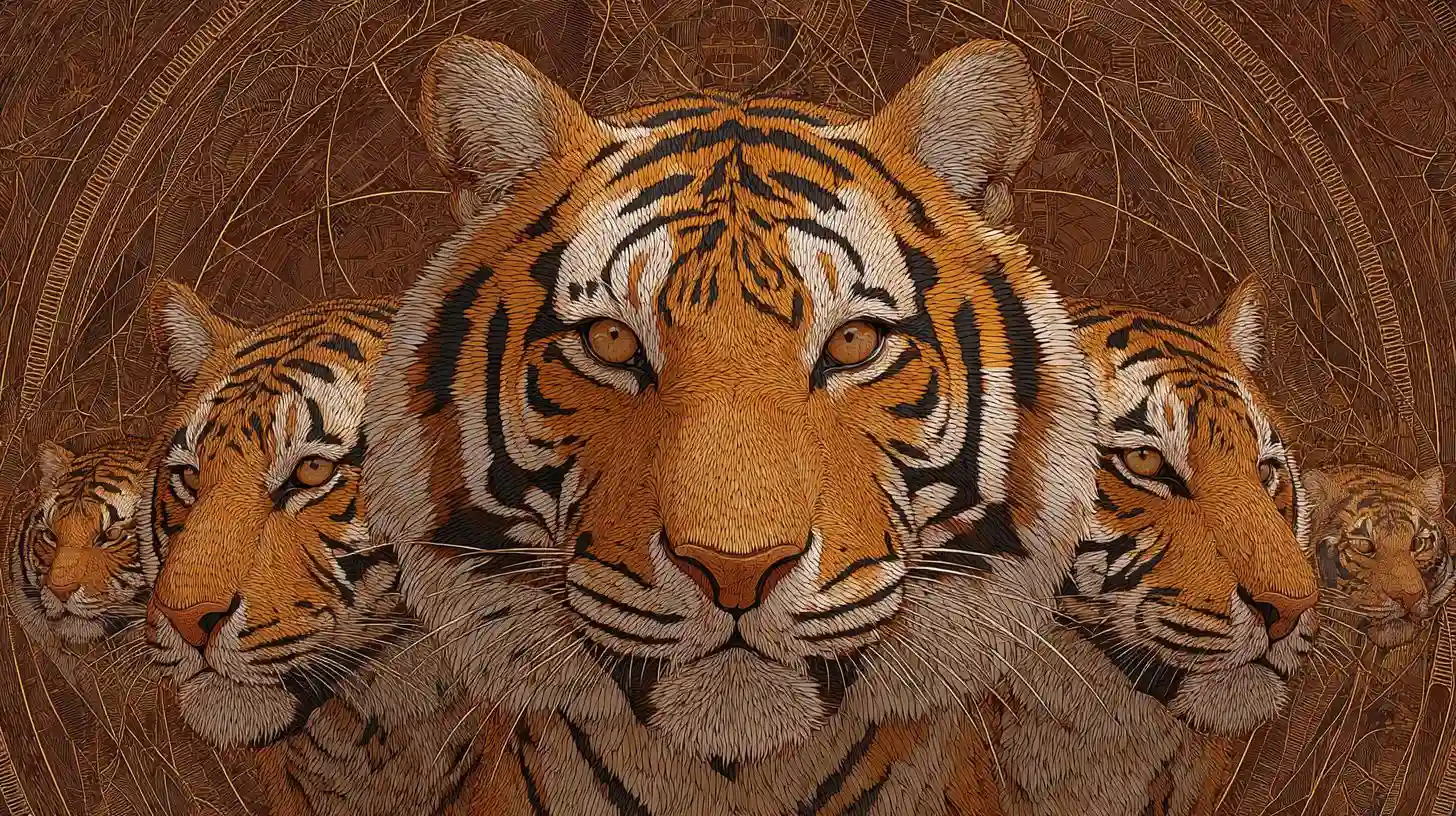
The tiger has long been a powerful symbol across numerous cultures, often representing strength, courage, and mysticism. In many Asian societies, the tiger is seen as a protector, a creature whose fierce and untamed nature offers a sense of security. In China, for instance, the tiger is one of the twelve zodiac animals and is associated with bravery, power, and protection. It is frequently depicted in traditional Chinese art as a guardian, warding off evil spirits. This symbolism extends into the spiritual realm, where the tiger is believed to possess the ability to safeguard the soul, offering protection against harmful forces.
In India, the tiger holds a significant place in both religion and folklore. The majestic animal is the mount of the Hindu goddess Durga, representing her ferocity and divine power. As a result, the tiger is not only seen as a symbol of physical strength but also as an embodiment of spiritual authority and protection. Tigers are often featured in ancient Indian art, from temple carvings to intricate paintings, where they serve as both a symbol of the divine and a reminder of the untamed forces of nature.
In Southeast Asia, particularly in countries like Thailand and Malaysia, the tiger is similarly revered and often portrayed in vibrant artworks. The animal is linked to royalty and nobility, seen as a symbol of the ruler’s power and might. In some Southeast Asian cultures, tigers are considered to possess mystical qualities, embodying both the strength of nature and the spiritual realm. The depiction of tigers in Southeast Asian art often emphasizes their wild beauty, creating a striking contrast between their fearsome appearance and their revered status.
Moving to Western cultures, tigers are not as common in mythology, yet they still carry powerful symbolism. In the United States and Europe, the tiger represents a mixture of the exotic and the dangerous. The animal often appears in works of art that explore themes of the natural world’s raw and unpredictable forces. While they are frequently seen as symbols of fear and awe, tigers are also admired for their elegance and beauty. Their striking coats and graceful movements have made them subjects of admiration in both art and literature, where they evoke mystery and a sense of the untamed wilderness.
Throughout the world, tigers have been portrayed as complex symbols, their roles shifting between representations of strength, mystery, spirituality, and fear. Whether as divine protectors, symbols of power, or majestic creatures of the wild, the tiger continues to inspire awe and admiration in the minds of people from all walks of life. Through art, the tiger’s image endures, reminding us of the balance between nature’s fearsome forces and the reverence they inspire.