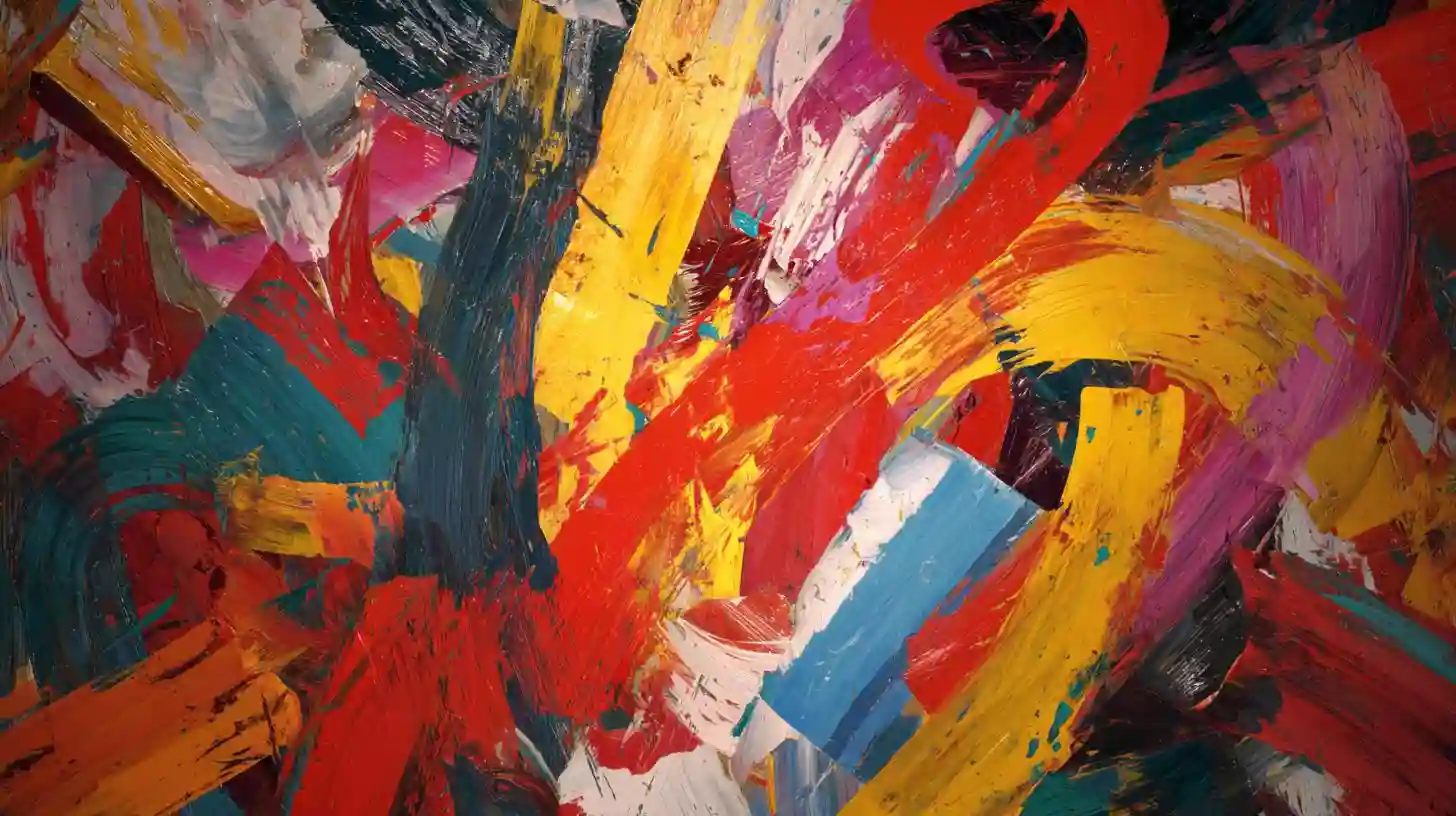
Abstract Expressionism emerged as a revolutionary force in the development of modern art during the mid-twentieth century. Its impact on the art world cannot be overstated, as it marked a departure from the traditional notions of art and opened the door to new modes of artistic expression. Abstract Expressionism was characterized by a focus on spontaneous, automatic, or subconscious creation, often manifesting through large-scale, energetic, and vibrant paintings that sought to express the artist’s internal emotions rather than depict external reality. This radical shift allowed artists to explore abstract forms, shapes, and colors as a means to convey complex emotional experiences.
One of the key figures associated with Abstract Expressionism is Jackson Pollock, whose "drip" paintings became iconic representations of the movement. Pollock’s technique of pouring or dripping paint onto a canvas placed on the floor rejected the traditional use of the brush and sought to capture the physicality of the painting process itself. This was seen as an act of liberation from the constraints of representational art. His works were not only about the finished product but also about the act of creation, which was viewed as a direct link to the unconscious mind. This made Abstract Expressionism not just a visual experience but also a psychological one.
The movement also gave rise to a new understanding of the artist’s role in the creative process. Unlike previous artistic movements that focused on the depiction of specific subjects or the mastery of technique, Abstract Expressionism emphasized the importance of personal expression and emotional authenticity. Artists were encouraged to express their inner turmoil, joy, or confusion without the pressure of creating realistic or idealized representations. This shift allowed for a greater diversity of artistic voices, contributing to the democratization of art, where the artist's individual perspective was as important as the subject matter.
The influence of Abstract Expressionism extended beyond the realm of painting. Its impact could be seen in sculpture, photography, and even performance art, where artists experimented with similar ideas of spontaneity, abstraction, and emotional intensity. By rejecting the constraints of formal composition and embracing the chaos of the subconscious, Abstract Expressionism not only redefined the boundaries of art but also encouraged future generations of artists to explore new and unconventional ways of creating. It provided a platform for exploring the complexity of the human experience, turning art into a powerful medium for emotional and intellectual exploration.