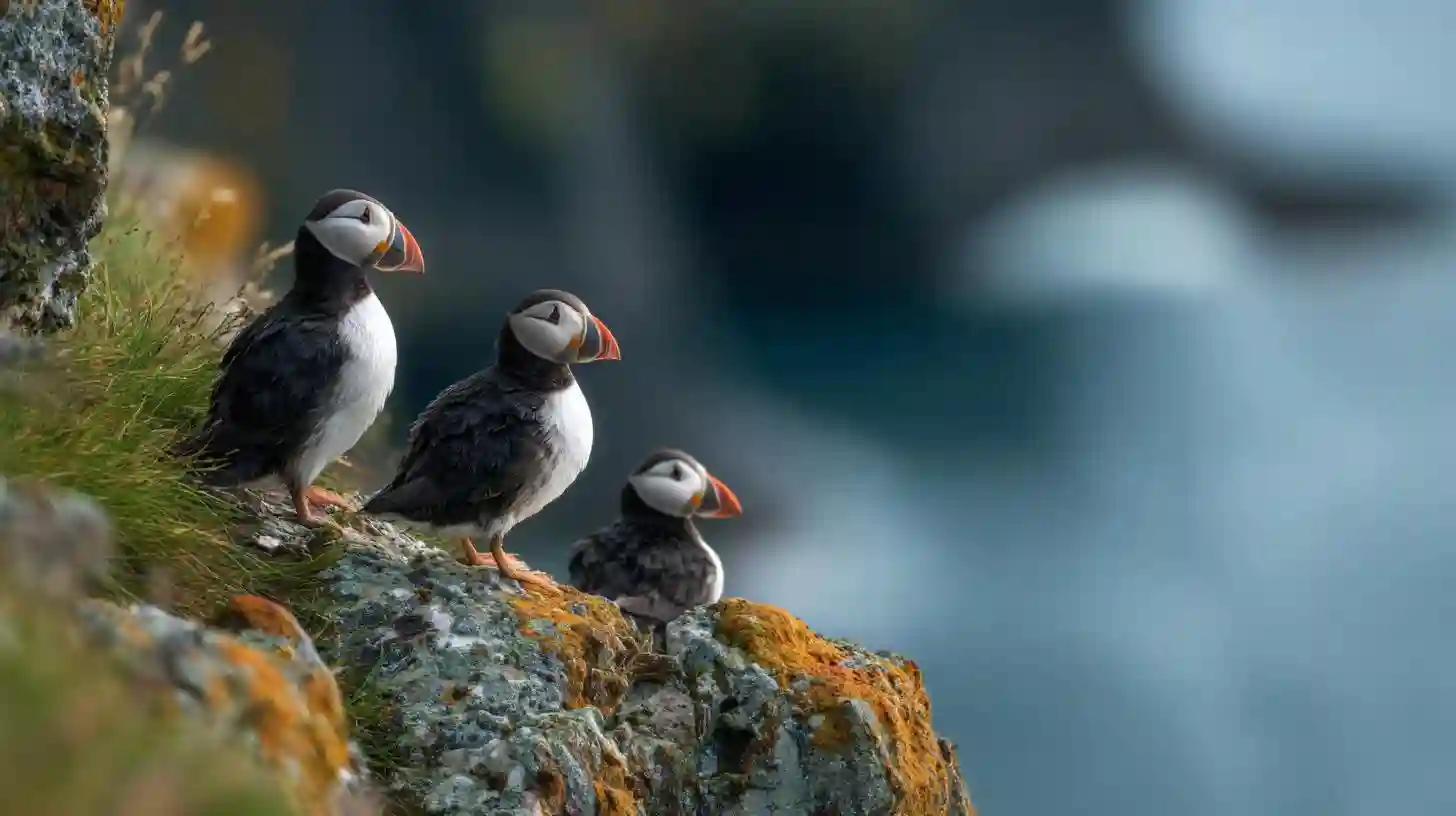
Climate change has created profound challenges for puffin populations across the North Atlantic and Arctic regions. Rising ocean temperatures disrupt the delicate balance of marine ecosystems that puffins depend on for food. Puffins rely heavily on small fish that thrive in cooler waters, and as sea temperatures increase, these fish migrate to more suitable habitats, leaving puffins with limited food options. This shift forces puffins to travel longer distances in search of nourishment, which increases energy expenditure and reduces breeding success. Prolonged foraging trips can result in lower chick survival rates as adult puffins struggle to provide adequate food for their young.
Altered weather patterns associated with climate change also threaten puffin nesting sites. Coastal storms have become more frequent and intense, eroding cliffs and island shores where puffins dig burrows for breeding. Flooded or collapsed burrows directly reduce nesting success and leave eggs and chicks vulnerable to predation and exposure. Puffins are highly site-faithful, returning to the same colonies each year, so the loss of suitable nesting areas can have long-term effects on population stability. Habitat disruption, coupled with food scarcity, compounds the pressures on these birds, creating a cascade of negative impacts that ripple through puffin communities.
Changes in ocean currents and plankton availability further complicate puffin survival. Puffins depend on specific plankton-feeding fish, and disruptions in the food web reduce the availability of prey during critical breeding seasons. Puffins may be forced to switch to less nutritious or harder-to-catch prey, impacting their health and reproductive capabilities. Additionally, warmer waters encourage the proliferation of predators and competitors that were previously less common in puffin habitats, adding new threats to their survival.
The cumulative effects of climate change on puffin populations extend beyond immediate survival challenges. Reproductive delays, lower chick survival, and decreased adult body condition weaken the overall resilience of colonies. As environmental conditions continue to shift rapidly, puffins face an uncertain future, requiring conservation measures that address both habitat protection and the broader impacts of a changing climate on marine ecosystems.