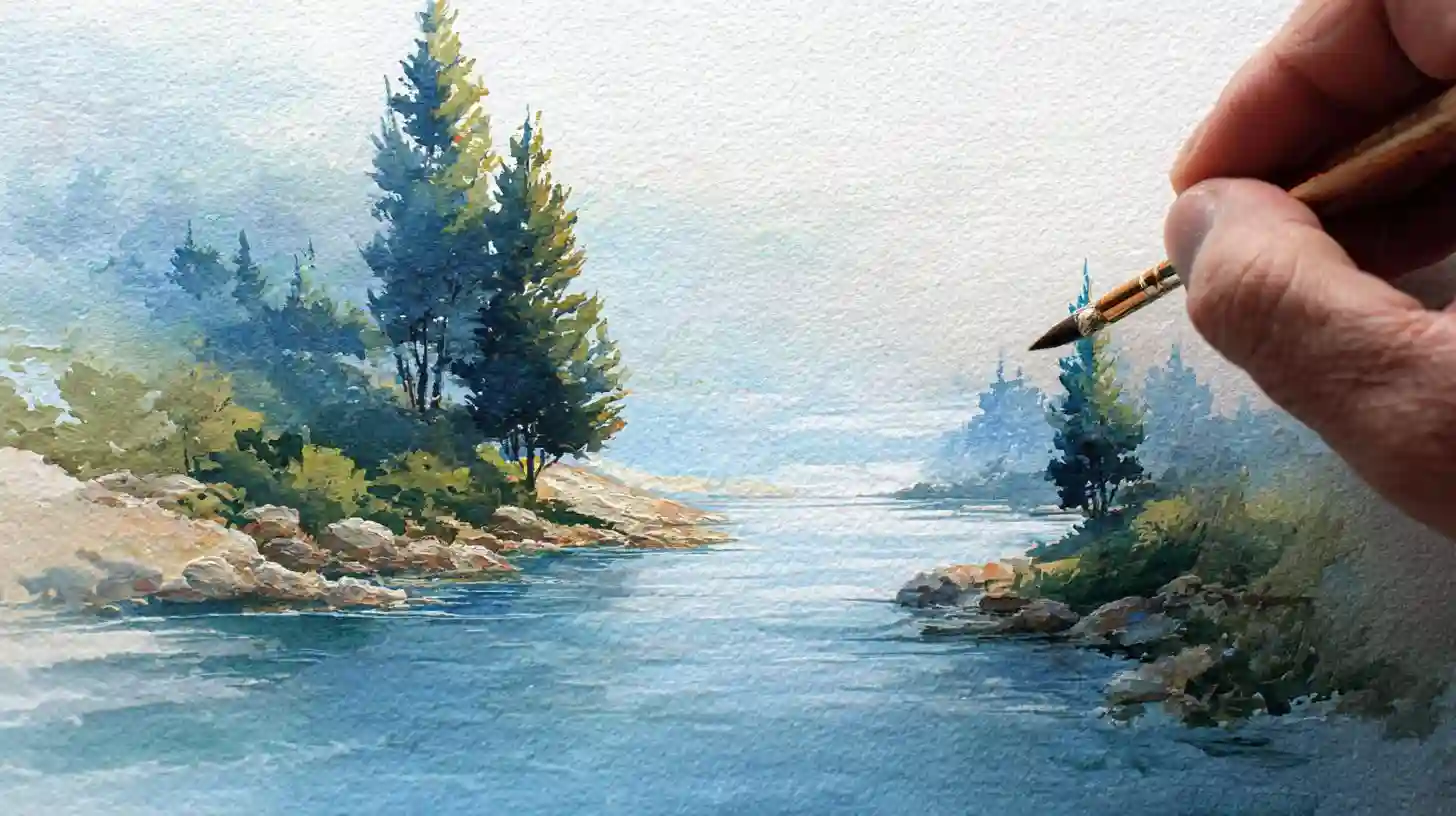
Atmospheric perspective in watercolor painting is a technique used to create the illusion of depth and distance by manipulating the color, value, and level of detail in your painting. To capture atmospheric perspective effectively, start by understanding how the atmosphere affects the colors of distant objects. As objects recede into the background, they tend to become lighter and less saturated, with cooler tones replacing warmer hues. This is particularly important when painting landscapes, where distant mountains or hills often appear hazy due to the air between them and the viewer. By incorporating subtle gradations of color, you can simulate this effect and give your painting a sense of vastness.
One of the key elements in achieving atmospheric perspective is the use of value contrast. Objects that are close to you tend to have stronger contrasts of light and dark, whereas distant objects lose this sharp contrast. To create this effect in watercolor, you can soften the transitions between light and shadow in the background, ensuring that the values in the farthest parts of the painting are closer together. This helps to create a soft, almost dream-like quality that conveys distance.
Detail is another important factor in capturing atmospheric perspective. The level of detail in an object also diminishes with distance. For example, objects in the foreground can be rendered with sharp, intricate details, while objects further away should be painted with less definition. This is where watercolor’s soft, flowing nature is particularly advantageous, as it allows you to effortlessly blend and fade distant elements.
When painting skies, remember that they play a significant role in creating the sense of space. The sky near the horizon often appears lighter in color, and as it moves upward, it becomes richer in tone and more intense in saturation. Using these subtle changes in color and value can help you create the illusion of great distances in your painting.
Finally, consider how moisture affects the flow of the paint. Watercolor’s fluidity can work in your favor when trying to create soft transitions and blending effects that contribute to the feeling of atmosphere. By mastering the interaction between water, pigment, and paper, you can effectively capture the essence of atmospheric perspective, transforming your watercolor landscapes into dynamic, immersive works of art.