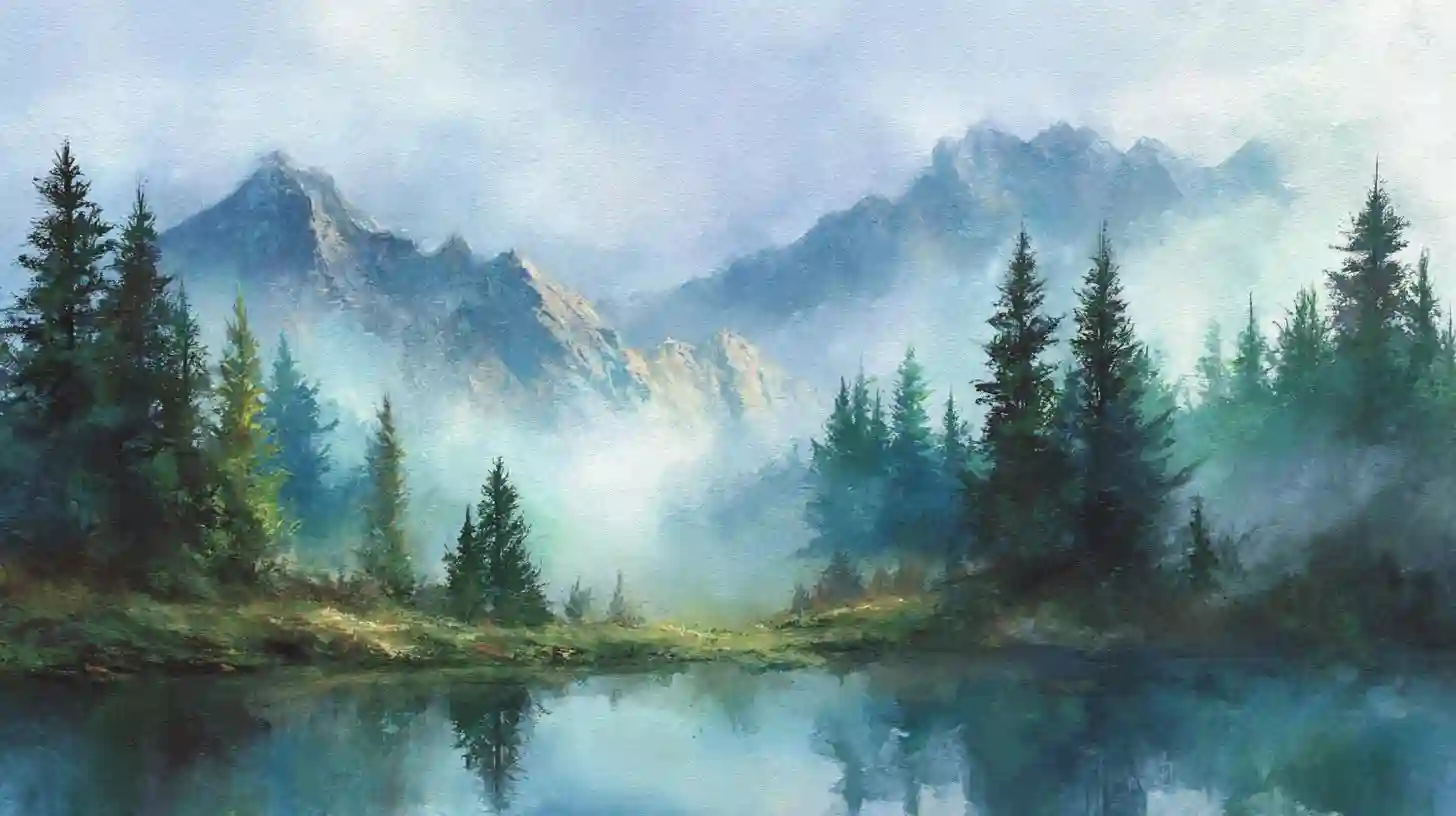
Watercolor landscape art can be a beautiful and expressive form of painting, but it also comes with its own set of challenges. Many beginners often fall into a few common mistakes that can hinder their progress and prevent their work from reaching its full potential. Understanding these pitfalls can help improve the overall quality of your watercolor landscapes.
One frequent mistake is overworking the paint. Watercolor is a delicate medium that requires careful control of the water-to-paint ratio. When too much water is applied, the colors can become too diluted, resulting in a washed-out appearance. On the other hand, using too little water can make the paint dry too quickly, leading to harsh edges and a lack of blending. It’s essential to learn how to manage the fluidity of the paint to achieve the desired results without compromising the vibrancy and flow that make watercolor so unique.
Another common error is neglecting the importance of layering and building up the painting gradually. Watercolor requires patience and a slow build-up of layers. Many artists make the mistake of trying to complete a scene too quickly, which often leads to muddy colors and a lack of depth. Instead of rushing to finish, focus on building each layer, allowing the paint to dry between layers for a more dynamic and rich effect.
Many artists also struggle with the composition of their landscape. One mistake is placing the horizon line too close to the center of the paper. This creates a sense of stagnation and doesn’t lead the viewer’s eye across the scene. A more effective approach is to place the horizon line either higher or lower in the composition, which creates more interest and balance within the painting.
Using colors too directly without considering their relationships can also lead to less harmonious results. Beginners often use bright, bold colors in isolation, ignoring how colors interact with one another. The key to a cohesive landscape is in the subtleties of color mixing, understanding how warm and cool colors can complement each other, and how to create a sense of distance and light by adjusting color intensity.
Lastly, forgetting to leave some white space in the painting is another common mistake. Watercolor often relies on the untouched white of the paper to create highlights, light spots, and reflections. Neglecting this aspect can make the painting feel flat and lifeless. By leaving areas of the paper exposed, you create a sense of light, space, and contrast that adds life to the landscape.
Avoiding these mistakes requires practice and an understanding of the watercolor medium’s unique characteristics. By being mindful of these common pitfalls, artists can improve their skills and create stunning watercolor landscapes that capture the beauty of the natural world.