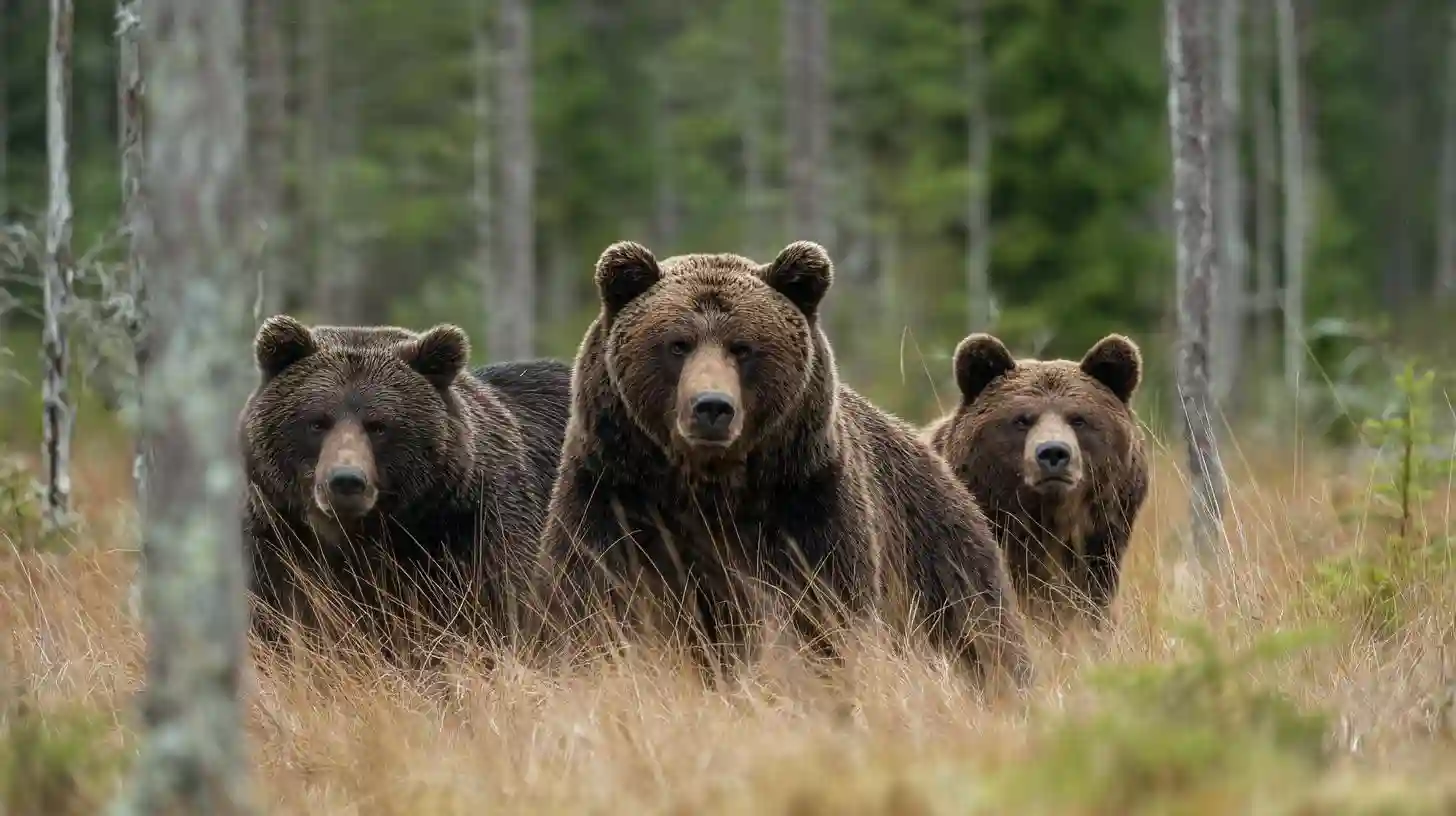
Bears are generally solitary creatures, yet their social interactions are complex and vary depending on species, season, and environmental conditions. While most bears spend the majority of their lives alone, they often engage with others during mating season or when abundant food sources attract multiple individuals to the same area. For instance, salmon streams in the wild may become temporary gathering spots where bears tolerate each other's presence while competing for fish. Dominance hierarchies can emerge in these contexts, with larger or more experienced bears asserting priority access to resources. Such interactions are often characterized by body language, vocalizations, and scent marking rather than physical confrontation, as aggressive encounters carry risks that may not be worth the reward. Young bears, especially cubs, remain in close proximity to their mothers for an extended period, learning essential survival skills and social cues. These family units demonstrate a different form of social structure, where the mother guides the cubs through foraging techniques, avoidance of danger, and recognition of other bears. Adult males typically roam over large territories and may encounter one another sporadically, sometimes displaying tolerance or engaging in brief disputes to establish boundaries. Communication among bears is subtle yet vital, including the use of scent marking to convey presence, reproductive status, or territorial limits. Certain species, such as polar bears, may show more flexible social patterns when food is concentrated, occasionally forming temporary associations that resemble loose groups. Bears' social behavior is also influenced by environmental pressures, such as climate and food availability, which dictate when and how individuals interact. Even though they are often seen as solitary predators, the interplay between solitary life and occasional social encounters allows bears to adapt to changing conditions while maintaining the flexibility necessary for survival. This balance between independence and interaction illustrates a nuanced social landscape that is rarely apparent at first glance but becomes evident through careful observation in natural habitats.