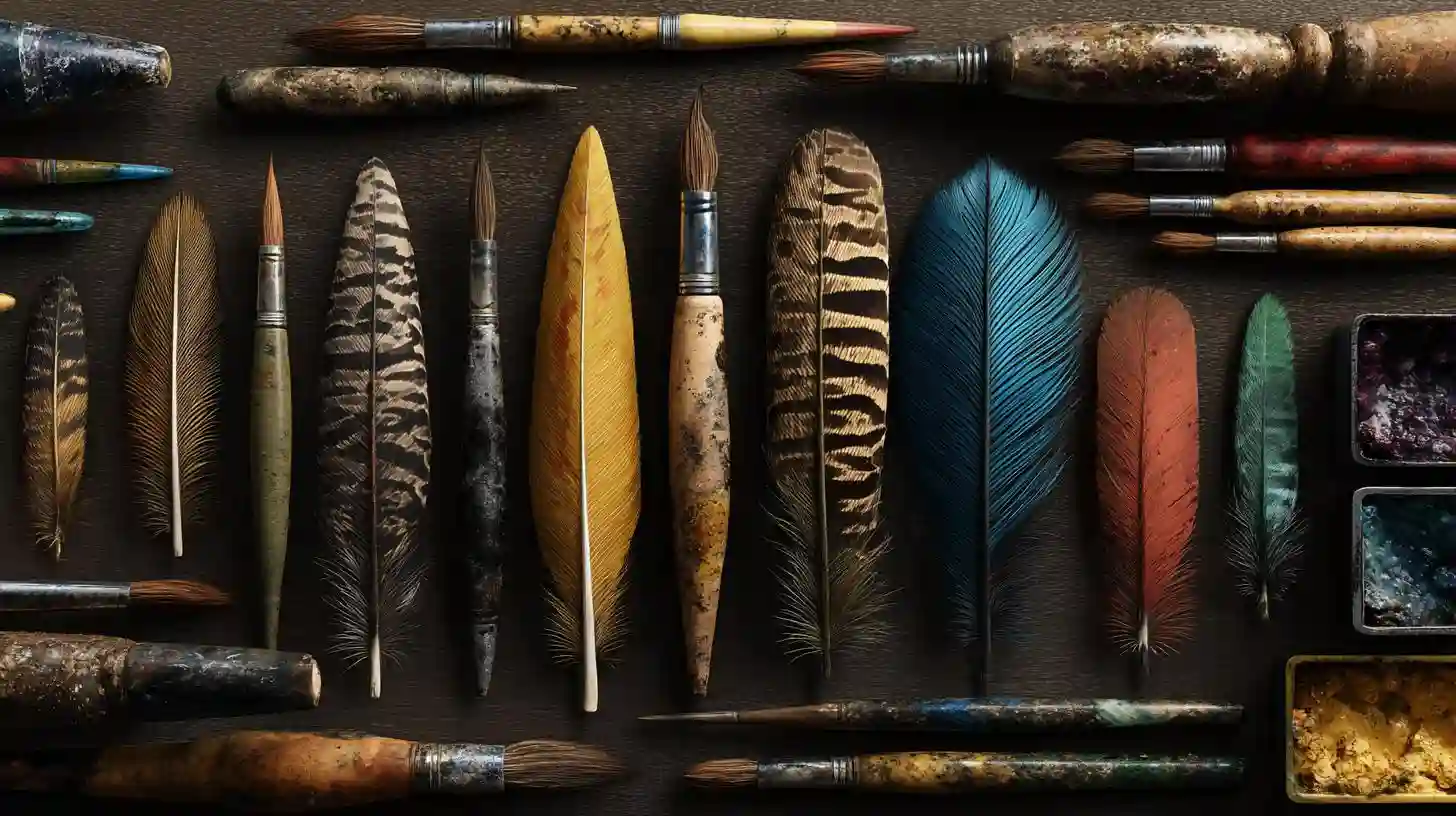
Early humans first used natural materials like stones, sticks, and animal bones as tools to create images on cave walls. As their artistic expression evolved, so did the tools they used. In ancient times, brushes and pigments were rudimentary. Early brushes were often made from twigs or animal hairs, which were tied together to form simple brushes for applying color to surfaces. For example, Egyptian artists crafted brushes from stiff plant fibers or animal hair, using them to apply mineral-based pigments to papyrus, pottery, and the walls of tombs.
Over time, brush-making techniques became more refined. In ancient China, around the third century BCE, the first true brushes were made with hair from animals such as goats, wolves, and weasels. These brushes were created with greater precision, allowing for more control over the application of ink or paint. The fine tips of these brushes made intricate calligraphy and delicate painting techniques possible, leading to a golden age of Chinese art. The flexibility of the brush allowed for a wide range of strokes, from broad washes to fine, detailed lines, influencing painting styles for centuries.
Meanwhile, in Europe, the Renaissance period saw the development of the soft-haired brush that is still common today. Painters began to use brushes with softer bristles, often made from the hairs of sable, which allowed for smoother, more controlled strokes. These brushes were essential for creating the layered effects and fine details seen in Renaissance masterpieces. The brush became the main tool for oil painting, and different sizes were developed to accommodate various techniques, from fine details to broad background washes.
In addition to the classic brushes, painting tools began to diversify in the modern era. Sponges, palette knives, and even fingers became common tools for applying paint. These new methods allowed artists to explore textures and create unique effects, expanding the possibilities for artistic expression. Today, painting tools continue to evolve with the advent of synthetic brushes and specialized tools for digital art. The history of painting tools reflects the continuous innovation and adaptation of artists throughout the ages, as they strive to convey their creative visions with the best materials at hand.