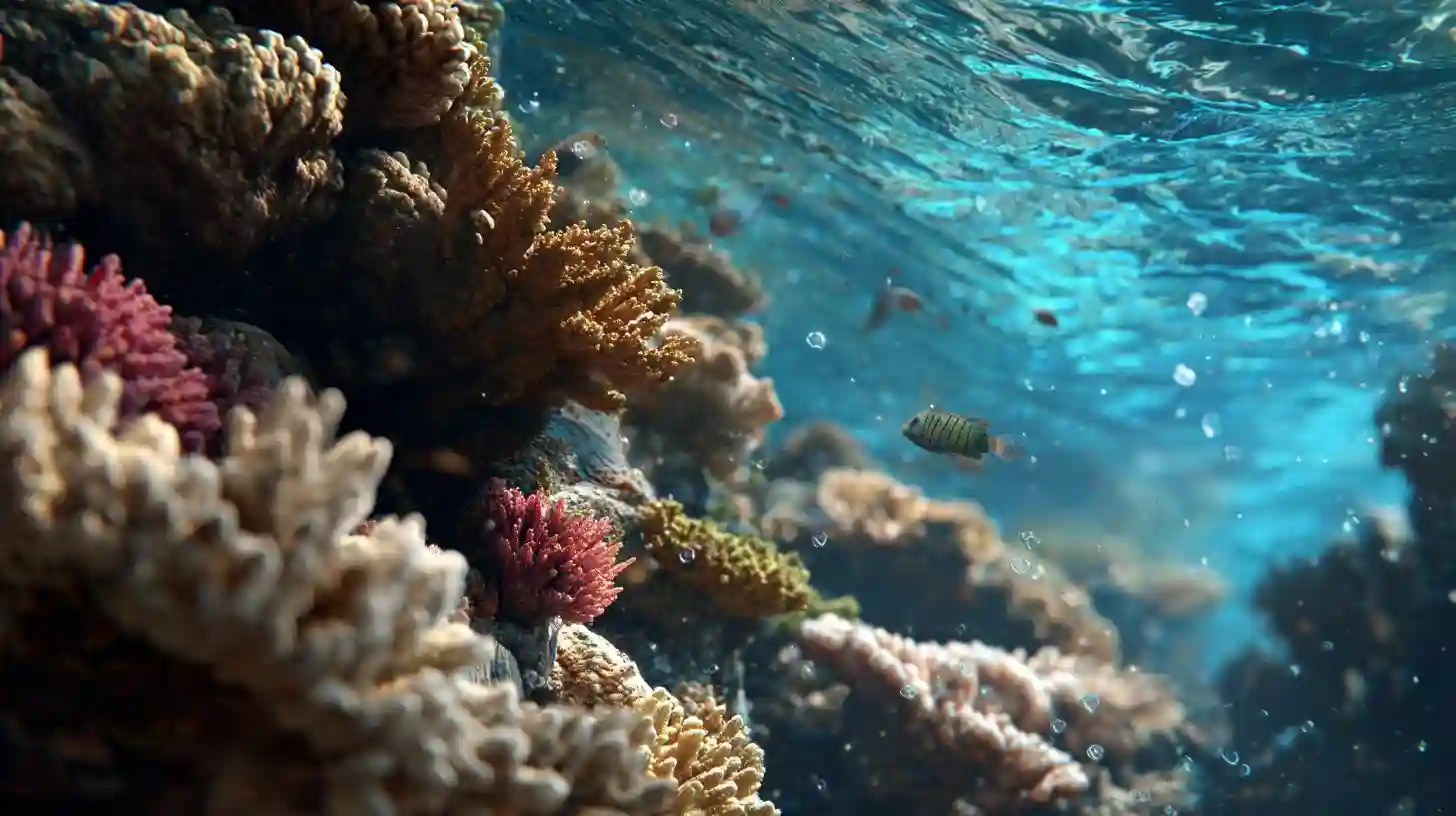
Coral reefs, often referred to as the "rainforests of the sea," are some of the most biologically diverse ecosystems on Earth. These vibrant underwater structures are home to thousands of species, from tiny fish to large marine mammals. However, climate change is having a profound impact on coral reefs, disrupting the delicate balance of these ecosystems and threatening the species that depend on them. Rising ocean temperatures, one of the most significant effects of climate change, cause coral bleaching, a phenomenon where corals expel the symbiotic algae living within their tissues. These algae, known as zooxanthellae, provide corals with essential nutrients through photosynthesis. When corals expel them due to temperature stress, they lose their color and the energy they rely on for survival. If the temperature remains high for prolonged periods, corals may die, leading to the collapse of entire reef ecosystems. Ocean acidification, another consequence of climate change, also poses a significant threat. As the atmosphere absorbs excess carbon dioxide, much of it is absorbed by the oceans, lowering the pH of seawater. This makes it more difficult for corals to build their calcium carbonate skeletons, weakening their structure and making them more vulnerable to storms and other environmental stresses. Species that rely on coral reefs for food, shelter, and breeding grounds are also suffering. Fish that depend on coral for protection from predators are left exposed as the reefs degrade. Many species of fish, crustaceans, and mollusks rely on the biodiversity of coral reefs for their survival, and as these ecosystems deteriorate, their populations are threatened. Without healthy reefs, many of these species face dwindling numbers or extinction. Coral reefs also support human communities, particularly in coastal regions where they protect shorelines from erosion and provide resources for fishing. As the health of coral reefs declines, so does the economic and social stability of these communities. The loss of coral reefs is a crisis not just for marine life, but for humans as well.