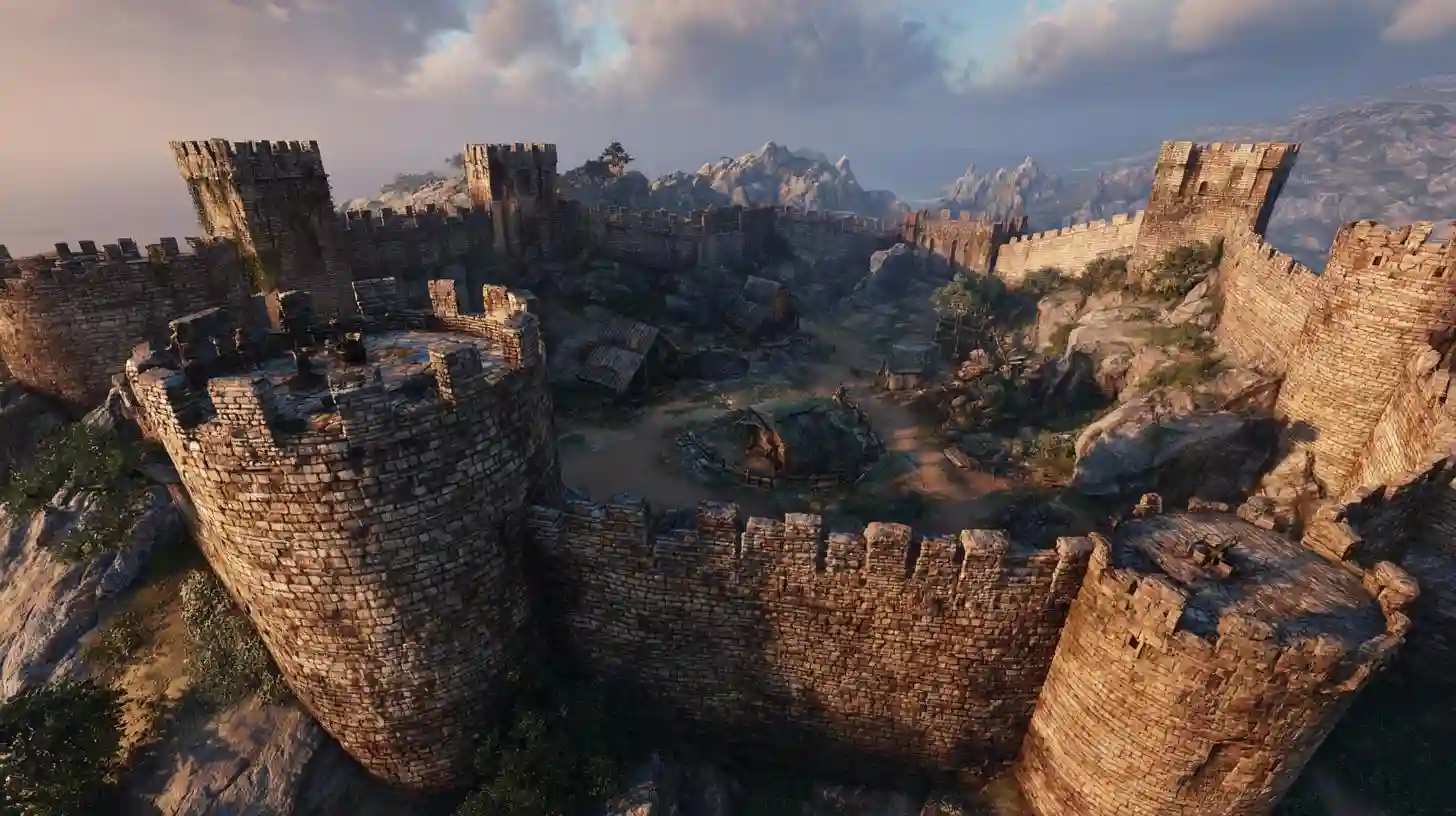
Medieval castles were architectural marvels designed with the primary purpose of defense. Constructed to withstand prolonged sieges and protect their inhabitants, these fortresses often sat atop elevated terrain to provide a strategic advantage over the surrounding landscape. The design and structure of these castles were influenced by the need for both military strength and the practicalities of daily life within their walls.
At the core of the defense strategy was the castle's walls. Thick, towering stone walls were built to absorb and deflect projectiles such as arrows, stones, and later, cannonballs. These walls were often reinforced with a combination of stone and mortar, which could withstand significant impact. The walls were further strengthened with features like corner towers, which provided additional vantage points for defenders to spot and fend off attackers. These towers were strategically placed to make it difficult for enemies to launch a successful assault.
The entrance to a medieval castle was heavily guarded, often equipped with a large wooden or iron gate. To prevent enemy forces from easily entering, castles had drawbridges and moats. The moats, which were either dry or filled with water, created an additional barrier that hindered enemy access to the castle gates. The drawbridge could be raised in times of danger, isolating the castle from attackers. In addition, the gatehouse was a complex structure, designed to thwart attempts to breach the castle walls. Some castles featured multiple layers of defense, including secondary gates or fortified structures, to make any assault as difficult as possible.
Inside the walls, castles were equipped with strategic elements to improve the defense. Narrow windows, often called arrow slits, allowed defenders to shoot projectiles while remaining protected behind the walls. These openings were typically small and placed high up to limit the enemy's ability to return fire. Many castles also included a keep, a fortified tower that served as the last line of defense during a siege. The keep was where the lord and his family could retreat in times of danger, equipped with food supplies and fresh water.
Additionally, castles were designed with logistical considerations in mind. They were built to be self-sustaining, with inner courtyards that contained kitchens, storage rooms, and workshops. These areas were essential for maintaining the castle's ability to withstand a siege, as prolonged isolation meant that the defenders would have to rely on their stored food and water. A well within the castle ensured a supply of fresh water during extended sieges, preventing the defenders from succumbing to thirst.
The combination of these elements made medieval castles formidable defensive structures, able to resist both physical attacks and prolonged sieges. The architecture and design of each castle reflected the need for survival in a time of constant warfare and instability, where safety was a luxury that only the strongest fortresses could provide.