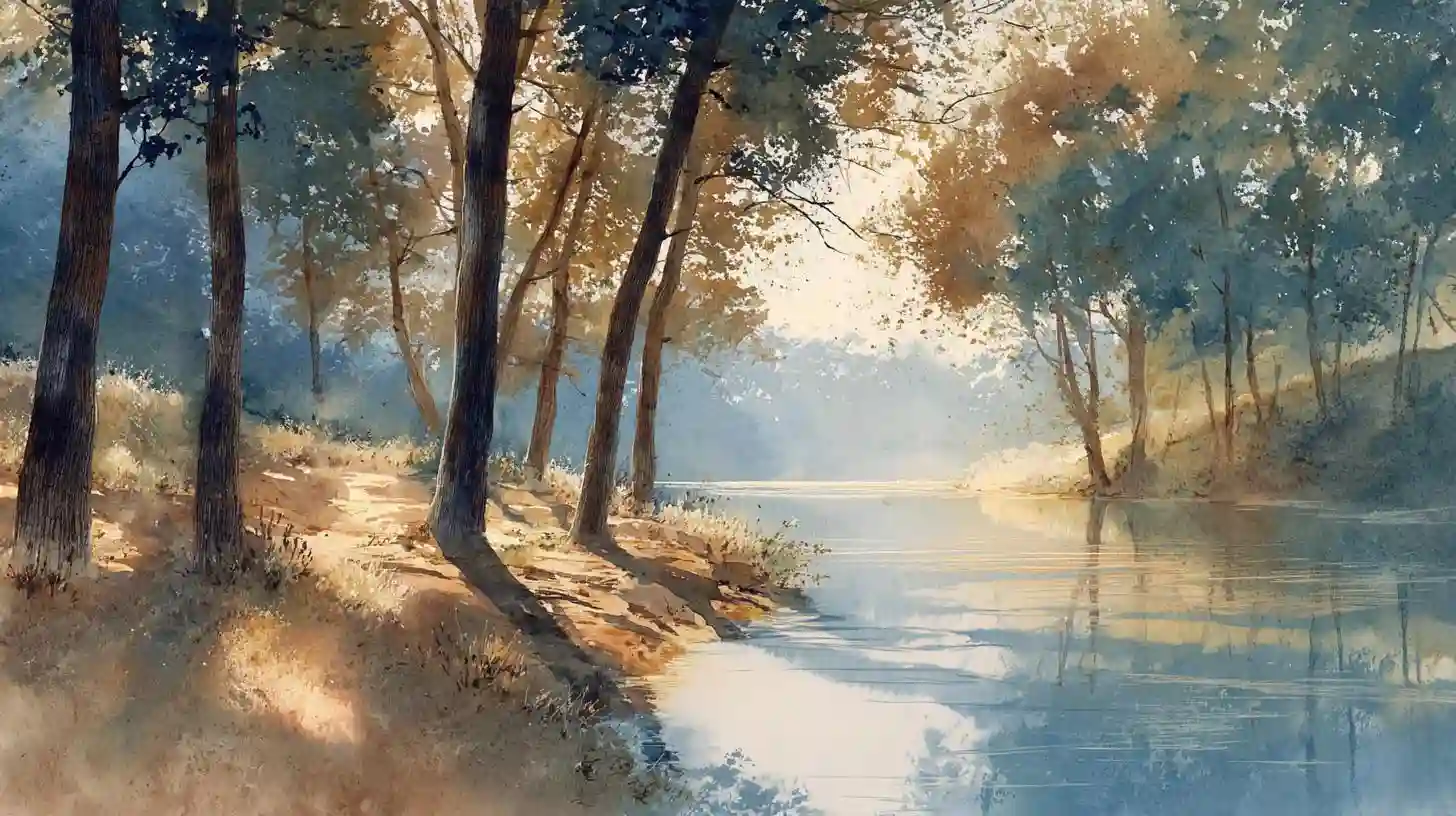
Light and shadows play a crucial role in watercolor landscape art, bringing depth, emotion, and atmosphere to a painting. The delicate balance of light and shadow can transform a simple scene into something dynamic and evocative. In watercolor, the interplay of these elements is particularly unique, as the medium’s transparency and fluidity allow the artist to capture light in a way that is both soft and luminous.
The way light interacts with objects in a landscape can reveal texture and form. A sunlit meadow, for example, may have areas of brilliant brightness where the light directly hits, while the areas in shadow take on a muted, softer tone. This contrast creates a sense of three-dimensionality, giving the painting a lifelike quality. Watercolors, with their ability to create subtle transitions between light and shadow, can make these distinctions feel natural and fluid, unlike other mediums that might rely more heavily on hard lines.
The role of shadows is equally important in watercolor landscapes. Shadows can add mystery, suggesting depth beyond the immediate view, or they can highlight the time of day, such as long evening shadows that stretch across a quiet field. The movement of light throughout the day changes the intensity and shape of shadows, and this variation can add layers of interest to the artwork. For instance, as the sun sets, shadows elongate and colors shift, creating dramatic contrasts that can enhance the emotional tone of the scene.
Watercolor artists often use techniques like wet-on-wet or dry-brush to control the way light and shadow interact on the page. By letting pigments bleed into one another, an artist can soften transitions between light and shadow, creating a harmonious flow. Alternatively, by using dry-brush strokes, they can add sharp contrasts and more defined shapes, accentuating the play of light. This fluidity allows for a range of expressions, from a gentle, tranquil landscape to a more intense and vivid portrayal of nature.
Ultimately, light and shadows not only serve a technical purpose in watercolor landscapes but also work as emotional tools, guiding the viewer’s experience. The subtleties in light’s reflection and the hidden depths in shadow evoke feelings of calm, solitude, or even mystery. These elements make watercolor landscapes stand out, offering a visual narrative that is both captivating and full of life.