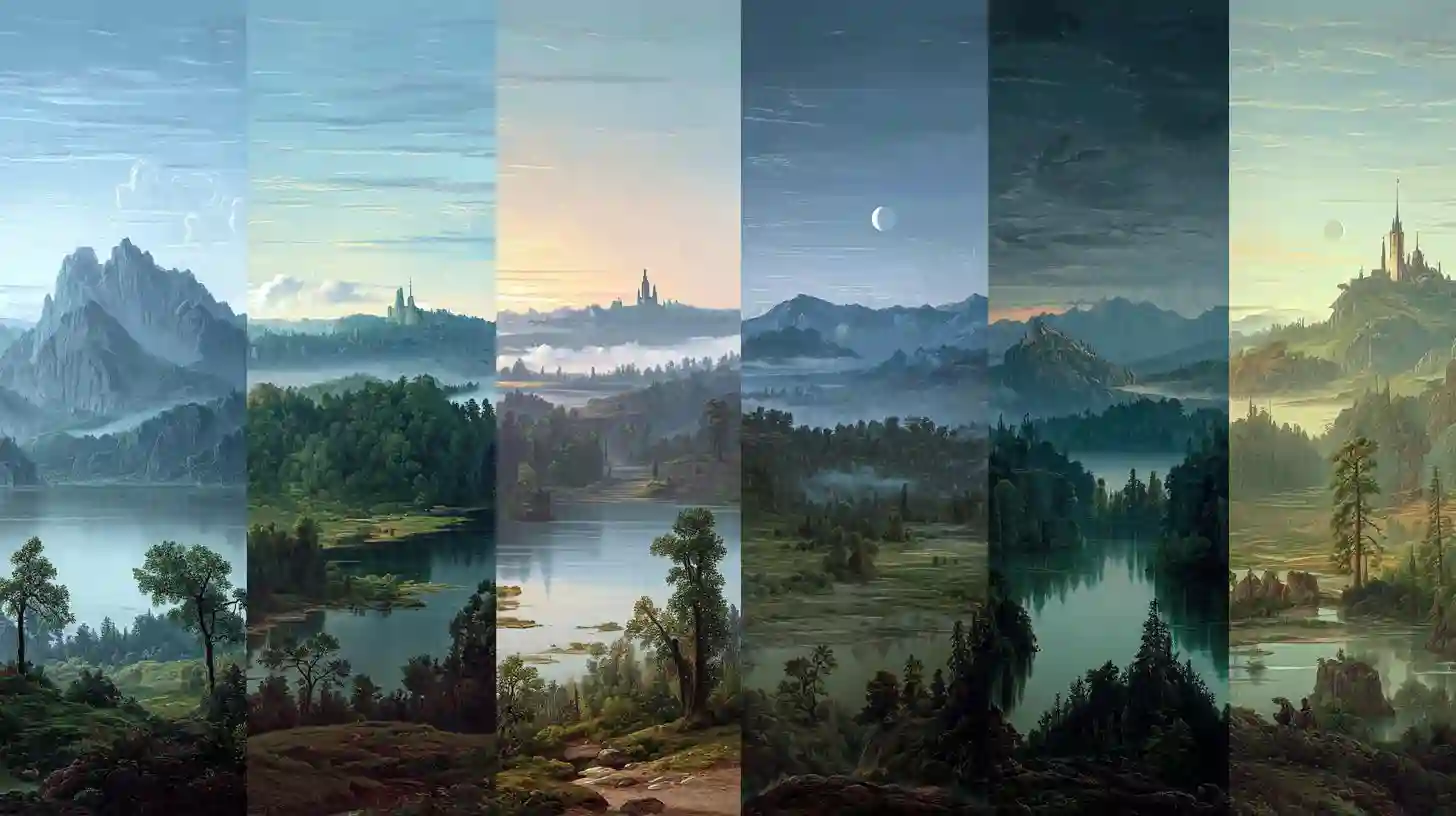
Romanticism in art emerged as a response to the rationalism and order of the Enlightenment, as well as the industrial changes that transformed society. It was an era that sought to emphasize emotion, nature, and individualism, all of which stood in contrast to the strict rules of Neoclassicism. Artists rejected the focus on reason and embraced the sublime, portraying dramatic landscapes, intense emotions, and heroic or mythical subjects. This shift signified the growing importance of the artist’s personal vision and feelings in the creation of art. As the movement developed, it reflected the turbulent social, political, and cultural changes of the time. Romanticism was not confined to a single country but had varying manifestations across Europe, with different artists finding unique ways to express its core principles. In France, for instance, the movement was represented by Eugène Delacroix, whose vivid colors and dynamic compositions embodied the fervor of Romantic ideals. His works often depicted scenes of revolution and exoticism, pushing the boundaries of traditional subject matter. Meanwhile, in England, J.M.W. Turner and John Constable captured the raw power and beauty of nature in their landscapes. Turner’s use of light and atmospheric effects created a sense of awe and mystery, while Constable focused on the pastoral and serene aspects of the natural world, aiming to evoke a sense of nostalgia and harmony. As Romanticism spread throughout Europe, it also began to influence sculpture, literature, and music. The movement’s emphasis on the individual and the irrational provided a fertile ground for the development of new artistic styles and techniques. Throughout the 19th century, Romanticism gradually gave way to other artistic movements, such as Realism and Impressionism. However, its influence remained deeply embedded in the artistic consciousness, continuing to shape the ways in which artists engaged with emotion, nature, and the complexities of the human experience.