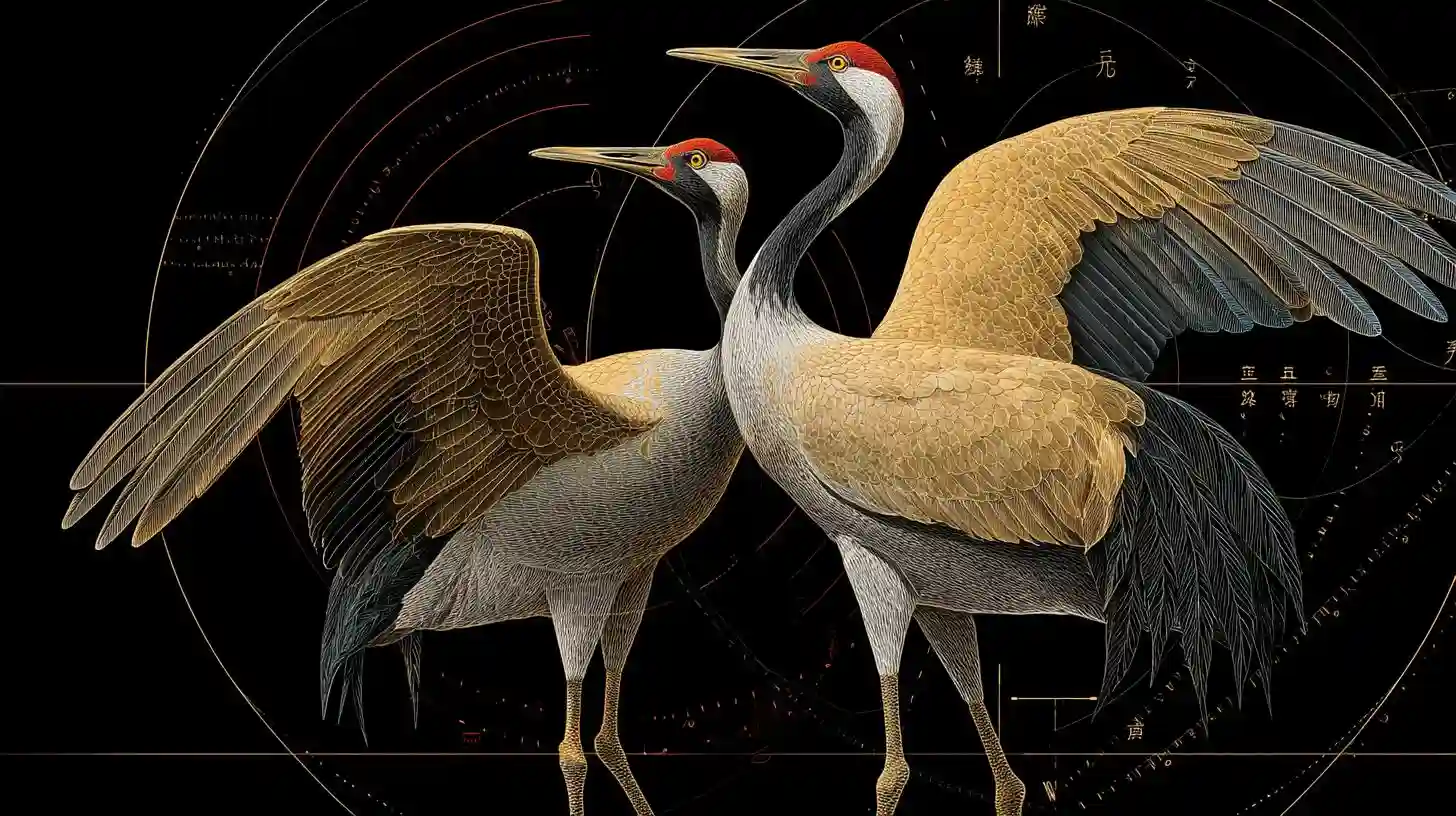
Cranes hold a revered place in many Asian cultures, often symbolizing longevity, purity, and wisdom. In Chinese mythology, the crane is seen as a mystical bird that brings immortality. This association stems from the belief that the crane lives for a thousand years and possesses the ability to transcend the physical realm, making it a symbol of eternal life. Immortality is also reflected in Chinese art, where the crane is frequently depicted alongside other symbols such as the peach, a symbol of longevity, and the tortoise, often representing endurance. According to one popular myth, a crane transforms into a beautiful woman and falls in love with a man, teaching him the importance of compassion and kindness, symbolizing the gentle and graceful nature of the bird.
In Japan, cranes are similarly cherished as symbols of good fortune and longevity. The bird is so revered that it is said that folding a thousand paper cranes can grant a wish, particularly the wish for good health or recovery from illness. The crane’s presence in Japanese culture is also closely tied to the Shinto religion, where it is believed that cranes act as messengers of the gods. Their elegant appearance and soaring flight patterns have inspired admiration for their connection to the divine, embodying the qualities of grace, peace, and spiritual enlightenment. The red-crowned crane, known for its distinctive markings, is especially significant, often seen as a protector of the land and a creature of profound spiritual power.
In Korea, cranes are also linked to immortality and good fortune, with legends often portraying them as messengers between the earthly world and the heavens. A popular folktale tells of a woman who is transformed into a crane after she saves her husband from danger. In this story, the crane represents purity and selflessness, serving as a reminder of the deep connection between humans and nature. In many Korean artistic traditions, cranes are depicted in majestic poses, often surrounded by clouds or mountains, emphasizing their connection to both the earthly and divine realms.
The crane’s significance in these cultures extends beyond myth and folklore into various art forms, including painting, poetry, and sculpture. In all these traditions, the crane embodies a bridge between the mortal and divine worlds, acting as a symbol of purity, grace, and the eternal cycle of life. This revered bird serves not only as an icon of beauty and elegance but also as a powerful reminder of the deeper connections between nature, spirituality, and humanity.