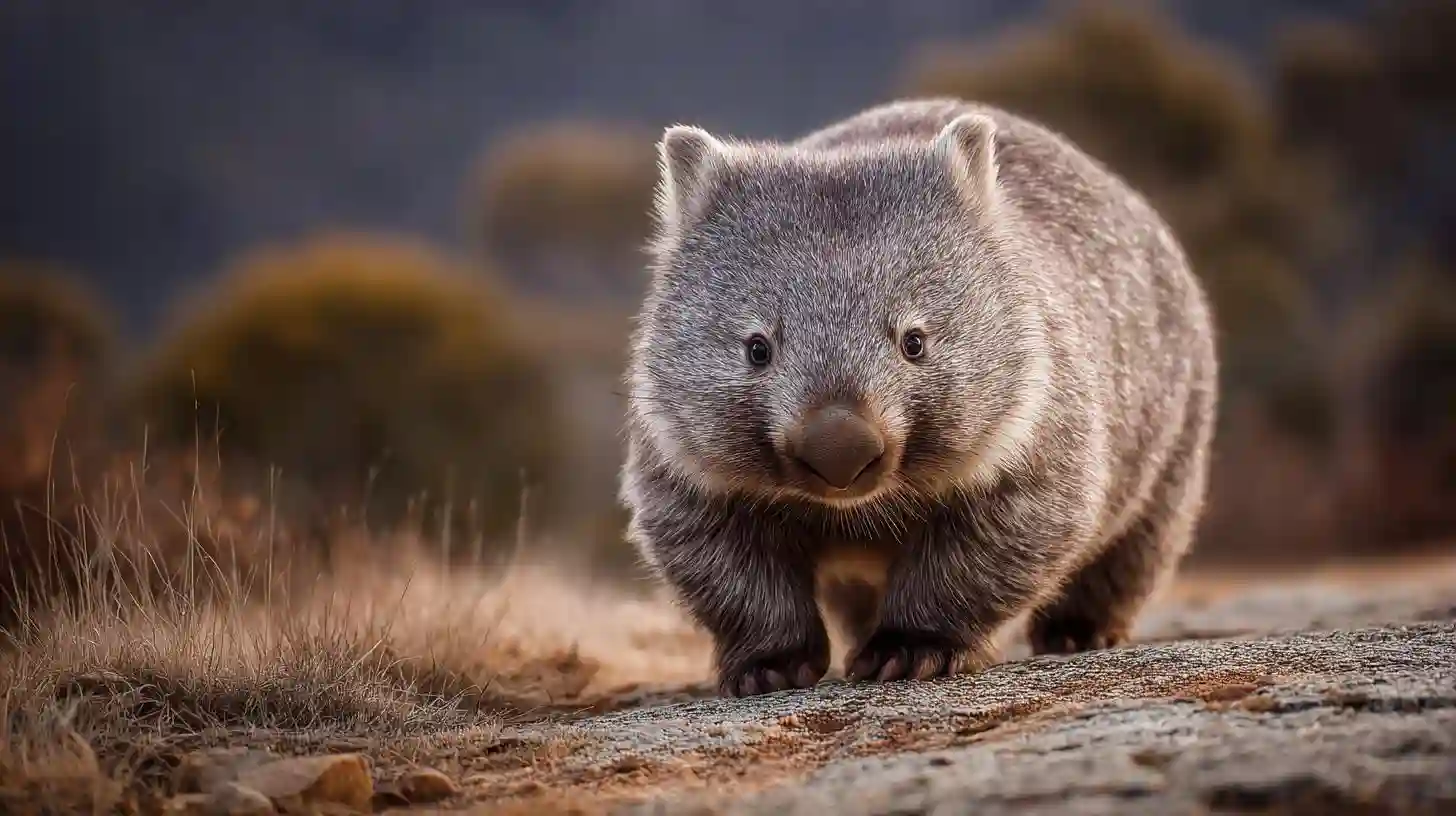
Wombat poop is something of a scientific curiosity. These Australian marsupials are known for producing cube-shaped droppings, a unique trait that has intrigued researchers for years. While most animals produce round or cylindrical feces, wombats stand out with their perfectly formed, almost geometric, cubes. The question of why wombats produce such unusual feces has been the subject of much study, with experts offering a variety of hypotheses about how and why these creatures have evolved this peculiar digestive feature.
The process begins in the wombat’s digestive system, which is specifically adapted to extract as much moisture and nutrients from their food as possible. Wombats are herbivores, mainly feeding on grasses, roots, and bark, which are rich in fiber but low in water content. To survive in their often dry environment, wombats have developed a highly efficient system for conserving water. This system includes a long, slow digestive process that can take up to two weeks. During this time, the food passes through the wombat’s large intestine, where the majority of the water and nutrients are absorbed. The remaining waste material is then compacted and shaped into distinct blocks before being expelled.
One of the primary factors contributing to the cube-shaped feces is the structure of the wombat’s intestines. The last part of the wombat’s large intestine, where the final shaping of the feces occurs, has an interesting feature: it is unevenly segmented. This unevenness creates areas of different elasticity along the intestine, causing the feces to become more rigid in some areas and softer in others. As the material moves through the intestines, it is compressed and molded into cubes due to the varying pressures exerted by the muscular walls of the intestine. The result is a perfectly formed cube that retains its shape even after it leaves the wombat’s body.
Another contributing factor to the shape of wombat poop is the slow rate at which it moves through the digestive tract. Wombats have a very slow metabolism, which allows their food to be processed over a long period of time. This slow movement allows the intestines to take more time to extract water and nutrients, but it also gives the waste more time to solidify and form its distinctive shape. The extended digestive period combined with the unevenness in the intestinal walls provides the optimal conditions for the creation of cube-shaped droppings.
The purpose of the cube-shaped poop is thought to be related to the wombat’s behavior and environment. Wombats are territorial animals, and they use their feces to mark their territory. The cube shape allows the poop to remain in place, rather than rolling away as it might if it were round. This is especially important for wombats, as they often leave their droppings in prominent places like logs or rocks to communicate with other wombats. The cubes are less likely to be displaced by wind or rain, providing a stable marker of their territory.
The unique shape of wombat feces also has an impact on their social structure. Because they use their droppings for communication, the consistency and location of their feces play a role in how they interact with each other. Other wombats can identify the feces of rivals or potential mates by its shape, size, and location, which helps them navigate social dynamics in their habitat. The ability to leave a consistent marker that doesn't easily move or wash away is a critical aspect of maintaining a clear and effective system of communication within their environment.
While much has been learned about the formation of wombat poop, researchers continue to study this fascinating phenomenon. The unique shape of their droppings offers insights into how animals have evolved to adapt to their environments and how even the most seemingly trivial aspects of biology can play a significant role in an animal’s survival and behavior. The mystery of the wombat’s cube-shaped poop is a reminder of the complex and often surprising ways that nature finds to solve problems and enhance the survival of a species in the wild.