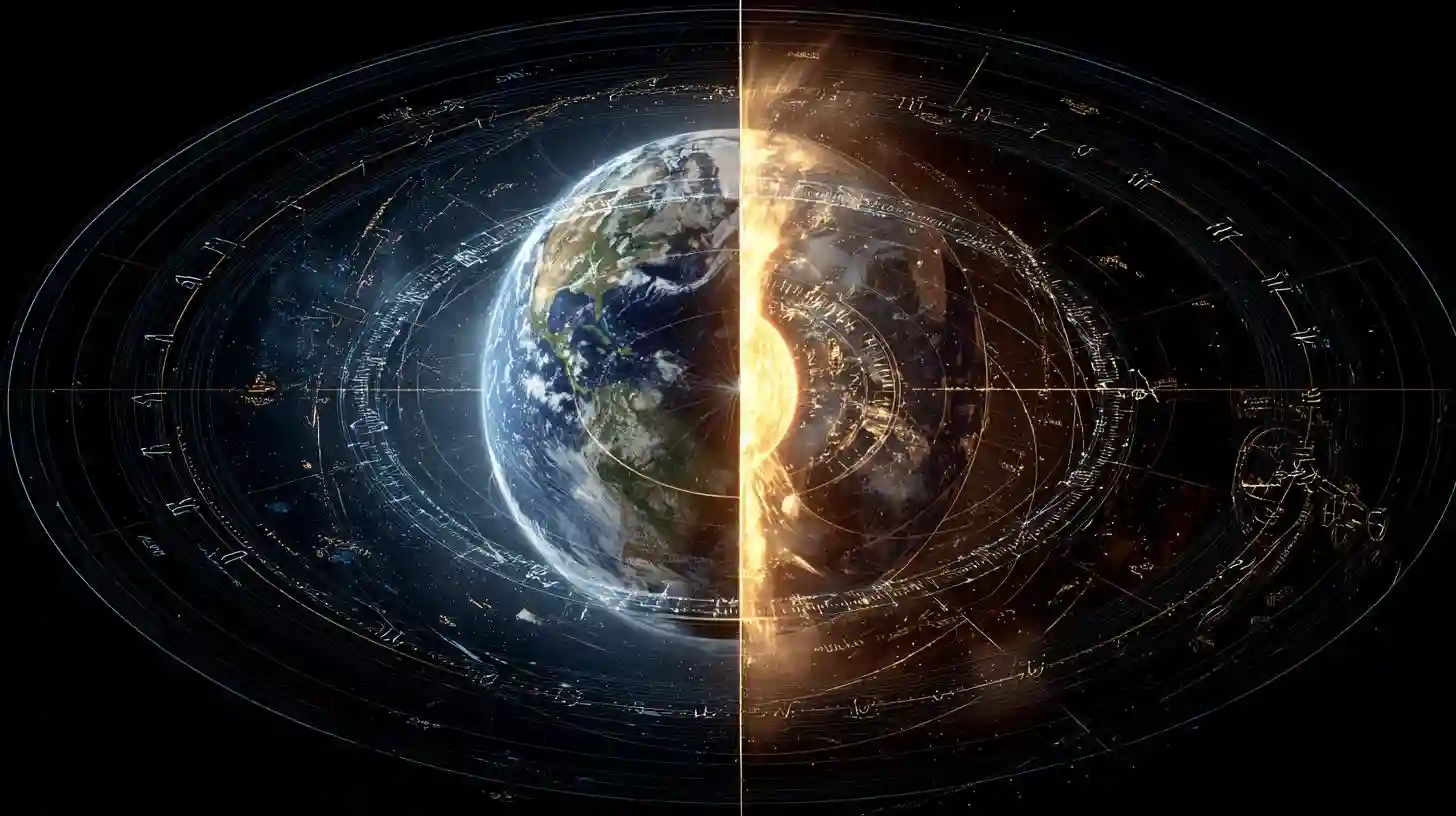
The Earth experiences seasons due to the tilt of its axis and the way it orbits around the Sun. Unlike a perfect vertical line, Earth’s axis is tilted at an angle, which means that during its yearly journey around the Sun, different parts of the planet receive varying amounts of sunlight at different times of the year. This change in sunlight is the primary cause of seasonal variation in temperature and daylight.
The Earth is tilted at an angle of approximately twenty-three and a half degrees from the perpendicular to the plane of its orbit. This tilt means that as the Earth orbits the Sun, different hemispheres of the planet are tilted either toward or away from the Sun at different times. When a hemisphere is tilted toward the Sun, it experiences summer, as the Sun’s rays hit that region more directly and for a longer period of time during the day. Conversely, when a hemisphere is tilted away from the Sun, it experiences winter, as the Sun’s rays are spread over a larger area and have to travel through more of the Earth’s atmosphere, making them less direct and less effective in warming the surface.
At the time when the Earth is at a particular point in its orbit where the tilt causes the Sun’s rays to hit directly over the Tropic of Cancer in the Northern Hemisphere, this marks the start of summer there. At the same moment, the Southern Hemisphere experiences winter because it is tilted away from the Sun. Similarly, when the Earth is positioned in its orbit so that the Sun’s rays are directly over the Tropic of Capricorn, the Southern Hemisphere experiences its summer, while the Northern Hemisphere endures winter. The times of transition between these extremes are known as the spring and autumn equinoxes, when both hemispheres receive nearly equal amounts of sunlight, resulting in nearly equal day and night lengths.
The Earth’s orbit is not a perfect circle but rather an ellipse, which means that the distance between the Earth and the Sun changes slightly over the course of the year. However, this variation in distance is not significant enough to account for the seasons. The seasons are primarily driven by the axial tilt rather than the distance from the Sun. This explains why the Northern Hemisphere experiences summer when it is actually farther from the Sun than the Southern Hemisphere, which experiences winter at the same time.
The combination of axial tilt and the Earth’s orbit around the Sun creates the familiar cycle of seasonal changes. In the Northern Hemisphere, the months leading up to the summer solstice are marked by increasing daylight and warmer temperatures, while the months leading to the winter solstice bring shorter days and cooler temperatures. The reverse happens in the Southern Hemisphere, with summer occurring around December and winter around June.
This cycle of seasons has profound effects on the climate, ecosystems, and life on Earth. The variation in temperature and sunlight affects plant growth, animal migration, and human activities. It influences everything from the crops people grow to the clothing they wear, and it shapes the natural world in ways that are central to the way we experience life on Earth.
Throughout history, the changing seasons have been crucial for agriculture, guiding planting and harvesting times. Early civilizations recognized these patterns and used them to organize their calendars. In many cultures, the changing of the seasons has also had significant cultural and religious importance, with festivals and rituals marking the transitions between seasons, especially the solstices and equinoxes.
The Earth’s seasons are a result of a beautiful and intricate combination of physical properties. The tilt of the Earth’s axis and its orbit around the Sun work together to create the dynamic and ever-changing cycles that define life on Earth. These seasons are more than just periods of hot and cold; they are the driving force behind much of the natural processes that sustain life on our planet, making them one of the most important and fascinating phenomena in the natural world.