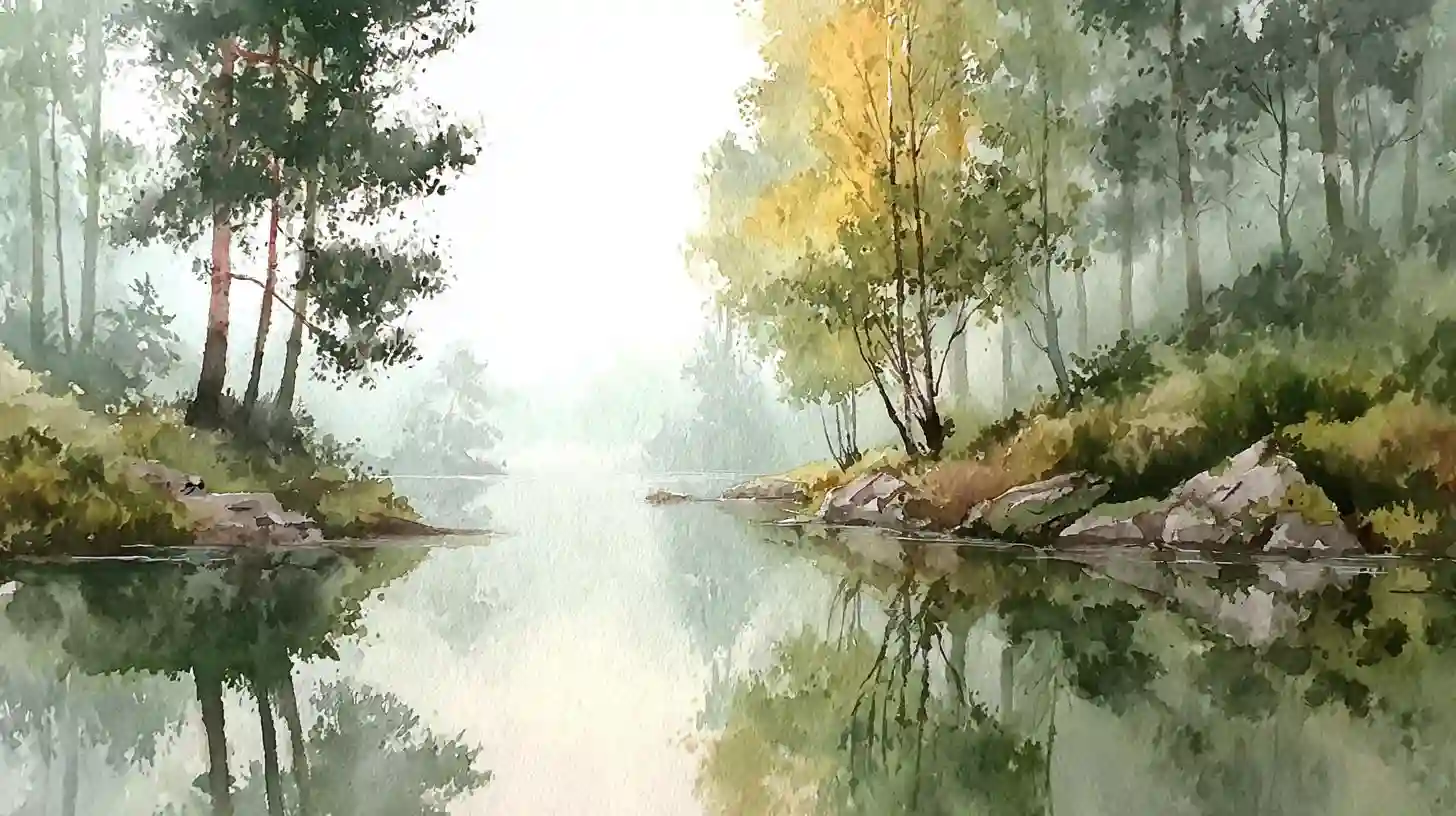
Mastering watercolor landscape painting can be a deeply rewarding and calming experience. By following a simple process, you can gradually develop your skills and create stunning artwork. Whether you’re a beginner or an experienced artist looking to refine your techniques, the key is to practice and observe nature. Begin by selecting a reference for your landscape. This could be a photograph or a scene from life, such as a park, mountain view, or coastline. The more you observe your subject, the better you can capture its essence. Pay attention to details like the play of light and shadow, the way the landscape is divided into foreground, middle ground, and background, and the different colors and textures that make the scene come alive.
Next, prepare your watercolor supplies. Watercolor paints come in tubes or pans, and each offers different benefits. The tube paints tend to be more vibrant, while the pans are convenient and portable. Make sure to have a good selection of brushes, ranging from broad washes to finer details. Watercolor paper is crucial to your success. Choose a high-quality, cold-pressed paper that can handle the amount of water you’ll be using. The texture of the paper plays a significant role in how your paint will behave, so always select one that will help you achieve the results you want. Additionally, have a palette for mixing your colors, a clean jar of water, and a rag or sponge for blotting.
After setting up your materials, start with a light pencil sketch of your landscape. Lightly outline the main features such as hills, trees, or buildings. Avoid focusing on small details at this stage; instead, concentrate on getting the general shapes and proportions right. Keep your lines light and simple to avoid them showing through your final painting. This step will guide you as you paint, giving you a roadmap to follow. Once your sketch is ready, it’s time to begin the watercolor wash. Start with the sky, as it typically forms the background of your painting. Mix a light, watery wash of blue or any color that fits the scene you’re creating. Apply the wash in sweeping strokes, keeping your brushstrokes soft and fluid. Remember that watercolors are transparent, so the underlying pencil lines and paper texture will subtly show through, adding a sense of depth. After the sky is complete, move to the distant mountains or horizon. These areas should be painted with lighter washes, using less pigment and more water to create a feeling of distance and atmosphere.
Once the background is in place, move on to the middle ground and foreground. Here, you can start introducing more vivid colors and adding more definition to your landscape. For example, you might paint fields, trees, or a body of water. The key to a successful landscape is to layer your colors. Start with lighter tones and gradually build up darker values. Watercolors are ideal for layering, as they allow you to gradually deepen shadows and add texture. For trees and foliage, use varying shades of green, mixing in yellows, blues, and browns to create natural diversity. Remember to allow your layers to dry before adding new ones. This prevents the colors from bleeding into each other and helps maintain sharp edges where necessary.
When you get to the final stages, focus on the details that will bring your landscape to life. This is where your skills in using a fine brush and a steady hand come into play. Add subtle details like the texture of tree bark, ripples in the water, or highlights in the grass. You can also enhance the contrast between light and dark areas to give your painting more dimension. A small touch of white gouache can help to add highlights or accents, such as clouds, the sparkle of water, or glints of light on leaves. Be sure to leave some areas of the painting untouched, allowing the white of the paper to show through. This will create contrast and help to make the colors pop.
Finally, take a step back and evaluate your painting. Look for any areas that need more balance or adjustment. At this stage, it’s tempting to keep adding details, but it’s important to know when to stop. Remember, watercolor painting is about creating a sense of harmony and fluidity. A landscape doesn’t need to be overly detailed to be beautiful; it needs to capture the essence of the scene, the movement of nature, and the play of light and shadow. With practice, you’ll develop a personal style and technique that works for you. Each painting you create will be an opportunity to refine your skills and experiment with new ideas.