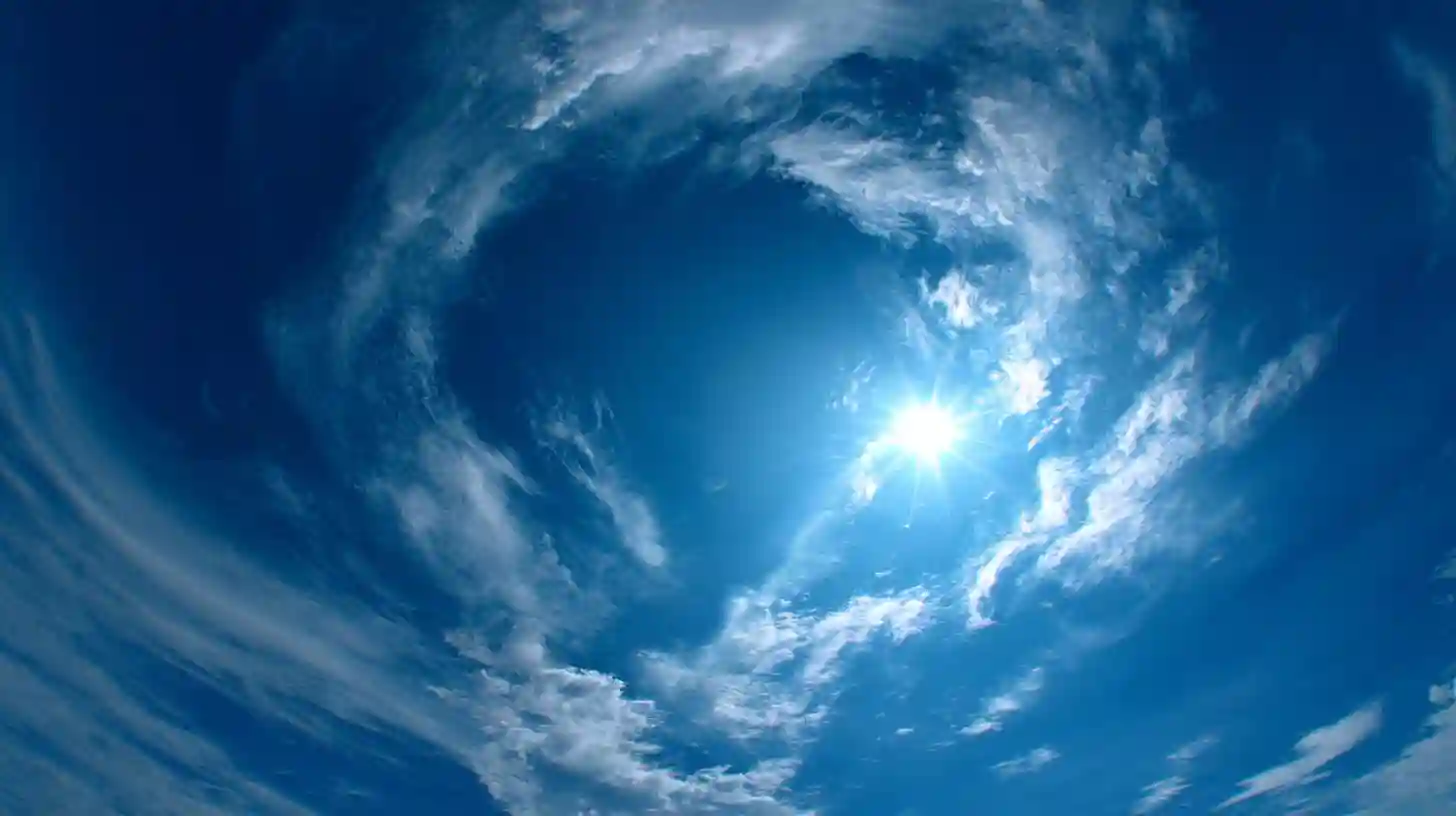
The color of the sky has fascinated people for centuries, with many wondering why it appears blue during the day. The answer lies in the way sunlight interacts with Earth's atmosphere. Sunlight, though it may seem white to our eyes, is actually composed of many different colors, which together form the visible spectrum. Each of these colors corresponds to light waves of different lengths. The color of the sky is determined by the scattering of light, particularly how shorter wavelengths, like blue, are scattered more than longer wavelengths, like red or yellow.
When sunlight enters the Earth's atmosphere, it is made up of various gases, particles, and water droplets. As sunlight passes through this atmosphere, it collides with these molecules. The atmosphere is made primarily of nitrogen and oxygen, and these molecules have a strong influence on how light is scattered. This scattering process is known as Rayleigh scattering, named after the British scientist who first described it in the nineteenth century.
Rayleigh scattering happens because smaller particles or molecules scatter shorter wavelengths of light more efficiently than longer ones. The blue end of the visible spectrum has shorter wavelengths, which means that blue light is scattered in all directions when it encounters molecules in the atmosphere. As a result, when we look up at the sky, we see blue light coming from every direction, making the sky appear blue to our eyes.
It is important to note that the scattering is not uniform. Although blue light is scattered more than other colors, the amount of light scattered depends on several factors, including the angle of the sun, the time of day, and the presence of particles or pollution in the atmosphere. When the sun is high in the sky, the light travels through a thinner portion of the atmosphere, and blue light is scattered broadly and evenly, giving the sky its characteristic hue. However, at sunrise or sunset, when the sun is lower on the horizon, the light has to pass through a larger portion of the atmosphere. In this case, the shorter wavelengths are scattered so much that they are largely removed from the direct sunlight, leaving behind the longer wavelengths, such as red and orange, which is why the sky often appears reddish during these times.
While blue is the dominant color of the sky, other factors can influence its appearance. For instance, the amount of dust, pollution, or moisture in the atmosphere can affect how light is scattered. Large amounts of particulate matter can cause scattering that enhances the red and yellow hues in the sky, especially during times of heavy pollution or after a volcanic eruption. Additionally, in areas with lots of humidity, clouds and water droplets scatter light in a way that can make the sky appear white or gray.
Interestingly, the sky's color can also be affected by geographical location and weather conditions. In places near the equator, the atmosphere is denser, and the scattering effect may cause the sky to appear a more vibrant blue. On the other hand, at higher latitudes, the atmosphere is thinner, which may result in a slightly different hue. Atmospheric pressure, which decreases with altitude, also plays a role in the color we observe. At higher altitudes, the thinner atmosphere means there are fewer molecules to scatter the light, which can result in a less intense blue.
In addition to these natural phenomena, human perception plays a role in how we perceive the sky's color. The human eye is more sensitive to blue light than to other wavelengths, which makes blue light more prominent in our visual experience. This sensitivity is why, even though all colors of the spectrum are being scattered, our eyes are more attuned to seeing blue as the predominant color in the sky.
This phenomenon, though seemingly simple, demonstrates the intricate interactions between light, atmosphere, and perception. It highlights how complex even the most familiar elements of our world can be. While the reason for the blue sky may seem straightforward at first glance, it involves a combination of physical laws, atmospheric conditions, and biological factors that together produce a stunningly beautiful and often mesmerizing effect.