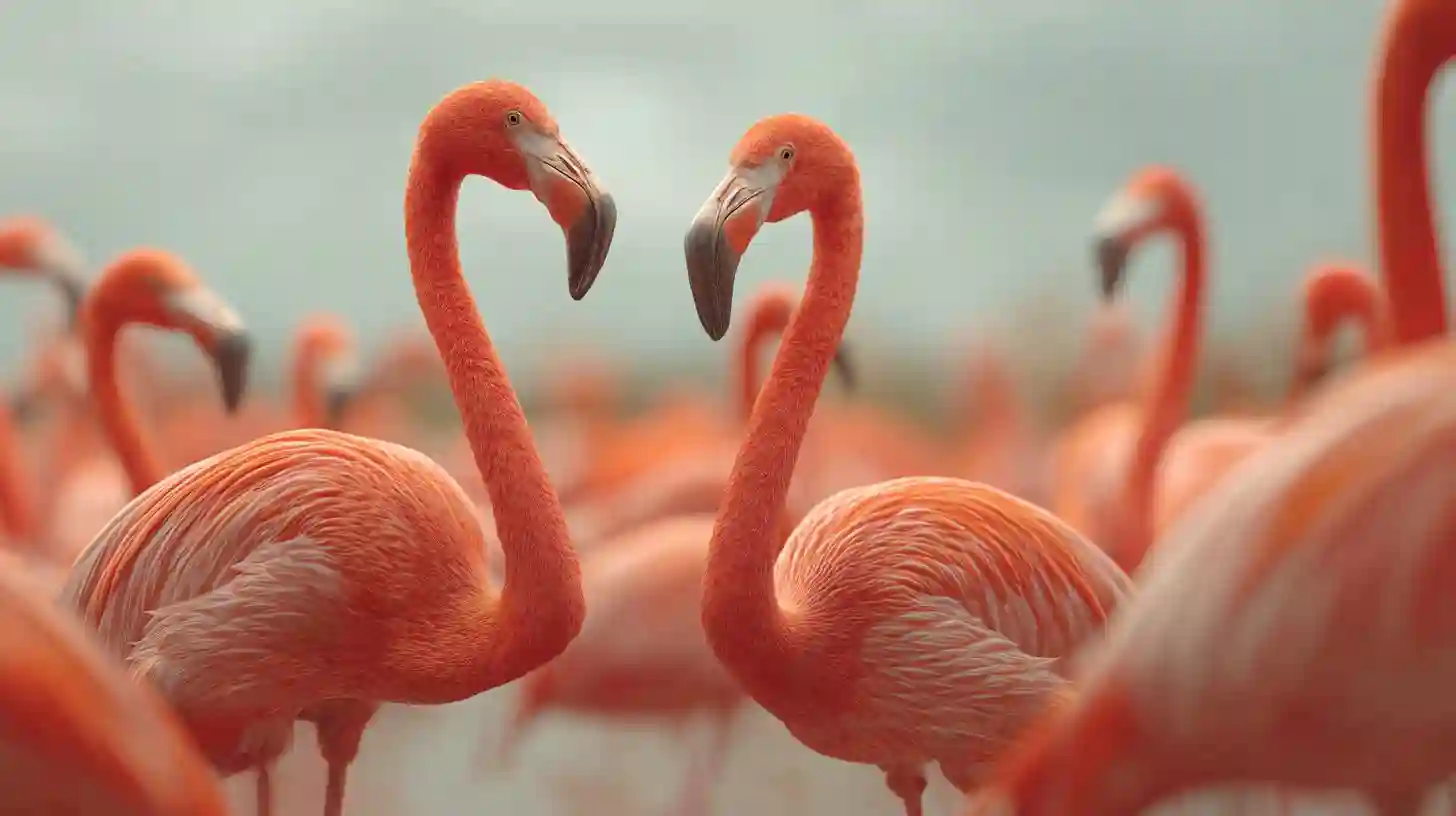
The word "flamboyance" conjures images of vibrant colors and dramatic displays, and it is the perfect term to describe a group of flamingos. The flamingo, with its striking pink plumage and long, graceful neck, is a bird that stands out in the wild. When they gather together, the sight of these elegant creatures, often standing in shallow waters or wading through mud, is nothing short of spectacular. The term "flamboyance" reflects not only the physical appearance of flamingos but also their behavior and social dynamics, making it an apt descriptor for a group of these birds.
Flamingos are known for their striking color, a shade that can range from pale pink to a deeper crimson, depending on their diet and the minerals found in their environment. Their feathers are often the first feature that people notice, giving them a sense of majesty and grace. However, it's not just their color that makes them unique; it's their social nature that defines them. Flamingos are highly social birds, and their behavior is influenced by the group dynamic. They often travel and forage in large groups, sometimes numbering in the thousands, and it is in these large congregations that the term "flamboyance" feels especially fitting.
The flamboyance of flamingos is not just a visual spectacle; it is a reflection of their interactions. These birds communicate through a variety of vocalizations, postures, and synchronized movements. Their elaborate courtship rituals, where males display their bright plumage and engage in intricate dances, add to the sense of drama that defines a flamboyance. The synchronized movements of a flock of flamingos, with their heads held high and necks arched in unison, create an almost choreographed dance, further enhancing the feeling of flamboyance that the term evokes. It's a display of unity and coordination, where each individual participates in a collective performance that is both beautiful and mesmerizing.
The group behavior of flamingos is also a critical aspect of their survival. Living in large colonies helps them protect themselves from predators, as the sheer number of birds provides a level of security. Additionally, flamingos often rely on the group to help find food sources. They feed by filtering water with their unique beaks, and this is more easily done when they are in large groups. By moving together in sync, they can access food more efficiently, ensuring that each bird gets enough to eat. This communal way of life, where cooperation and synchronization are key, only adds to the sense of flamboyance that surrounds flamingos.
The social structure of a flamingo colony is complex, with different birds playing different roles within the group. While some flamingos may be more dominant, others might take on specific tasks, such as helping to care for the young or defending the colony from potential threats. This intricate balance of roles further contributes to the flamboyant nature of their behavior, as it is a mix of elegance, coordination, and hierarchy that makes a flamingo colony so captivating to observe.
In addition to their physical and social characteristics, flamingos are also known for their resilience and adaptability. They can thrive in a wide range of habitats, from salt flats to coastal lagoons, and their ability to adjust to different environments adds another layer to their flamboyant nature. Their ability to survive in harsh conditions, such as extreme heat or salinity, is a testament to their strength and endurance. This resilience, coupled with their striking appearance and social behavior, makes them one of the most unique and fascinating bird species in the world.
As a symbol of grace and beauty, the flamingo has captured the imagination of people for centuries. Their distinctive appearance and flamboyant behavior have made them a subject of art, literature, and popular culture. Whether depicted in photographs, paintings, or fashion, flamingos continue to be associated with elegance, luxury, and sophistication. The term "flamboyance" is a perfect reflection of these qualities, as it captures not only the visual spectacle of a group of flamingos but also the unique dynamics that make them so captivating.
Ultimately, the term "flamboyance" is more than just a label for a group of flamingos. It is a word that encompasses the beauty, grace, and social complexity of these birds. It reflects their striking appearance, their coordinated movements, and their ability to thrive together as a community. In many ways, the term "flamboyance" encapsulates the essence of what makes flamingos so remarkable – a combination of elegance, social cohesion, and a vibrant display of life.