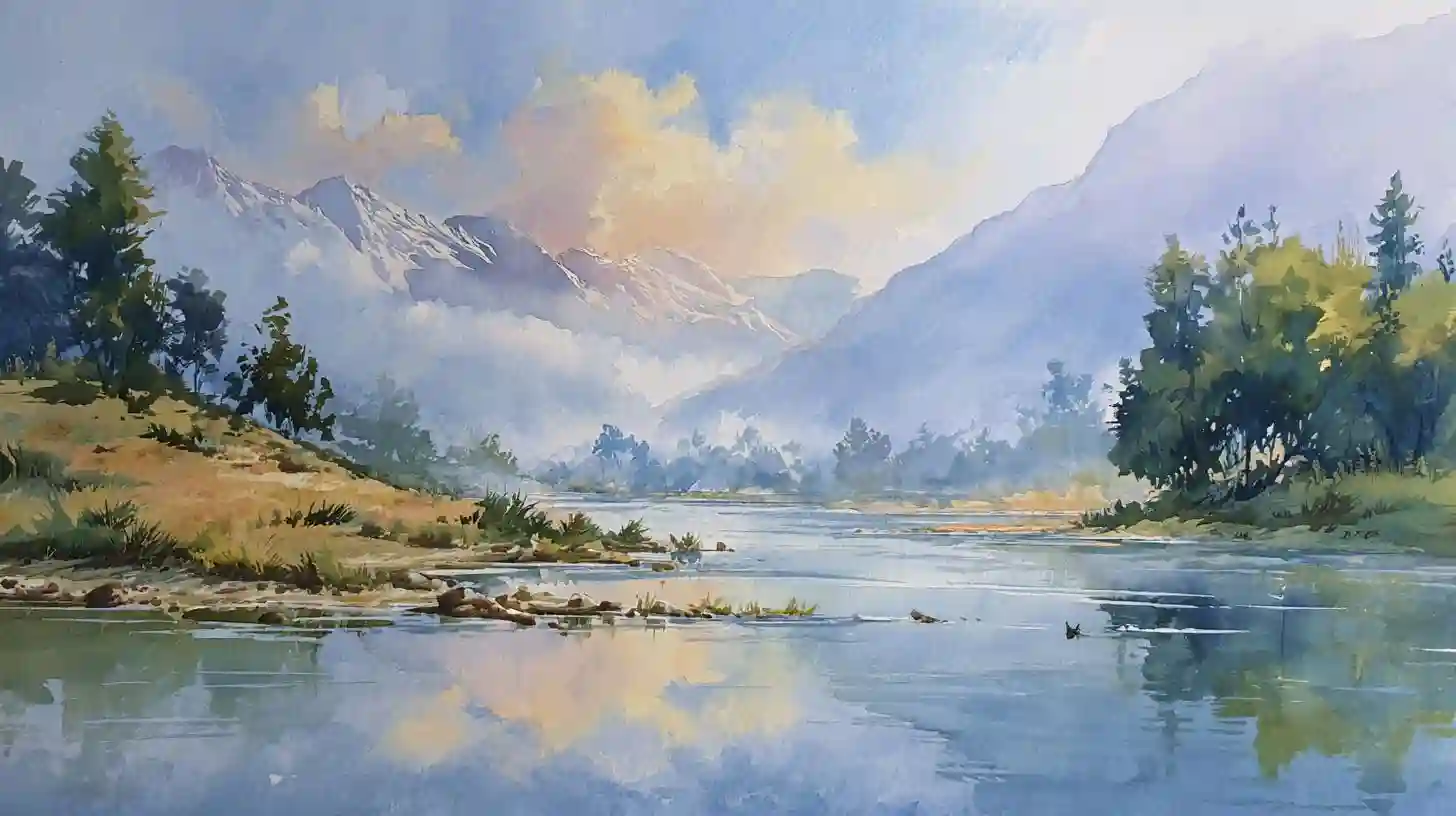
Watercolor landscape painting is a beautiful and expressive form of art that captures the subtle beauty of nature. Whether you are a beginner or someone with a bit more experience, mastering watercolor landscapes can be a fulfilling and rewarding journey. The key to creating stunning watercolor landscapes lies in understanding basic techniques, using the right tools, and embracing the fluidity of the medium. The following guide breaks down the essential steps you can follow to achieve a successful landscape painting, making the process feel approachable and manageable.
Start by gathering your materials. You’ll need watercolor paints, brushes, a block of watercolor paper, and a jar of clean water. It’s essential to use high-quality materials to get the best results, especially with watercolor paper. A cold-pressed, 100% cotton paper will hold water well and give you the texture you need to make the most of your paints. Additionally, choose brushes that are soft and allow you to create a range of marks. Having a palette to mix your colors and a rag or paper towels on hand for blotting and corrections is also important. By setting up everything you need before beginning, you’ll be ready to focus on your painting process without distractions.
Once your materials are prepared, the next step is to sketch out your landscape lightly with a pencil. This stage does not require intricate details but should give you a basic structure to follow. For example, if you are painting a mountain scene, sketch in the outline of the mountains, trees, and the horizon line. This initial sketch helps you maintain proportions and composition, and it serves as a guideline to follow as you add layers of paint. Keep the lines faint, as you’ll be painting over them later, and avoid adding too much detail. This stage is just about capturing the basic shapes and layout of your landscape.
The next step involves applying your first wash of color. Watercolor works best in layers, starting with a light wash of color. Begin by wetting the paper lightly with clean water, and then apply a wash of color for the sky, ground, or distant hills. Work quickly, as watercolor dries fast, and try to let the water and paint blend naturally to create soft gradients. You can use a large, flat brush for this process, allowing you to cover a wide area with a smooth layer. Make sure you leave some areas of the paper untouched, as these will serve as highlights or lighter areas in your painting. This first wash sets the mood and atmosphere of your landscape, and you can build upon it later with more details and depth.
After the first wash dries, it’s time to add depth and detail to your landscape. Start by painting the middle ground and foreground elements. For example, if your landscape includes trees, mountains, or water, begin with these features by applying more saturated, concentrated layers of paint. Watercolor allows you to build up depth gradually, so take your time to layer the paint. Use smaller brushes for more precise detailing and allow the paint to dry between layers to maintain control over the intensity of the colors. You can also use the wet-on-wet technique to create soft transitions between colors or wet-on-dry for sharper, more defined edges. As you add these layers, remember to keep a balance between lighter and darker areas, as the contrast will help bring your landscape to life.
The final stage of your painting involves adding the finishing touches. This is where you can refine the details of your landscape, such as adding shadows, highlights, and smaller elements like grasses or foliage. Use a fine-tipped brush for intricate details, and remember that less is often more when it comes to final touches. You want to avoid overworking the painting, as watercolor is a delicate medium, and excessive layers can make the painting look muddy. Consider the light source in your painting and use it to guide where you place shadows and highlights. For example, shadows on trees or mountains should fall opposite to where the light source is. Once you feel satisfied with the overall look of your painting, step back and give it a final evaluation. Adjust anything that feels out of balance, and don’t hesitate to add small adjustments like subtle highlights or darkening certain areas to create contrast.
Throughout the process of painting, it’s important to embrace the fluid and unpredictable nature of watercolor. Mistakes or unintended results can sometimes lead to happy accidents, creating unique effects that might add character to your landscape. Don’t be afraid to experiment with different techniques, whether it’s splattering paint for texture or using salt to create interesting patterns. With practice and patience, you will begin to develop your own style and preferences when it comes to watercolor landscape painting. Let go of the idea of perfection and focus on enjoying the process of capturing the beauty of nature in your own artistic way.