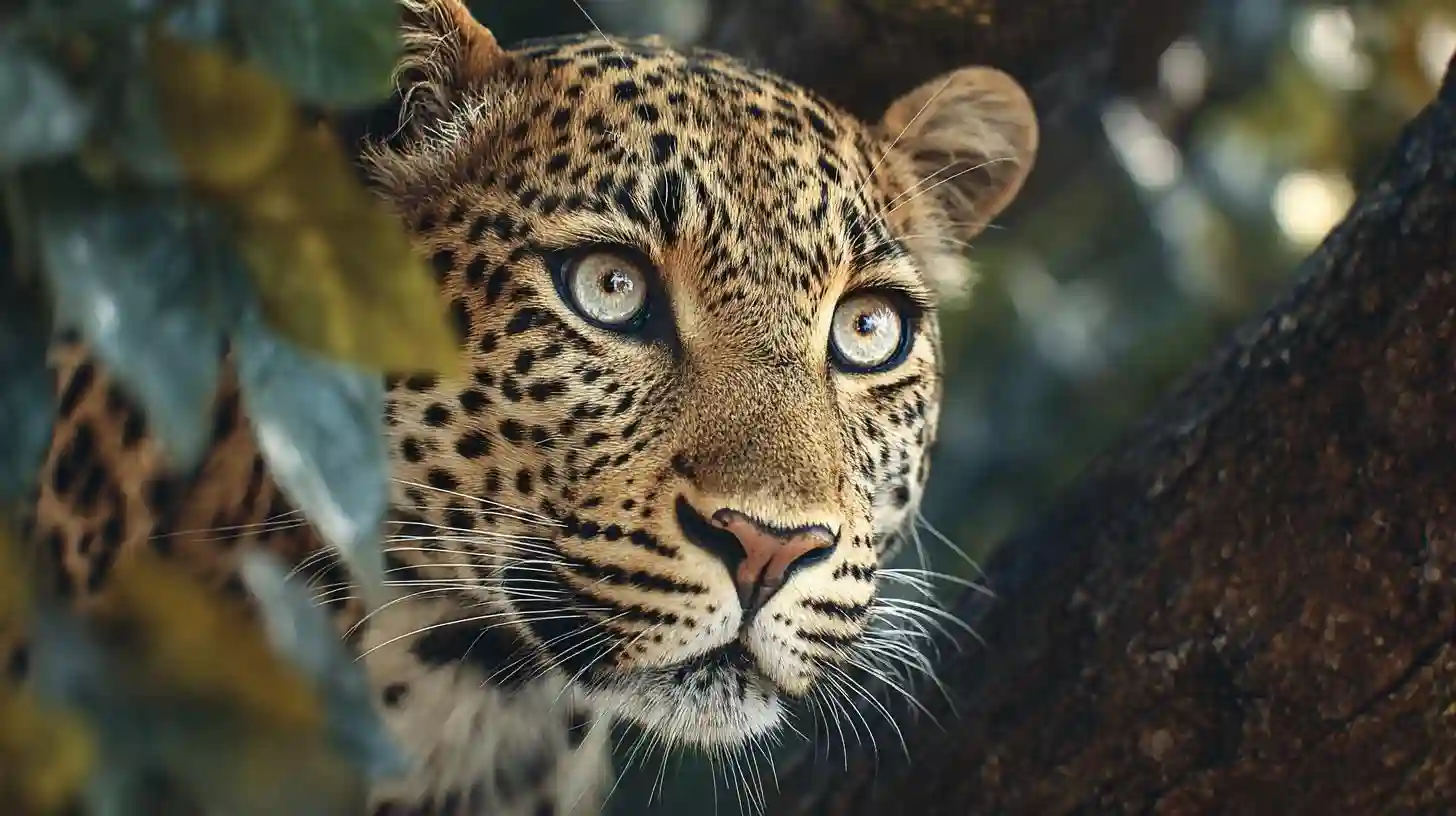
Leopards are one of nature's most versatile and agile predators, known for their exceptional ability to climb trees. Unlike many big cats, which are often grounded hunters, leopards have evolved an impressive set of skills that allow them to thrive in environments where trees play a critical role in their survival. These big cats use their climbing abilities to secure food, escape danger, and even establish territories. Leopards are solitary creatures, and their ability to climb trees gives them an advantage in the wild, where the presence of other predators, including lions and hyenas, poses a constant threat.
A leopard's climbing skills are incredibly refined. They have strong, muscular limbs and sharp claws that can grip tree trunks with ease, allowing them to ascend with remarkable speed and agility. Their flexible spine and powerful hind legs provide them with the strength needed to leap up to higher branches or scale trees in a way that few other predators can match. This flexibility in their body structure allows leopards to navigate through dense foliage or climb vertically with minimal effort. They can also descend trees head-first, a rare ability among carnivores, which further enhances their advantage in a forested environment.
The most notable use of this climbing ability is seen when leopards store their kills in trees. Predators such as lions, hyenas, and even crocodiles, are all potential threats to a leopard's hard-earned meal. To avoid losing their prey to these larger and more powerful animals, leopards often drag their kills up into the safety of a tree. The high branches provide a safe haven, keeping their food out of reach from scavengers and giving the leopard time to eat at its leisure. In some instances, leopards will hoist carcasses that are even heavier than themselves up the trees, showcasing not only their strength but also their problem-solving abilities in securing their food.
This behavior also reflects the leopard's adaptability and intelligence. By keeping their kills out of the reach of ground-dwelling scavengers, leopards maximize their chances of survival, as they do not have to compete for food as frequently. The trees offer a level of protection from larger predators, enabling leopards to enjoy a meal without constant interruption. This tree-dwelling strategy allows them to stay undisturbed and ensures that they do not have to engage in confrontations with more powerful animals, which could lead to injury or death.
Climbing also plays a role in leopard's ability to escape danger. When threatened by larger predators or even by other leopards, they often take refuge in trees to avoid direct confrontation. The ability to quickly scale a tree provides them with a safe escape route, allowing them to elude danger in a way that ground-bound predators cannot. Leopards are highly adept at using their climbing skills to gain a vantage point over their surroundings, observing threats from above and making decisions about how to respond to potential dangers. Their ability to swiftly retreat to the safety of the treetops gives them an edge in avoiding unnecessary conflicts and ensures their survival in areas populated by other powerful predators.
The trees also provide a sense of security when it comes to establishing territories. Leopards are territorial animals, marking their areas with scent markings and using trees as natural boundaries to demarcate their domains. By climbing trees and leaving scent marks on the bark, leopards communicate their presence to other animals, signaling that the area is claimed. This is important for maintaining space and reducing competition for resources. Trees become not only physical structures for climbing but also play a crucial role in the leopard’s social and territorial behavior.
This remarkable ability to climb trees is not only a tool for survival but also a testament to the leopard’s versatility and skill. In an environment where agility, strength, and intelligence are key to thriving, leopards use their climbing prowess to stay one step ahead of their competitors and predators. Whether they are storing food, escaping danger, or asserting their dominance, the trees serve as an essential resource for leopards, allowing them to navigate the wild with ease and efficiency. Their exceptional climbing abilities give them a unique advantage, one that has helped them to remain successful and dominant in their natural habitats for centuries.