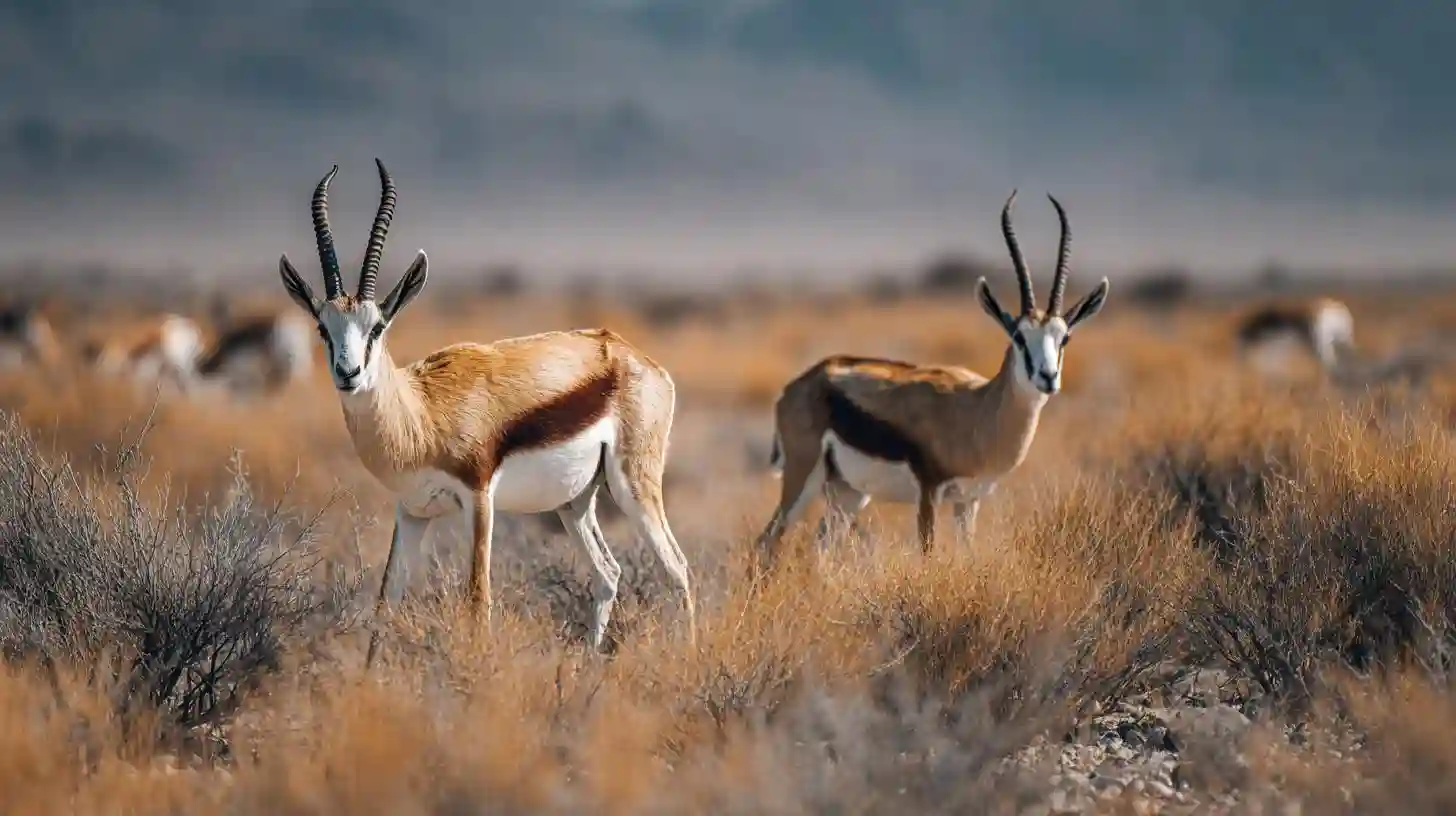
Antelopes are some of the most graceful and captivating creatures found in the wild, particularly across the savannahs, grasslands, and forests of Africa and parts of Asia. Known for their speed, agility, and unique adaptations, these animals have developed fascinating habits to survive and thrive in their natural environments. From their feeding behaviors to their social structures and intricate methods of avoiding predators, antelopes showcase a blend of instinct and learned behaviors that help them navigate the challenges of their habitats.
One of the most striking characteristics of antelopes is their incredible ability to move swiftly and with precision. They are built for speed, with long, slender legs and specialized muscle structures that allow them to run at remarkable speeds when necessary. Many species, such as the impala, springbok, and gazelle, are known to perform impressive leaps and bounds when evading predators. These rapid movements often help them escape from lions, cheetahs, and other apex predators that roam the same territories. The ability to make sharp, unpredictable turns in mid-air or during high-speed chases gives antelopes an edge in survival, confusing predators and making them harder to catch.
Antelopes are herbivores, with their diets primarily consisting of grass, leaves, and shrubs. Depending on their species and the availability of food in their particular region, they may also consume fruits and seeds. Their foraging habits are often influenced by the seasonal availability of different plants. During the dry season, when grass is scarce, antelopes may graze on more woody vegetation or move to areas where fresh shoots are emerging. They have developed a keen sense of smell and taste, helping them identify the most nutritious plants available at any given time.
While grazing, antelopes are always vigilant. These animals have a highly developed sense of sight and hearing, allowing them to detect predators from a distance. Their eyes are positioned on the sides of their heads, providing them with a wide field of vision to spot potential threats. Antelopes often rely on their keen eyesight to stay alert for predators, watching for the slightest movement in the surrounding grasses. They also use their acute hearing to detect the sounds of predators approaching, enabling them to react quickly and flee if necessary.
One of the most remarkable aspects of antelope behavior is their social structure. Many species of antelope live in herds, which can range from small groups to large, tightly-knit families. The size and composition of the herd can vary depending on the species and the availability of resources. In some cases, the herd is led by an older, experienced female who provides guidance and protection to the younger members. In other species, males may play a more dominant role in the herd's leadership, especially during mating seasons when they engage in fierce competitions for dominance.
Antelope herds often exhibit highly coordinated behavior, especially when it comes to avoiding predators. When a threat is detected, the entire group may take off in unison, running in the same direction or changing course in a split second to confuse predators. This collective behavior increases the chances of survival for each individual, as it makes it more difficult for a predator to single out and capture one member of the herd. In some species, such as the springbok, herds will even perform coordinated jumps known as "pronking," a behavior that seems to confuse predators and might even serve as a display of fitness to deter potential attackers.
Within these herds, antelopes have developed complex communication methods. Vocalizations such as bleats, grunts, and snorts are used to convey different messages, such as alerting the group to the presence of a predator or signaling distress. Visual cues, such as tail movements or body posture, are also important in maintaining social cohesion. A raised tail can signal alarm, while a calm, low posture may indicate that all is well. These signals help ensure that the group remains united and ready to act if a predator is nearby.
Another fascinating aspect of antelope behavior is their migratory patterns. Some species, particularly those in more arid regions, engage in seasonal migrations to find food and water. These migrations can span long distances, with entire herds moving across vast stretches of land in search of more favorable conditions. The ability to navigate across vast open landscapes, often without the benefit of clear landmarks, is a testament to the antelope's extraordinary instincts and memory. During migration, antelopes rely on their social groups for guidance, as well as the experience of older individuals who have made similar journeys in the past.
Reproduction in antelopes also follows a complex pattern, with many species displaying unique courtship rituals. Males often compete for the attention of females, using displays of strength, agility, and stamina to demonstrate their fitness as potential mates. These displays can range from physical confrontations to intricate dances and vocalizations. The males who are most successful in these competitions gain access to mates, ensuring that their genes are passed on to the next generation. Once mated, females typically give birth to a single calf after a gestation period, and the young are cared for by the mother until they are old enough to join the herd.
The role of antelopes in their ecosystems is significant, as they serve as a primary food source for predators while also contributing to the overall health of the vegetation they graze on. Their grazing habits help maintain the balance of plant life by preventing any one species of plant from becoming overly dominant. In doing so, antelopes contribute to the biodiversity of their habitats, supporting a wide range of other species that rely on the same resources.
Ultimately, the habits and behaviors of antelopes are a testament to their adaptability and resilience in the face of the challenges posed by their natural habitats. Whether it’s their impressive speed, their social coordination, or their intricate ways of avoiding predators, antelopes continue to captivate and inspire those who are lucky enough to observe them in the wild.