Fireworks, often associated with celebrations and moments of grandeur, have long captured the fascination of photographers. Their explosive colors and dynamic patterns provide endless creative opportunities, transforming the night sky into a canvas of light and motion. Among the various ways fireworks can be explored through the lens, fire circles and sparks stand out as particularly intriguing. These elements, when captured at the right moment, reveal a unique blend of energy and artistry that can elevate any photographic composition.
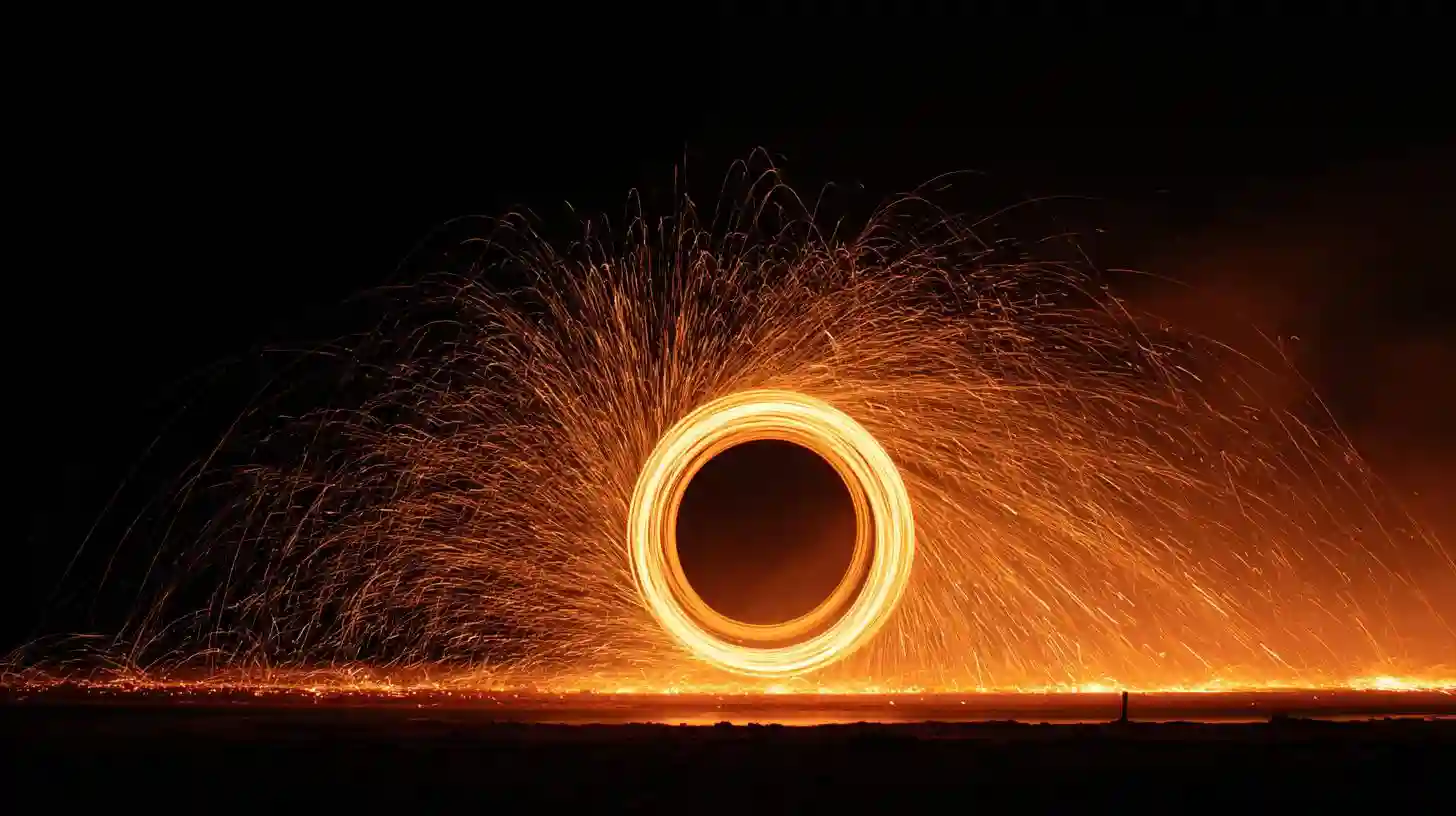
One of the most mesmerizing aspects of fireworks in photography is their transient nature. The fleeting moments of each burst of light create a sense of urgency for photographers to capture the perfect shot. Fire circles, which are often created by spinning sparklers or other fire-based tools, produce continuous loops of light. These circles can be captured in long exposure shots, where the slow shutter speed allows the light trails to fill the frame with fluid, circular shapes. The result is a beautiful contrast of motion against stillness, as the rest of the scene remains sharp and in focus while the fiery circles swirl and dance in front of the lens. The contrast of light and dark adds a layer of drama and tension, making the image feel alive with energy, even though the moment of capture has long passed.
Another captivating feature of fireworks in photography is the spark effect. Sparks, often created by fireworks igniting in midair, fall like glowing embers, creating a cascade of fiery trails that seem to linger in the frame before disappearing into the darkness. These sparks can add a dynamic and almost magical quality to a photograph. By capturing them at a high enough shutter speed, the photographer freezes the individual sparks in mid-flight, making them appear as tiny, suspended stars. When using longer exposures, the sparks appear as trailing lines, creating an illusion of continuous movement across the sky. This effect can lend a sense of fluidity and rhythm to the image, enhancing the feeling of an event unfolding before the viewer’s eyes.
In the process of capturing fire circles and sparks, there is a delicate balance between technique and timing. For example, the speed of the shutter is crucial. Too fast, and the fire trails may be too brief or not capture enough of the movement. Too slow, and the resulting image may become overexposed, with the light trails blending into one another in an uncontrolled blur. The skill lies in understanding how to manipulate exposure time to achieve the desired effect. Additionally, the choice of camera settings, such as aperture and ISO, plays an important role in maintaining the clarity and contrast of the image while preventing overexposure from the intense light of the fireworks.
The composition of the image is another vital consideration. While fireworks themselves are the primary subject, the background and foreground can influence the impact of the shot. A clear sky, free from clouds or light pollution, often serves as the ideal backdrop, allowing the fireworks to shine in their full glory. However, urban or natural landscapes can add context, with fireworks illuminating iconic landmarks or blending with the landscape in a way that enhances the viewer’s sense of place. The juxtaposition of fire and stillness can also create intriguing contrasts, as the motion of the fireworks stands in stark opposition to the calm of the surrounding environment.
One of the challenges in photographing fireworks is their unpredictability. Unlike other forms of photography, where the subject may be static or more controlled, fireworks are spontaneous. The timing of their bursts is erratic, and the size and shape of each firework are often a surprise. This uncertainty requires photographers to remain alert, constantly adjusting their settings and framing as the scene changes. Yet, this very unpredictability adds to the excitement and allure of photographing fireworks. Each shot is unique, with no two bursts of light ever appearing exactly the same. This randomness allows photographers to explore endless possibilities, capturing not just the fireworks but the emotions and atmosphere of the moment.
There is also a sense of playfulness and creativity involved in experimenting with fireworks in photography. Fire circles and sparks allow photographers to explore abstract forms of art, where the subject matter itself is a combination of light, motion, and fleeting beauty. By intentionally manipulating exposure times, angles, and movement, photographers can create visually stunning and imaginative images that evoke a range of emotions, from wonder to exhilaration. The sense of freedom that comes with working with fireworks as a medium encourages exploration and experimentation, making it an exciting area of photography to delve into.
Finally, fire circles and sparks present an opportunity to capture a unique form of storytelling. Every photograph has the potential to tell a narrative, whether it’s the build-up of a celebration, the energy of a festival, or the simple joy of watching light explode across the sky. Fireworks, especially when captured in their most dynamic forms, have the ability to evoke feelings of awe and excitement. They symbolize moments of celebration, transformation, and beauty, making them an ideal subject for photographers who seek to capture both the fleeting beauty of the moment and the enduring impact of the experience.