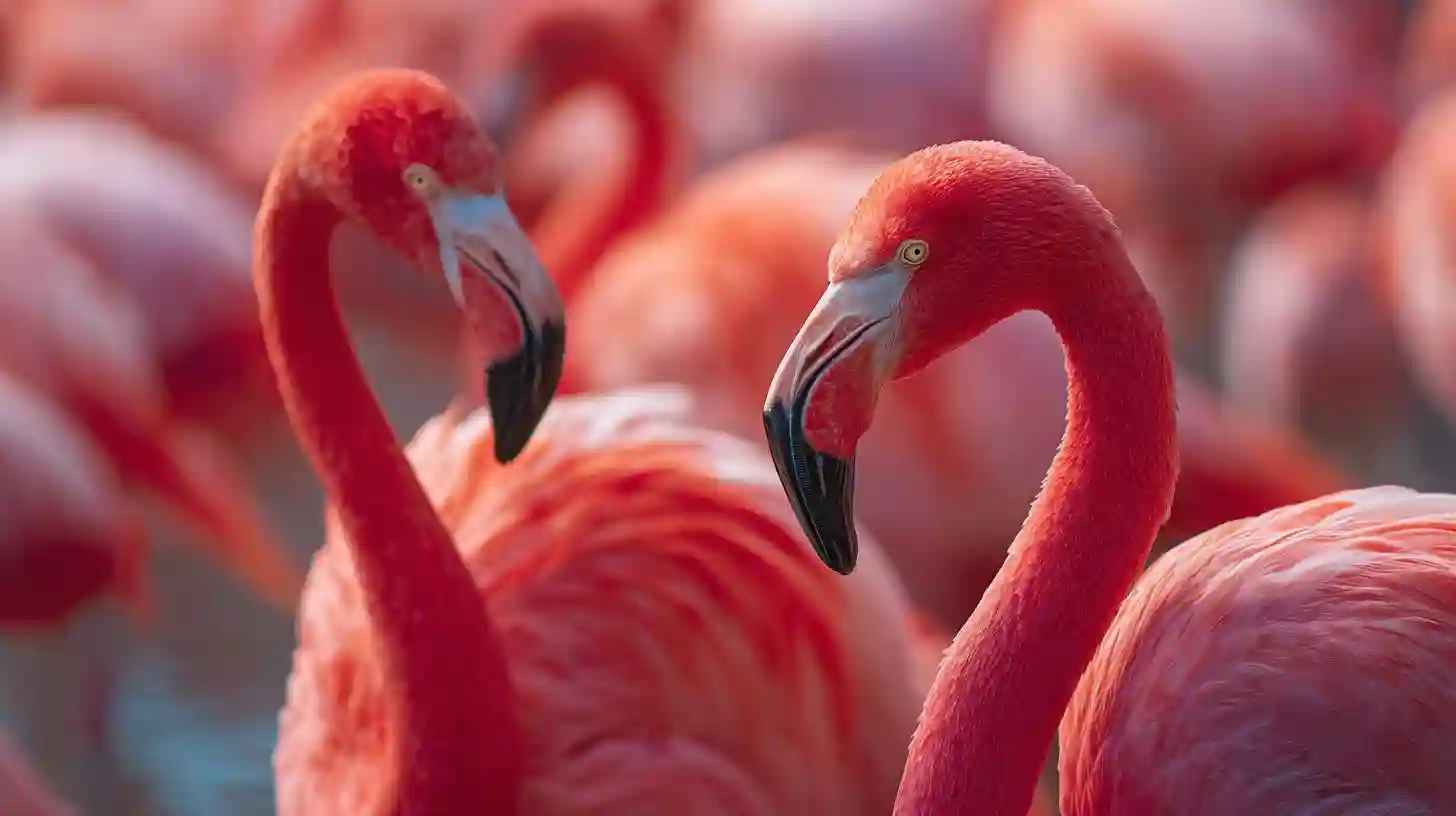
Flamingos are one of the most recognizable birds on the planet, known for their striking pink plumage, long necks, and graceful movements. The word "flamingo" itself is derived from the Spanish or Portuguese term "flamengo," meaning "flame-colored," which hints at their bright, fiery hues. The sight of a group of flamingos wading through shallow waters, with their vibrant feathers glowing in the sunlight, is truly a spectacle. However, it’s not just their looks that make them fascinating; their behavior, social structure, and the very term used to describe a group of these birds—"flamboyance"—offers a glimpse into the unique and often amusing aspects of their existence.
The term "flamboyance" for a group of flamingos is a fitting one. It captures the essence of these birds, whose appearance is as bold and attention-grabbing as the word suggests. Flamingos are known to gather in large groups, often numbering in the thousands. This collective behavior is not only a display of beauty but also serves important social and survival functions. Flamingos are highly social animals, and their flamboyant gatherings provide safety, increased chances of finding food, and the opportunity for mating and communication.
One of the most fascinating aspects of flamingo behavior is their feeding habits. These birds are filter feeders, using their specialized bills to sift through mud and water in search of tiny organisms like algae, crustaceans, and other small aquatic life. They feed in shallow waters, and when they do, they often form large groups. The advantage of feeding in a group is clear: flamingos can cover a larger area more efficiently, and the presence of many birds can deter predators. Additionally, these groups provide a way for flamingos to communicate with each other about the availability of food sources, which increases their chances of survival.
The pink color that flamingos are known for comes from their diet, specifically the carotenoid pigments found in the algae and crustaceans they consume. These pigments are broken down in the flamingo's liver and then deposited in the feathers, skin, and beak, giving the bird its signature pink or reddish hue. Interestingly, flamingos are not born with this color. Instead, they hatch with gray feathers and only develop their pink tones as they mature and begin to consume more of the right food. The intensity of the color varies, with some flamingos exhibiting deeper shades of pink or even orange, depending on their diet and habitat. This coloration plays a role in their social behavior as well. Flamingos use their vivid plumage in courtship displays, where the brightest, most vibrant individuals may have an advantage when attracting a mate.
In a flamboyance of flamingos, there is a constant exchange of social interactions. Flamingos engage in various rituals to reinforce their bonds within the group, especially during the breeding season. These rituals include synchronized movements, such as the "flamingo dance," where several birds perform a series of elegant head-bobbing and neck-stretching movements in unison. This synchronized behavior is thought to serve multiple purposes, from reinforcing group cohesion to signaling readiness for mating. The more synchronized and graceful the movements, the more likely it is that a flamingo will stand out and be noticed by potential mates. This social cooperation extends beyond mating, with flamingos also relying on each other for protection against predators, such as large birds of prey or crocodiles.
The role of flamboyance in flamingo groups goes beyond their physical appearance and behaviors. These birds are known to be highly adaptable and will often migrate to areas that offer the best conditions for breeding and feeding. Flamingos typically prefer saline or alkaline lakes, mudflats, and coastal lagoons, where they can find the food they need while also maintaining safe distances from predators. When conditions are right, flamingos can form colonies of thousands of individuals, creating an impressive spectacle of bright colors and synchronized movements. These colonies, or "flamboyances," are usually temporary, as the birds will move on to new areas once the food supply diminishes or the breeding conditions change.
The word "flamboyance" itself adds a layer of charm and character to the way we view these birds. It’s a playful term that reflects the spectacle flamingos create with their collective presence, and it evokes the idea of something extravagant and full of life. The term might also serve as a reminder of the importance of community and social behavior in the animal kingdom, as flamingos rely on one another to thrive in their often harsh environments. There’s something deeply captivating about the image of a flamingo standing tall among hundreds or even thousands of its kin, each bird contributing to the grand visual display, yet all bound together by shared purpose and instinct.
Flamingos are not just fascinating because of their striking appearance or their social structures; they remind us that nature is full of surprises, with every species offering unique behaviors, interactions, and adaptations to the environment. Whether it’s their graceful movements in the wild or their sheer numbers in a flamboyance, flamingos represent a harmonious blend of beauty, social interaction, and survival. Their collective nature, embodied by their flamboyance, is a testament to the power of cooperation and the dazzling beauty that nature can produce when species come together.