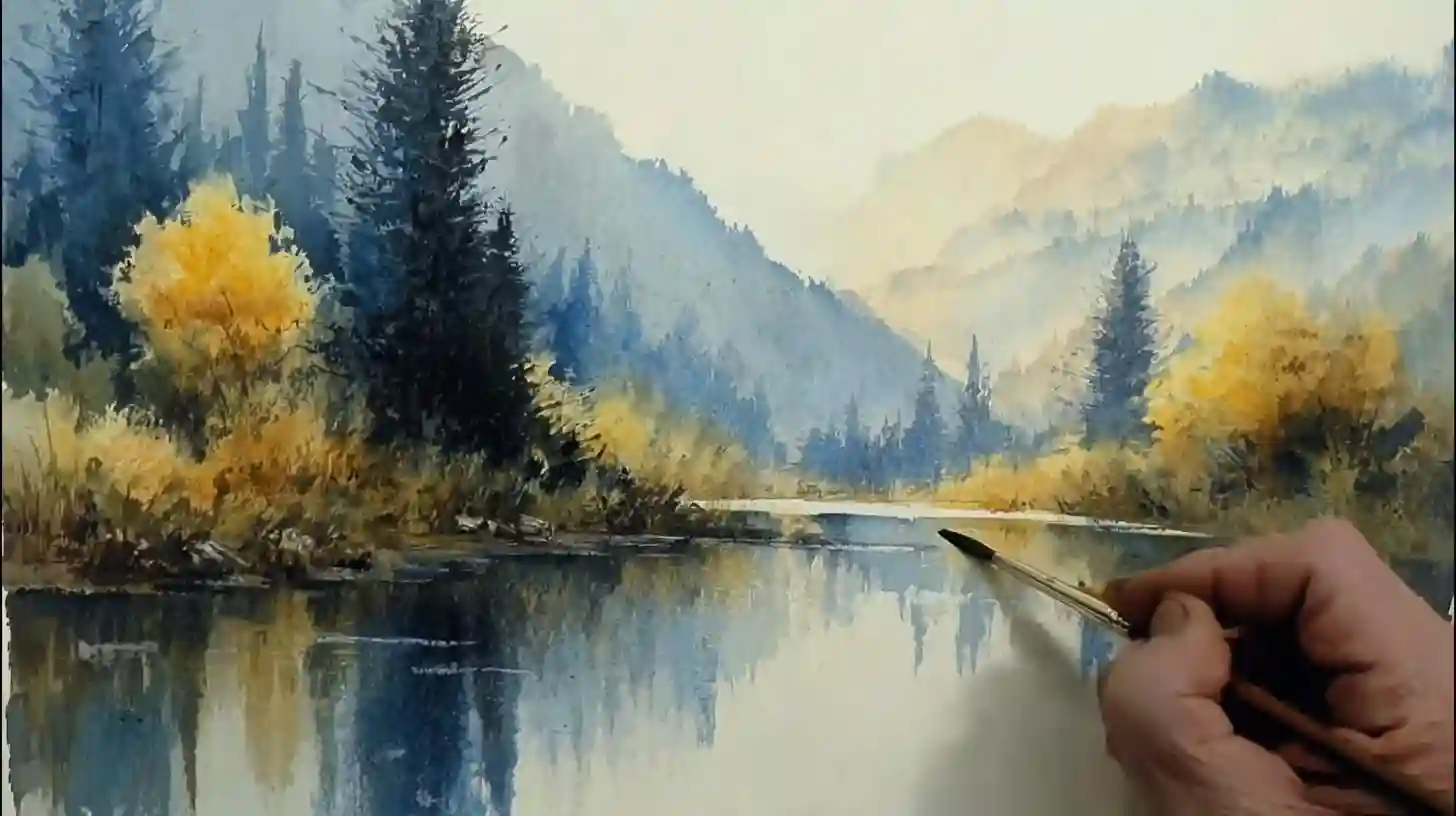
Mastering watercolor landscape painting requires patience, practice, and an understanding of a few key principles. To start, one should first familiarize themselves with the materials needed for the process. A high-quality watercolor paper is essential because it can handle the water and pigment without warping or deteriorating. Choosing the right brushes is also important, and generally, round brushes with pointed tips work well for fine details while flat brushes are perfect for broader strokes and washes. Watercolor paints themselves come in tubes or pans, with professional-grade paints offering richer pigments, which can make a noticeable difference in the final result. Once you have your tools in hand, the next step is understanding the importance of color mixing and layering.
The first step in creating a watercolor landscape is sketching the scene lightly with a pencil. Begin by outlining the general shapes of the composition, such as mountains, trees, and the horizon. Don’t focus on small details at this stage, as watercolor painting tends to be more fluid and organic in nature. The goal is to establish the big picture before diving into the intricacies. Keep the sketch light and simple, as pencil marks can sometimes bleed through the layers of watercolor paint. A loose, light sketch will also allow room for flexibility and adjustments as the painting progresses.
Once the sketch is in place, it’s time to establish the background wash. This step sets the mood of the painting and creates depth by starting with the lightest areas. For instance, if painting a sky, you might start with a wash of light blue or soft pastel colors. To achieve a smooth gradient, use a wet-on-wet technique, where the paper is dampened before applying the paint. This allows the colors to blend together seamlessly, creating soft transitions between the sky and the ground. Keep in mind that watercolor paints can appear lighter once dry, so it’s advisable to apply the paint in layers, gradually building up the depth of color.
After the background wash has dried, the next step involves adding the mid-ground elements. These might include trees, hills, or fields. When painting these elements, it’s important to consider how the light affects the landscape. Shadows and highlights add realism and dimension to the painting. At this stage, you should use slightly more concentrated pigment and adjust the water levels to create a range of values, from light to dark. It’s important to maintain the fluidity of the watercolor and not overwork the layers, as this can lead to muddy colors.
As the mid-ground is established, the foreground details can be added to bring focus and balance to the composition. The foreground is where the viewer’s eye is naturally drawn, so it’s important to add sharp details and contrasts. This could include intricate textures such as rocks, tree branches, or grassy fields. Using a dry brush technique can help create fine, crisp details in these areas, as the brush will pick up less water and apply more pigment to the paper. This contrast between soft, blended background elements and sharp, detailed foreground objects creates a sense of depth and realism.
The final step is to refine the painting and add finishing touches. This is when you can adjust the colors, darken shadows, or add highlights to areas that need more contrast. If necessary, you can lift some paint from the paper with a damp brush to create highlights, such as sunlight reflecting on water or areas where light hits the landscape. Once you’re satisfied with the composition and the balance of colors, allow the painting to fully dry before considering any final tweaks. Keep in mind that watercolor paintings are often best appreciated for their spontaneity and unpredictability, so don’t feel the need to overwork the details. Let the medium’s fluid nature guide you, and remember that each painting is a unique creation.
By following these steps, you can begin to master the art of watercolor landscape painting. With practice, you’ll develop your own style and understanding of how colors interact, giving you the ability to create breathtaking, dynamic landscapes.