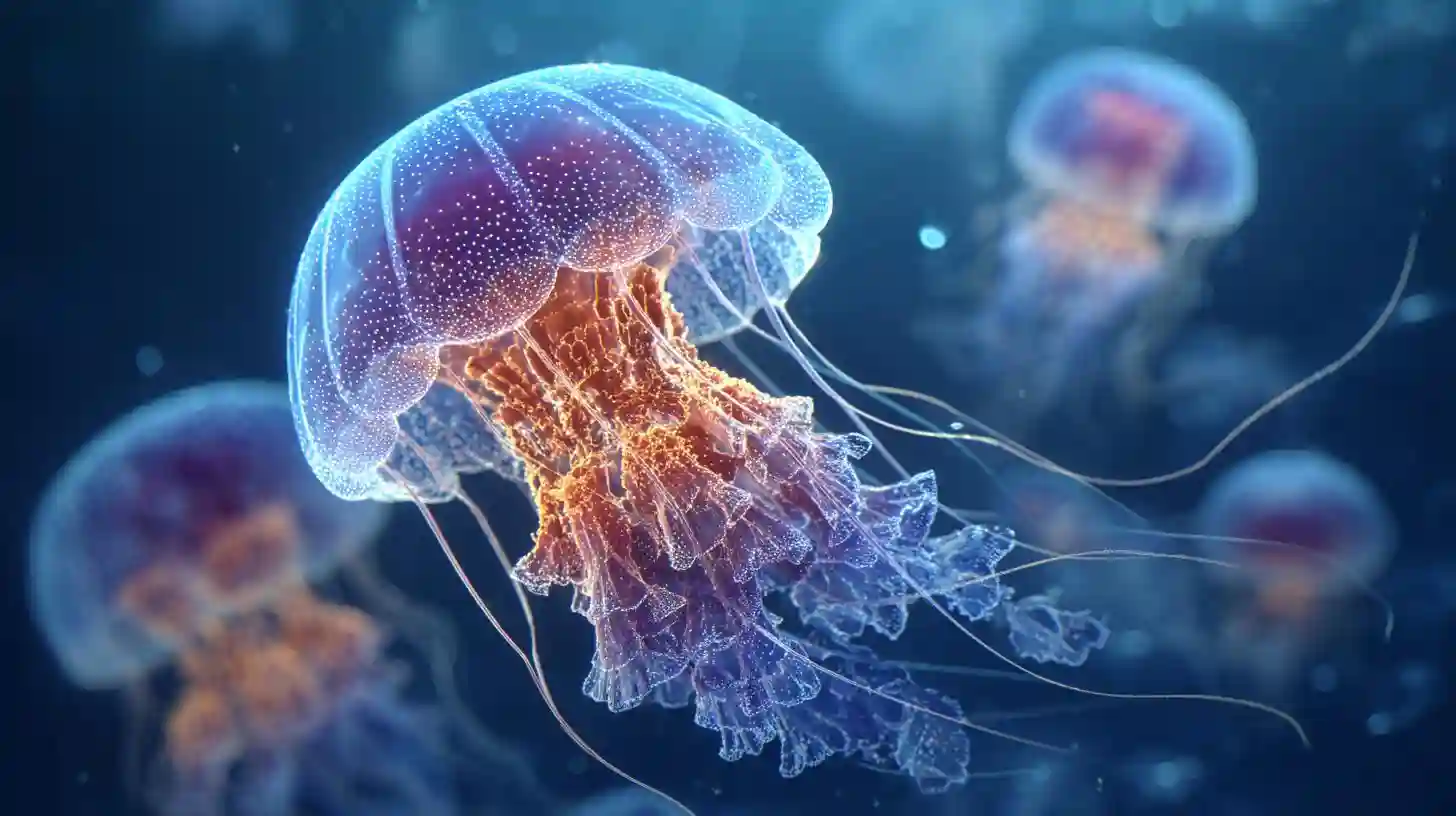
Jellyfish are one of the oldest and most fascinating creatures in the world, having existed for millions of years. These simple yet enigmatic organisms are not technically fish, but rather belong to the phylum Cnidaria, which also includes corals and sea anemones. Despite their lack of a brain, heart, and bones, jellyfish have managed to thrive in oceans across the globe. They are found in every ocean, from the surface to the deepest trenches, and their sheer adaptability has allowed them to survive and even flourish in changing environments.
One of the most unique aspects of jellyfish is their body structure. They are made up of about ninety-five percent water, making them incredibly fragile and gelatinous. The body consists of a bell-shaped, translucent umbrella that pulsates to propel them through the water. The bell is surrounded by a soft, transparent membrane called the epidermis, and beneath it lies a layer of mesoglea, a gelatinous substance that gives the jellyfish its shape and buoyancy. Hanging from the bell are tentacles, which contain specialized cells known as cnidocytes. These cells release tiny, stinging capsules that can paralyze or kill prey, allowing the jellyfish to feed. Although jellyfish do not have a central nervous system, their movement is controlled by a simple nerve net that coordinates their pulsations and reactions.
Jellyfish have a unique way of feeding. They capture small fish, plankton, and other marine organisms with their tentacles, which are covered in stinging cells that immobilize prey. Once immobilized, the jellyfish pulls the prey into its mouth, which is located on the underside of the bell. The mouth leads to a simple stomach where digestion occurs. Unlike many other animals, jellyfish do not have specialized organs for respiration or excretion. Instead, their entire body is capable of absorbing oxygen and expelling waste through diffusion.
Despite their simplicity, jellyfish have developed a remarkable ability to regenerate. In certain species, when injured or even after being severed into pieces, jellyfish can regrow their entire body. This regenerative capability is of great interest to scientists, as it may hold clues to understanding the processes of aging and tissue regeneration in other animals. The jellyfish Turritopsis dohrnii, often called the "immortal jellyfish," has gained attention for its ability to revert its cells back to a juvenile state after reaching adulthood, effectively starting its life cycle over. This process, called transdifferentiation, has led to studies on how organisms might potentially reverse aging.
Another fascinating fact about jellyfish is their ability to thrive in environments with low oxygen. Known as hypoxic zones, these areas in oceans are usually inhospitable to many marine species. However, jellyfish have adapted to these conditions and are often found in abundance in such regions. This ability to survive in low-oxygen areas may explain why jellyfish populations have exploded in recent years, especially in certain coastal regions that are affected by pollution and climate change.
Climate change has had a significant impact on jellyfish populations. Rising ocean temperatures and ocean acidification are believed to be contributing to the jellyfish boom in some parts of the world. Warmer waters provide ideal conditions for jellyfish to thrive, and the increased presence of human-induced nutrient pollution in coastal areas creates a food-rich environment for them. Jellyfish blooms, which occur when large groups of jellyfish gather in one area, can have serious ecological consequences. These blooms can damage fisheries, disrupt local ecosystems, and even interfere with the operations of power plants and desalination facilities by clogging intake pipes.
While jellyfish are often seen as nuisances, they play a critical role in marine ecosystems. As both predators and prey, jellyfish help regulate populations of plankton, small fish, and other marine creatures. They also provide food for a variety of predators, including sea turtles, certain species of fish, and even humans in some parts of the world. In Asia, jellyfish are considered a delicacy, and dishes made from jellyfish are common in countries like China and Japan. Additionally, jellyfish have been used in various medical and scientific studies, as their bioluminescence properties have provided insight into the mechanisms of light production in living organisms.
Jellyfish are also highly sensitive to changes in their environment. Their sensitivity to light and temperature makes them valuable indicators of environmental changes. Researchers have used jellyfish populations as a way to monitor the health of oceans and track the impacts of pollution and climate change. By studying how jellyfish respond to these changes, scientists can gain insights into the broader health of marine ecosystems and predict future trends in oceanic life.
The intriguing nature of jellyfish continues to captivate scientists and enthusiasts alike. From their ancient origins to their regenerative capabilities and environmental adaptability, jellyfish are more than just simple creatures drifting in the ocean. Their unique biology and behaviors hold numerous mysteries, many of which are still being unraveled by researchers around the world.