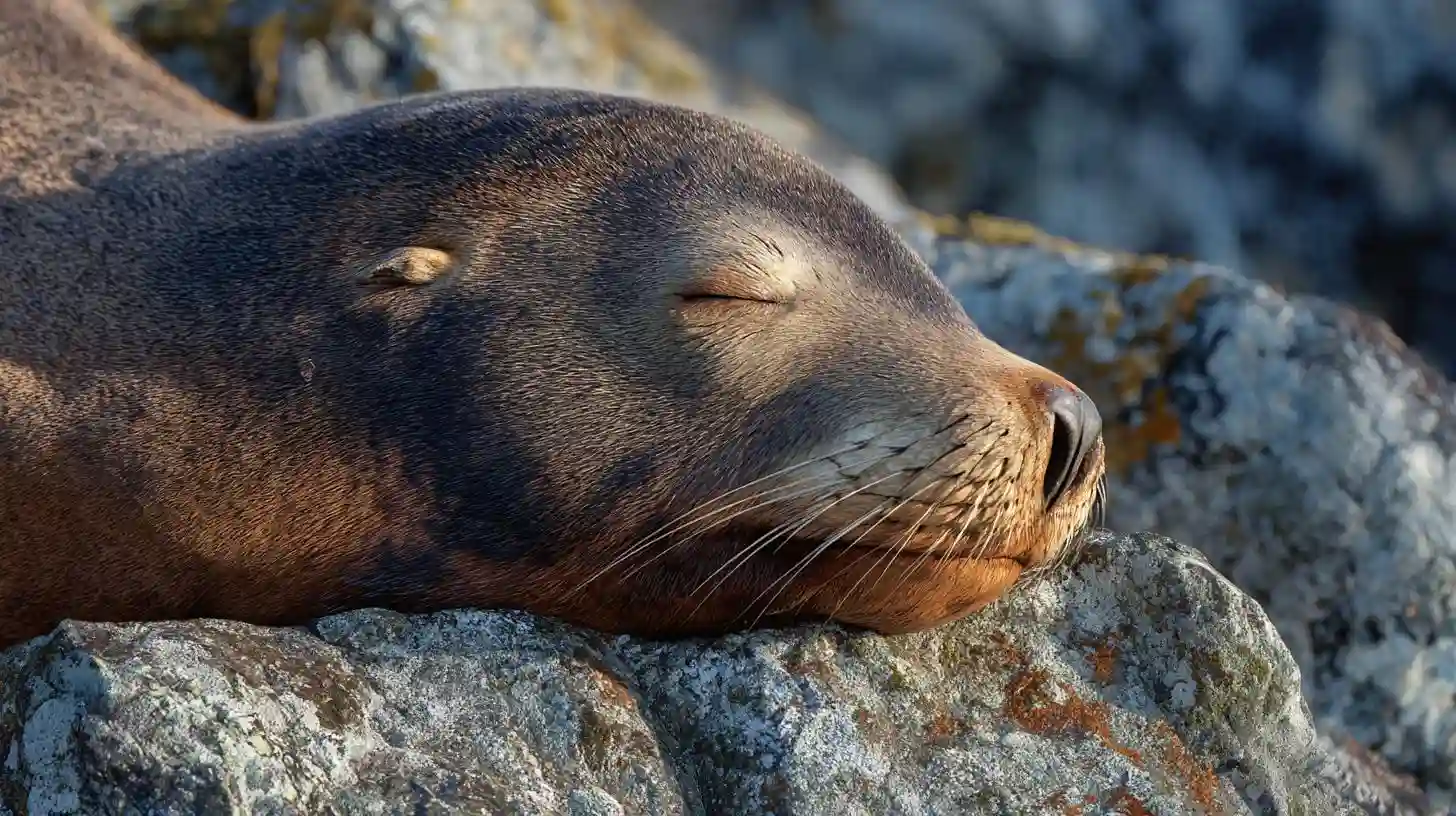
Sea lions have long been labeled as lazy creatures, lounging on rocks, piers, and beaches, often appearing to be in a state of perpetual relaxation. The popular image of these animals seems to support this idea. Their bodies, built for aquatic life, are often seen sprawled out in the sun, occasionally rolling over or shifting positions, but generally, they seem to do little else for long stretches of time. This behavior, however, has been questioned by recent observations that suggest there is more to sea lions than their seemingly lethargic demeanor.
The term "lazy" has been frequently used to describe sea lions due to their resting patterns, but it is important to consider the broader context of their behavior. Unlike many land mammals, sea lions spend a large portion of their lives in the water, where their energy demands are quite different from those of terrestrial animals. Resting on land or in the sun serves a functional purpose for these marine animals. It allows them to conserve energy after periods of high activity, such as hunting or swimming long distances in search of food. Resting helps them to recover, digest food, and regulate body temperature, especially after exerting themselves in colder waters.
In fact, sea lions are highly active hunters, capable of diving to impressive depths to catch fish and other marine life. Their ability to swim at remarkable speeds and navigate complex underwater environments requires a significant amount of energy. Their resting behavior should not be mistaken for laziness but rather as a necessary component of their survival strategy. Sea lions need to balance their physical activity with recovery time, and this balance is crucial for maintaining their health and overall fitness.
Recent research into sea lion behavior has also shed light on the complexity of their actions. Far from being sedentary, these animals exhibit sophisticated social behaviors, which involve much more than simply lying around. Sea lions live in colonies where they form intricate social structures. Males often compete for dominance over groups of females, engaging in vocalizations, physical displays, and even aggressive confrontations. The females, on the other hand, are responsible for raising their young, and the mothers have been observed to nurture and protect their pups with considerable care. These social interactions require energy and focus, and it is during the periods of rest that sea lions may appear most passive.
Additionally, sea lions have been observed engaging in playful behaviors, which further challenge the idea of them being lazy. In the wild, they are known to engage in activities such as surfing on waves, playing with objects, and interacting with one another in ways that suggest curiosity and intelligence. These playful actions not only provide entertainment for observers but also serve to enhance their physical abilities, including coordination and agility. Furthermore, such behavior may help to strengthen social bonds within the group, ensuring that the animals are prepared for the demands of hunting and reproducing.
Studies have also indicated that sea lions exhibit problem-solving skills and adaptability in their interactions with humans and their environment. In some cases, sea lions have been observed adapting to urban environments, interacting with fishing industries and taking advantage of human-made structures like piers and docks. They have been known to use these areas for rest and haul-out sites, where they can escape predators, find food, and interact with other sea lions. Their ability to thrive in both natural and urban habitats is a testament to their adaptability and resilience.
In essence, the idea of sea lions being lazy is a misconception based on limited observations. Their behavior is a complex mix of rest, social interaction, and physical activity, all of which are essential to their survival. The notion that they are simply "lazy" ignores the significant energy expenditures required for their hunting habits and their highly social and adaptive nature. What may appear as idleness is, in fact, a carefully balanced lifestyle that allows sea lions to thrive in their challenging marine environments. Far from being lazy, sea lions are highly active, intelligent, and well-adapted creatures that excel in their aquatic world.