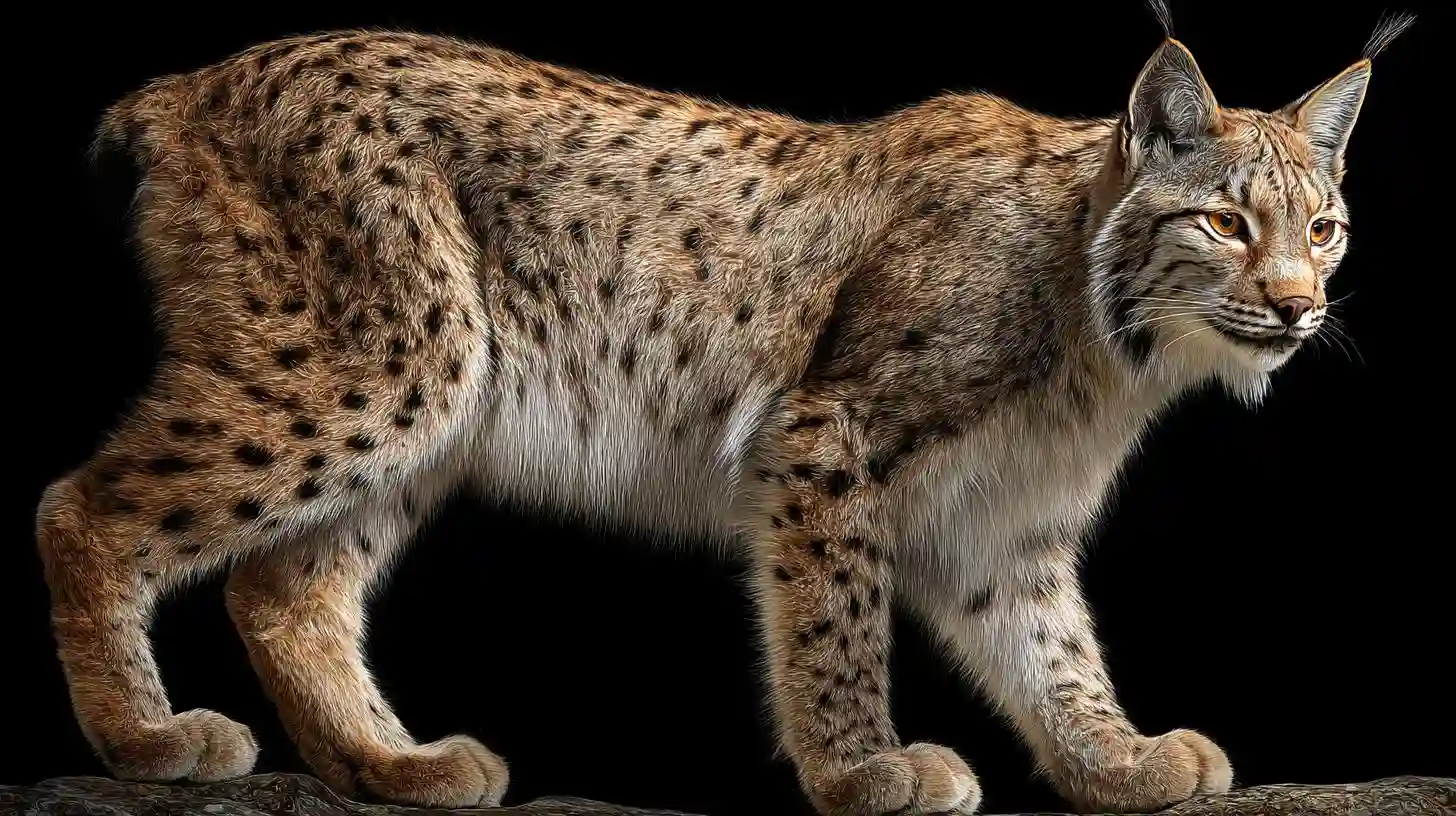
The Eurasian lynx is a medium-sized wild cat that inhabits the vast forests and mountainous regions of Europe and Asia. Recognizable by its tufted ears, long legs, and thick fur, this species plays an important role in maintaining the ecological balance of its habitats. The lynx is a solitary and elusive predator, primarily nocturnal, and is highly adapted to life in dense forests where it relies on stealth and agility to hunt its prey. Its fur provides excellent camouflage in the snowy winters of northern latitudes, blending seamlessly with the environment and allowing it to approach prey undetected.
The diet of the Eurasian lynx is diverse, consisting mainly of ungulates, small mammals, and occasionally birds. Roe deer and chamois are particularly favored in areas where they are abundant, but the lynx can also adapt to smaller prey such as hares, rabbits, and rodents when larger animals are scarce. Hunting is a meticulous process for the lynx, involving careful stalking and sudden bursts of speed to catch prey. It tends to rely on ambush techniques rather than long chases, conserving energy while increasing the likelihood of success. Its acute hearing and vision enhance its hunting efficiency, while strong jaw muscles and sharp teeth allow it to kill and consume its prey quickly.
The Eurasian lynx’s habitat stretches across a wide geographic range, from the forests of Scandinavia through Central Europe and across Russia to the mountains of Central Asia. Within this range, the lynx shows remarkable adaptability to varying climates and terrain, inhabiting dense coniferous and deciduous forests, rugged mountains, and even areas close to human settlements where it can find sufficient food. However, the fragmentation of forests and human encroachment pose significant threats to its survival. Logging, infrastructure development, and agricultural expansion reduce available habitat and isolate populations, which can lead to genetic bottlenecks and lower reproductive success. Conservation efforts increasingly focus on habitat protection and creating corridors that connect isolated lynx populations.
Reproduction in Eurasian lynx follows a seasonal pattern, with mating typically occurring in late winter. The female usually gives birth in spring after a gestation period of around two months, producing a litter of one to four kittens. The mother carefully selects a secluded den, often hidden among dense vegetation or rocky outcrops, where the young are kept safe from predators. Kittens are born blind and helpless, relying entirely on their mother for warmth, protection, and nourishment. Over several months, the mother teaches them essential survival skills, including hunting techniques and territory marking. By the time they are nearly a year old, the young lynx are ready to disperse and establish their own territories, often traveling long distances to find suitable habitat and avoid competition with other lynxes.
Behaviorally, the Eurasian lynx is mostly solitary, marking its territory with scent markings and scratches on trees to communicate with other lynxes. It maintains relatively large territories that can overlap with those of other lynxes, although direct confrontations are rare due to the species’ generally shy and reclusive nature. During winter, the lynx is particularly adept at navigating deep snow, using its wide, padded paws to move silently and efficiently. Seasonal changes also influence its diet and activity patterns, with the lynx becoming more active at dawn and dusk when prey movements are highest. Despite being a top predator, the lynx faces threats from human activity, including poaching for its fur and accidental trapping, as well as competition from other large carnivores in some regions.
The conservation status of the Eurasian lynx varies across its range. In some European countries, populations are stable or slowly recovering due to legal protection, reintroduction programs, and public awareness campaigns. In other areas, however, declining prey populations and habitat loss continue to threaten local lynx communities. International cooperation is crucial, as the lynx often traverses national borders, requiring cross-border management plans and conservation policies. Monitoring efforts involve camera traps, GPS tracking, and genetic studies to better understand population dynamics, movement patterns, and threats. Education and community engagement also play a significant role in reducing human-wildlife conflicts and promoting coexistence with this elusive predator.
The Eurasian lynx embodies the intricate balance of forest ecosystems, serving as both predator and ecological indicator. Its presence reflects the health of forest habitats and the abundance of prey species, highlighting the interconnectedness of flora, fauna, and human activity. Efforts to conserve this species contribute not only to the preservation of biodiversity but also to the protection of larger landscapes that support numerous other species. Maintaining viable lynx populations requires a combination of habitat protection, law enforcement, scientific research, and public participation, ensuring that this iconic predator continues to roam the forests and mountains of Europe and Asia for generations to come.