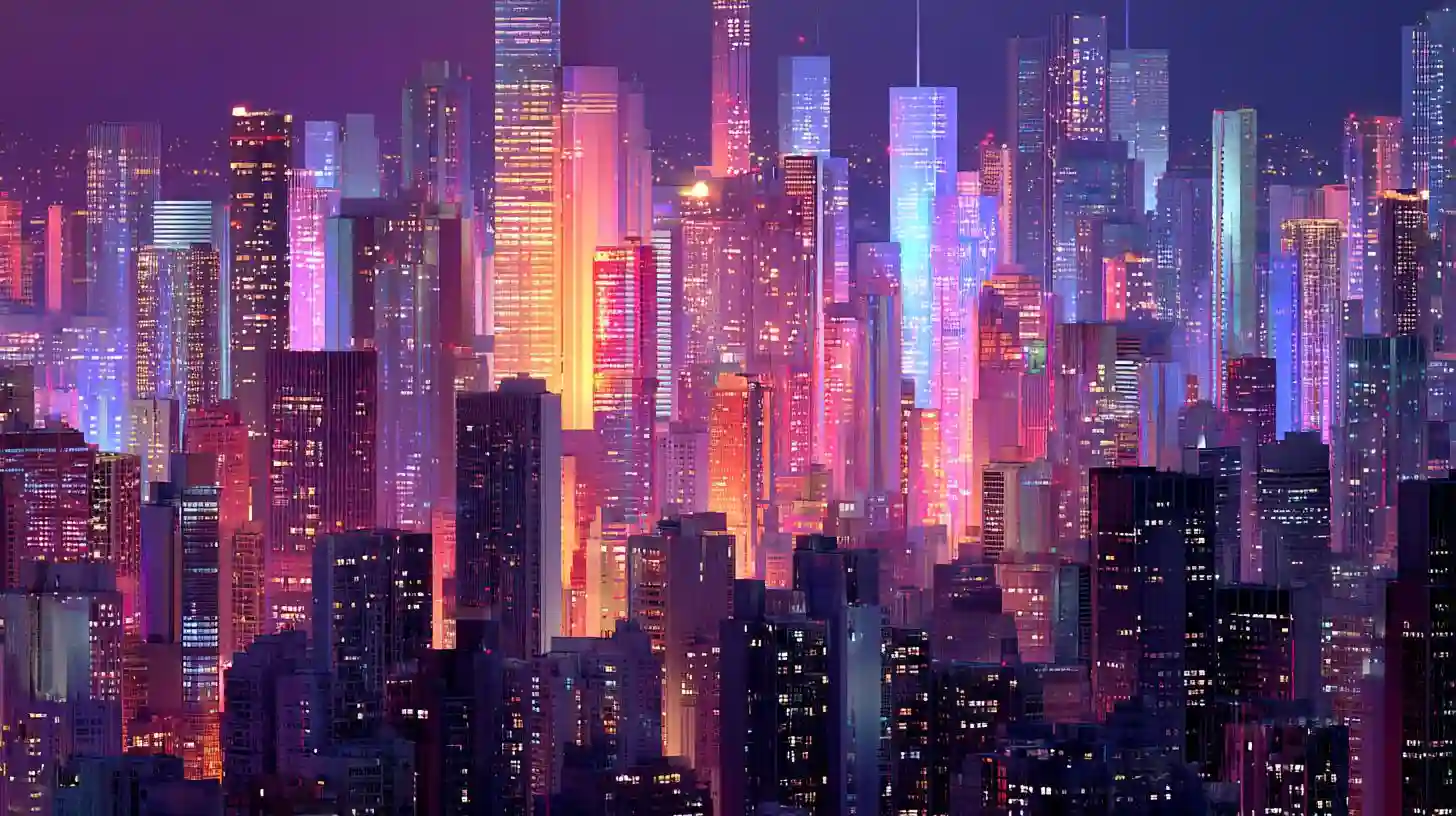
Neon lighting has long been an emblem of modernity, with its bright, colorful glow illuminating cityscapes and creating vibrant, dynamic atmospheres in urban environments across the world. It has become synonymous with nighttime culture, conjuring images of bustling streets, towering signs, and endless rows of glowing storefronts. The spectrum of neon—its range of colors, its unique characteristics, and its cultural significance—speaks to the evolving relationship between technology, art, and the urban experience.
The allure of neon lies in its ability to create intense, eye-catching colors. The process behind neon lighting begins with the use of neon gas, a noble gas that is colorless and odorless. When an electric current is passed through the gas inside a sealed tube, it ionizes and emits a bright red-orange glow. This basic neon color can be altered by using various phosphorescent coatings or by introducing other gases into the tube. The addition of gases like argon or mercury can produce colors ranging from blue to purple, and other coatings can further expand the palette, creating the greens, pinks, and yellows that we often associate with neon signage today.
Neon lighting has a long and storied history that dates back to the early 20th century. First discovered in the laboratory in the late 1800s, it wasn’t until the 1920s that neon began to be used commercially, when Georges Claude, a French engineer, introduced it to the public with the installation of neon signs in Paris. By the 1930s, neon signs had become a ubiquitous feature of major cities, especially in places like New York and Los Angeles. These bright lights not only served as advertisements but also as symbols of the modern era, representing a sense of progress, innovation, and the futuristic allure of urban life. Neon quickly became a staple of the entertainment districts and shopping areas, drawing in customers with its hypnotic glow.
As the years passed, the use of neon spread beyond commercial advertising. Artists began experimenting with neon lighting, incorporating it into installations and exhibitions. Its bright, fluorescent hues offered artists a new medium to explore themes of light, space, and color. Neon became a tool for creative expression, not limited to mere signage, but as a way to evoke mood, emotion, and even social commentary. Its vibrant colors and electric glow gave works of art an immediate impact, capturing the viewer's attention and making the surroundings feel alive. Famous artists like Dan Flavin and Bruce Nauman became known for their use of neon as a form of modern art, and their work helped cement neon’s place in the art world.
The role of neon in urban landscapes is also deeply intertwined with the culture of the cities where it resides. In places like Tokyo, Hong Kong, and New York, neon signs have become an iconic part of the city's identity. The streets lined with glowing signs, billboards, and storefronts create a distinct atmosphere, marking the areas as bustling, vibrant, and alive with energy. Neon lights transform a city’s skyline into a spectacle, with the interplay of light reflecting off glass buildings, casting colorful glows across streets and alleyways. At night, neon becomes the heartbeat of the city, guiding people through its streets, offering both direction and entertainment.
Yet, as technology has evolved, neon faces competition from newer lighting technologies. LED lights, for instance, offer greater energy efficiency and longevity compared to traditional neon tubes. As a result, some neon signs have been replaced by LEDs, which can replicate the neon effect while using less power and being more durable. Despite this shift, there is still a place for traditional neon, particularly in areas where its vintage appeal and unique aesthetic are appreciated. Neon has a nostalgic charm that LEDs cannot replicate, and its legacy continues to influence both the design of urban spaces and the ways in which lighting is used to create mood and atmosphere.
Neon has come to represent not just a form of lighting, but a cultural touchstone, encapsulating the energy, vibrancy, and forward-thinking nature of modern urban life. It’s a material that bridges the gap between art and function, decoration and utility. As cities around the world continue to evolve, neon’s glow will undoubtedly continue to be a defining feature of the night, illuminating not only the streets but also the stories, memories, and experiences that unfold in urban environments. Through its colors, its history, and its presence, neon will remain an integral part of the urban landscape, a symbol of both the past and the future in the ever-changing cityscape.