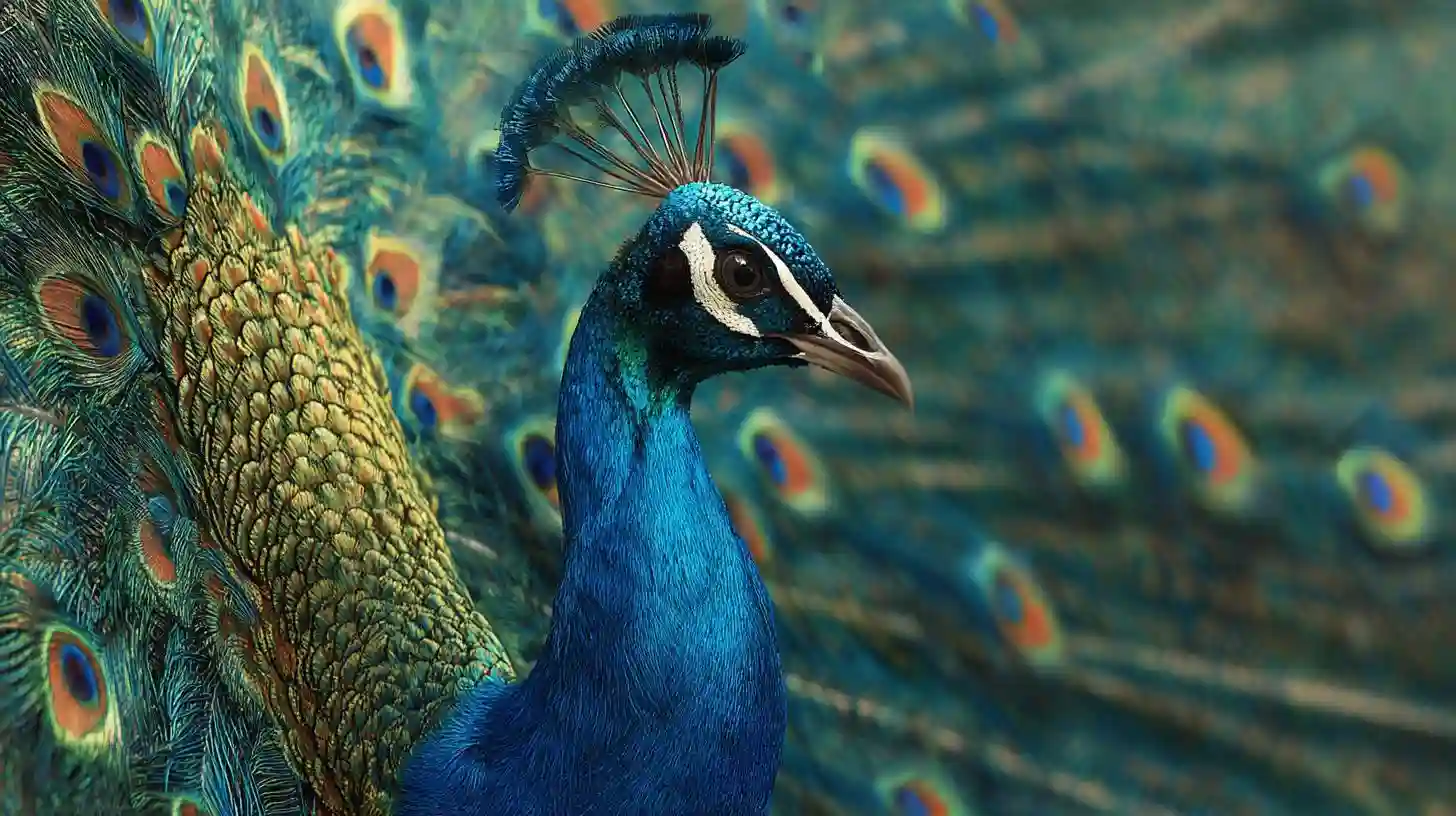
Peafowls are among the most magnificent creatures that grace the earth, captivating people with their striking beauty and graceful presence. Known for their vibrant and colorful plumage, they have earned a reputation as the world's most beautiful birds. The male peafowl, or peacock, is especially famous for its extraordinary tail feathers, which are often adorned with iridescent hues of blue, green, and gold. The male's display is a sight to behold, as it unfurls its tail into a spectacular fan, each feather intricately patterned with "eye spots" that seem to shimmer in the light. This display is not just for show; it is part of the peacock's courtship ritual, a way to attract a mate by demonstrating the health and vitality of the individual. The larger and more vibrant the tail, the more likely it is to impress a potential mate, indicating genetic fitness and strength. Peahens, the female counterparts, are less colorful in comparison, but their muted tones of brown and grey allow them to blend into the environment, providing camouflage against predators. Despite their less flashy appearance, they play a critical role in the natural balance of their ecosystems. Peafowls are native to the Indian subcontinent, where they have been revered in culture and mythology for centuries. In Hinduism, they are associated with Saraswati, the goddess of wisdom, and are considered symbols of beauty and grace. Their feathers are often used in various cultural practices and rituals, signifying prosperity and spiritual enlightenment. These birds are not only admired for their aesthetic qualities but also for their intelligence and behavior. Peafowls are highly social animals, often found in small groups, and their interactions are marked by complex behaviors. The males often engage in competitive displays of their plumage, trying to outdo each other in order to win the attention of the females. This competition can be fierce, with each male strutting and calling out in an effort to assert his dominance. In the wild, peafowls can be found in forests and grasslands, where they forage for food, primarily consisting of seeds, insects, and small reptiles. Their diet is varied, and they are known to be opportunistic feeders, adapting to the availability of food in their environment. Peafowls are also known for their loud calls, which can be heard from a considerable distance, especially during the breeding season. These calls are used to communicate with other members of their group and to warn of potential threats. In addition to their vocalizations, peafowls also use body language to convey messages. For example, when they feel threatened, they may puff up their feathers and adopt a defensive posture, making themselves appear larger and more intimidating to predators. The peafowl's ability to adapt to various environments has allowed them to thrive in both the wild and captivity. In many parts of the world, they are kept in zoos, gardens, and parks, where they continue to awe visitors with their stunning appearance and fascinating behavior. Conservation efforts have been put in place to protect their natural habitats, as deforestation and habitat destruction threaten their populations in the wild. While their beauty and grace are undeniable, peafowls also serve as important indicators of the health of their ecosystems. The presence of healthy peafowl populations often signifies a thriving environment, where biodiversity is maintained, and natural resources are abundant. Their role in the ecosystem extends beyond their beauty, as they help maintain the balance of plant and insect populations, contributing to the overall health of their habitats. The peafowl's remarkable beauty and symbolism have made them subjects of art, literature, and culture throughout history. Their elegance has inspired countless works of art, from paintings to sculptures, and they continue to be a source of inspiration for artists and nature enthusiasts alike. The peacock, with its flamboyant display of feathers, is a symbol of opulence and grandeur, often associated with royalty and luxury. The majesty of the peafowl is not just in its external beauty but in its ability to captivate and inspire those who encounter it. Whether in the wild or in the confines of a sanctuary, the peafowl remains a testament to the wonders of nature and the endless capacity for awe that the natural world can evoke. The vibrant colors of its plumage, the elegance of its movements, and the complexity of its behavior all contribute to its status as one of the most remarkable creatures on Earth. For those fortunate enough to witness the grandeur of a peafowl in full display, the experience is nothing short of magical, a reminder of the incredible diversity and beauty that exists in the world around us.